
The Coexistence Crisis: Why Toronto's Coyote Strategy is Failing the Urban-Wildlife Boundary

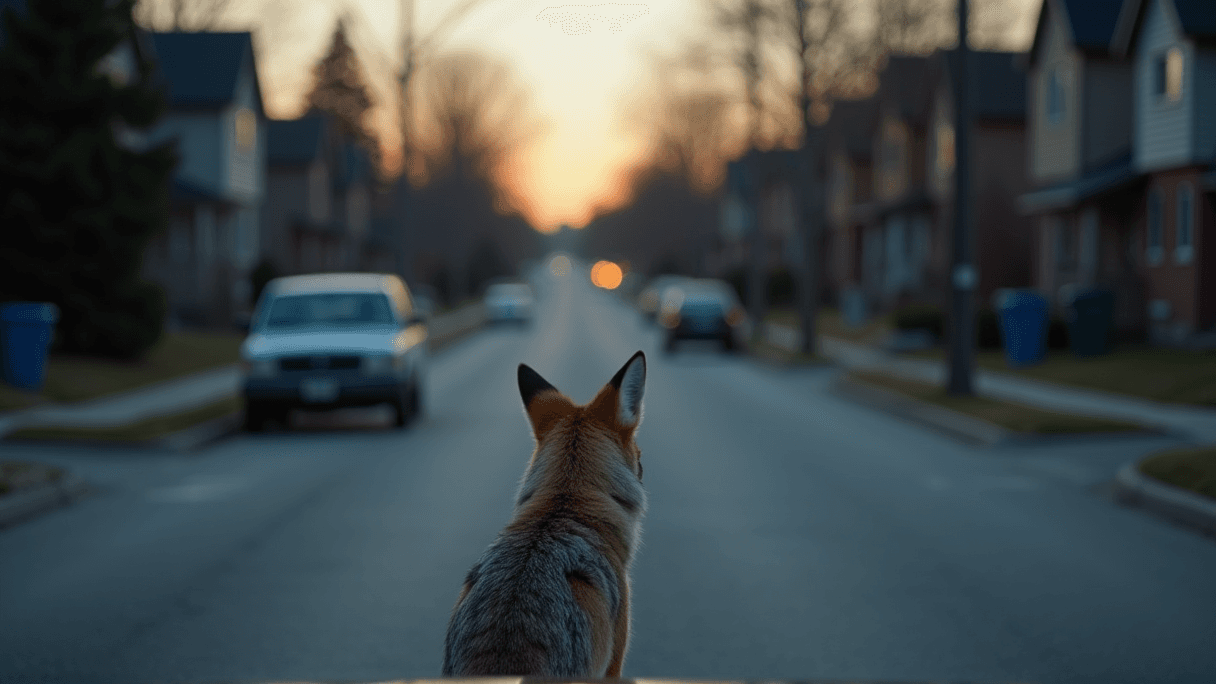
AI-generated image · Bay Street Wire
As attacks on children and pets rise across the GTA, experts warn that a reliance on 'coexistence' may be masking a failure to manage habituated predators.
Toronto's commitment to a "coexistence strategy" is being put to the test as violent encounters with coyotes spike across the Greater Toronto Area, as first reported by CityNews Toronto. While city officials maintain that coyotes are an established part of the urban ecosystem, a string of aggressive attacks suggests a growing disconnect between municipal policy and the reality of the urban-wildlife boundary.
According to reporting from CityNews Toronto, the city's approach prioritizes public safety through long-term prevention, aversion tactics, and public education. City officials argue that the removal of wild canines is costly, counterproductive, and ineffective. However, the data reveals a troubling trend. Between 2019 and June 2026, the city recorded 20 coyote attacks on humans that resulted in injuries, including nine biting incidents. The impact on pets has been even more severe; 331 dogs were attacked or bitten during that same period, with 143 of those incidents occurring in 2024 and 2025 alone.
***
**Opinion: The Boundary Failure**
Toronto's insistence on coexistence is increasingly appearing as a symptom of an inability to manage the encroaching boundary between our expanding urban footprint and the wild. By framing the issue as one of "education," the city shifts the burden of safety onto residents while failing to address the biological reality of habituation. When predators lose their fear of humans—often due to being fed or seeking urban food sources—the resulting predatory behavior is, as Dennis Murray notes, largely irreversible. A strategy that prioritizes "coexistence" over the swift removal of habituated animals is not a management plan; it is a gamble with public safety.
***
This tension is evident in the city's delayed response to "problem coyotes." In May 2025, officials finally euthanized a pair of mated coyotes linked to dozens of dog attacks in the Fort York and Liberty Village areas. Dennis Murray, a professor of biology at Trent University who authored a paper on these specific incidents, identified four problem coyotes attacking humans and dogs in those neighborhoods. Murray stated that the municipality was "delinquent" and should have acted much sooner.
Beyond Toronto's core, other GTA municipalities are grappling with similar surges. In Whitby, where a toddler was bitten on the face in July and another child was injured in a public field, supervisor of bylaw and animal services Kate Novia reported over 800 coyote sightings since January—nearly triple the reports from the previous year. While Novia attributes this surge to increased reporting rather than a population increase, the town has euthanized two coyotes that displayed "concerning and abnormal behaviour."
Similarly, Markham reported a higher-than-usual number of sightings in 2026 following attacks on a child and a teenager in May. The city confirmed it has lethally removed coyotes exhibiting "unprecedented and abnormal behaviour," though it did not provide a specific count.
While spatial ecologist Tiziana A. Gelmi Candusso argues that lethal removal is only a temporary fix because coyotes are quickly replaced, she emphasizes that the core issue is human behavior. Gelmi Candusso, who conducted post-doctoral research at the University of Toronto using wildlife cameras, suggests that the solution lies in stricter adherence to leashing dogs and ending the feeding of wildlife. She advocates for expanded outreach in schools to educate children and their parents on preventing confrontations.
However, Murray warns that when coyotes move beyond defending dens and become predatory, lethal removal or euthanasia must be considered immediately. For a city expanding into the Greenbelt, the current strategy of "monitoring" may no longer be sufficient to protect the most vulnerable residents.