
Concrete Gains or Climate Costs? The Trade-off in Toronto's Rental Push

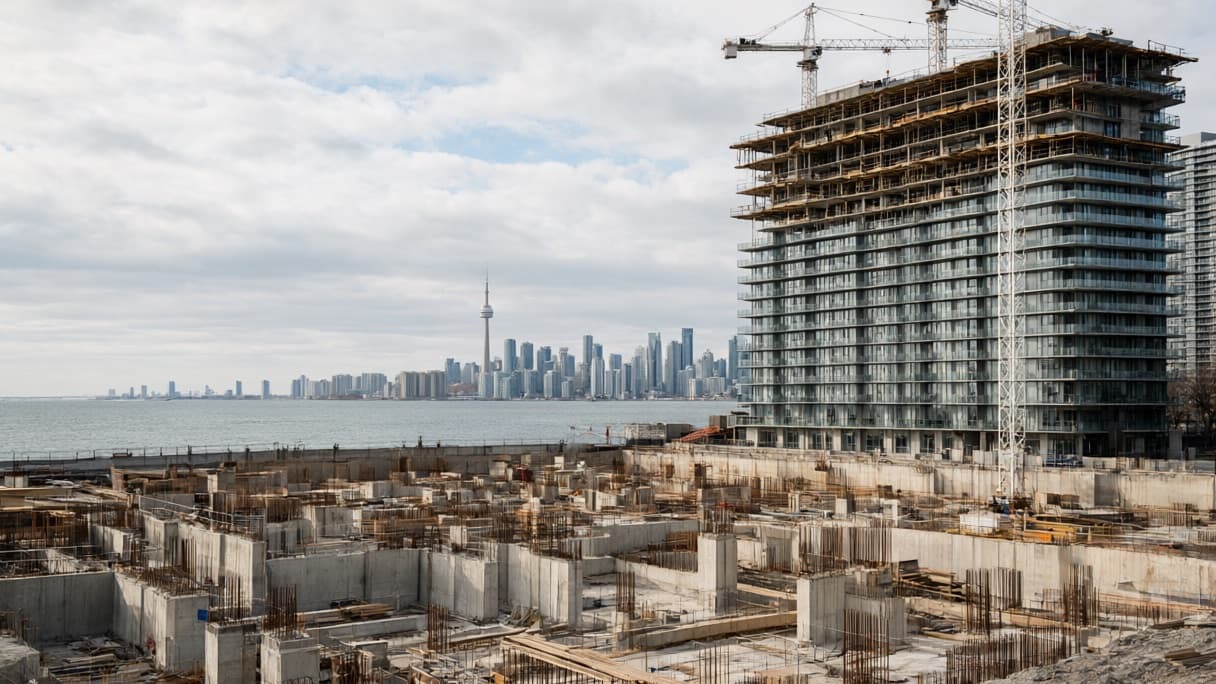
AI-generated image · Bay Street Wire
As the City unlocks nearly 10,000 new rental units through aggressive financial incentives, the rush to get 'shovels in the ground' raises questions about long-term urban sustainability.
Toronto is currently engaged in a high-speed race to solve its housing crisis, but as a climate and environment columnist, I find myself asking: at what cost to our urban fabric?
As the City of Toronto first reported in a recent news release, the municipality has announced the outcomes of the second phase of its Purpose-Built Rental (PBR) Housing Incentives stream. This program is designed to accelerate construction during difficult economic times by offering developers significant financial carrots. In Phase 2 alone, the City has selected 19 projects across 12 wards that are expected to yield 9,667 new rental homes, including 2,059 affordable, rent-controlled units.
When combined with Phase 1—which launched in November 2024 and supported 7,219 rental homes across 15 projects—the City is facilitating a total of 34 developments. These are projected to create over 13,000 market rental homes and more than 3,800 affordable, rent-controlled units. To achieve this, the City of Toronto is providing roughly $894.2 million in total financial incentives. These include the waiver of building permit fees, property tax exemptions for affordable units, and an indefinite deferral of development charges for market rental homes.
Mayor Olivia Chow has championed the program, stating that the second phase supports "shovel-ready projects" to ensure those who work in Toronto can afford to live there. The urgency is palpable; the City is requiring all Phase 2 projects to start construction within 12 months to maintain their eligibility for funding.
**Opinion: The Sustainability Gap**
While the addition of thousands of homes is a necessary victory for affordability, the mechanism of this growth is concerning. The City's primary metric for success in Phase 2 appears to be speed and volume. By prioritizing "shovel-ready" projects and imposing a strict 12-month construction deadline, the City risks incentivizing the fastest route to completion rather than the most sustainable one.
When we prioritize getting concrete poured quickly to meet housing targets, we often overlook the integration of low-carbon urban planning. Are these 19 projects incorporating passive house standards, green roofs, or sustainable materials? Or are they simply traditional builds that happen to be "ready"? Furthermore, the City notes that $1.5 billion in combined provincial and federal support via the Development Charges Reduction Program will fund essential infrastructure, including wastewater systems, water, and roads. While essential, the emphasis on "roads" suggests a continued reliance on traditional, car-centric infrastructure rather than a radical shift toward transit-oriented, low-carbon development.
If Toronto is to remain a "global leader in... climate action," as the City claims in its news release, our housing incentives must do more than just lower the cost of construction. They must mandate a higher standard of environmental performance. Otherwise, we aren't just building homes; we are locking in decades of carbon emissions under the guise of affordability.