
The Illusion of Infinite Water: Federal Alarm Should Be Ontario's Wake-Up Call

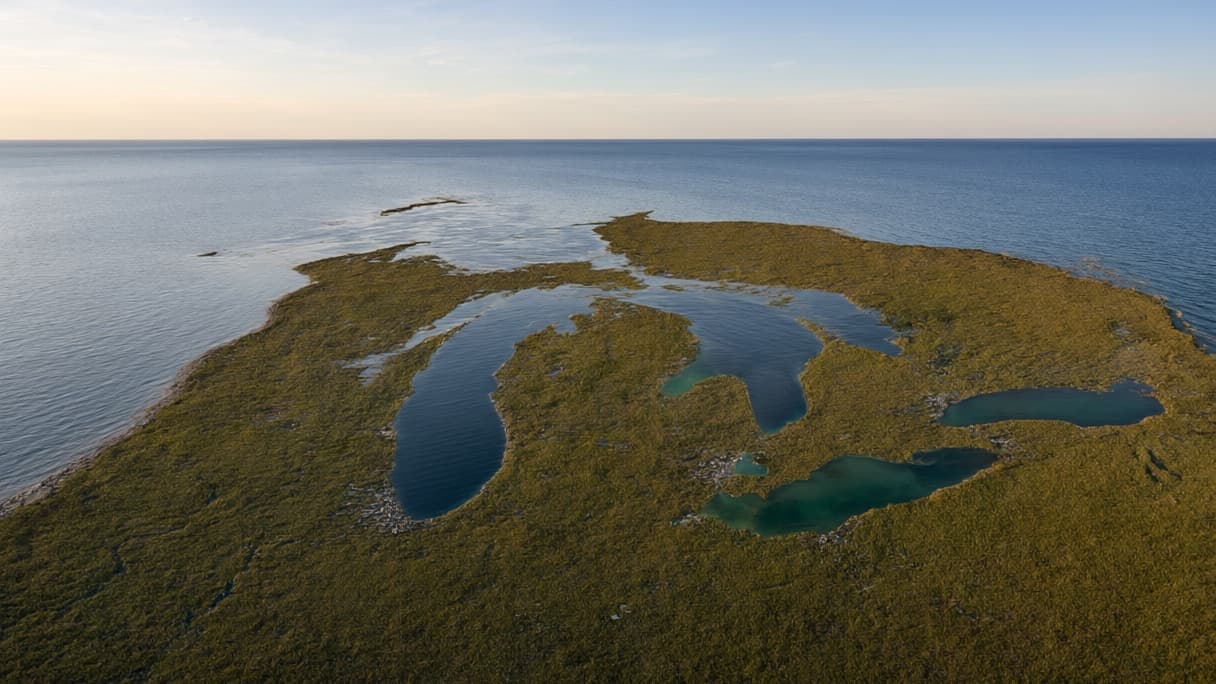
AI-generated image · Bay Street Wire
An internal government memo warns that freshwater security is a 'mission critical' risk to Canada's prosperity, challenging the assumption that the Great Lakes basin is a guaranteed safety net.
For too long, residents and policymakers in Ontario have operated under the comforting assumption that our proximity to the Great Lakes renders us immune to water scarcity. However, as first reported by CityNews Toronto, a leaked internal federal memo reveals that Ottawa is sounding a quiet alarm over the long-term security of Canada's freshwater—a warning that should serve as a catalyst for Ontario to rethink its resource management before the crisis reaches our taps.
According to reporting from CityNews Toronto, the 12-page document was prepared by the Canada Water Agency for Environment Minister Julie Dabrusin. The memo explicitly states that while Canada possesses 20 per cent of the world's surface fresh water, only one-third of that is salt-free and replenished annually by precipitation. More concerning for those of us in the south is the fact that the majority of Canada's renewable surface fresh water drains northward, away from the economic hubs and populated regions located within 300 kilometres of the U.S. border.
**Opinion: The Danger of Complacency**
In my view, the most jarring revelation in the Canada Water Agency's memo is the admission that even the Great Lakes-St. Lawrence River basin could face restricted or depleting water supplies. We have treated these massive bodies of water as an infinite bank account, yet Minister Julie Dabrusin identified a national water security strategy as a "mission critical priority" in her reply to a call from Prime Minister Mark Carney for cabinet objectives. If the federal government is concerned about the long-term viability of our water security, Ontario cannot afford to remain complacent.
***
The challenges are not merely about quantity, but quality and infrastructure. CityNews Toronto reports that the memo describes freshwater ecosystems in southern Canada as being "under stress" due to population growth, pollution, overconsumption, climate change, and aging infrastructure. The data is stark: between 2021 and 2023, 51 per cent of monitoring sites in southern Canadian rivers were rated as fair to poor. Specifically, the memo notes that complex ecosystems like the lower Great Lakes remain in fair or poor condition.
Furthermore, the memo highlights a critical blind spot in our resource mapping. Groundwater aquifers—the nation's largest freshwater resource—remain unmapped in several parts of the country, despite the fact that nearly one in three Canadians depend on them for clean water. This lack of data makes it nearly impossible to accurately assess the health of these vital resources.
Beyond domestic mismanagement, there is the geopolitical tension of shared waters. With over 40 per cent of the Canada-U.S. border crossing water, the memo warns that as North American supplies shrink and demands rise, "new water-related disputes could emerge and become more frequent." This is particularly sensitive given the long-standing public opposition to the bulk export of water to the U.S.
While the memo suggests that securing sustainable water supplies could provide a "strategic advantage" in a water-stressed world—supporting hydro power, the digital economy, and high-value crop production—that advantage is only possible if we stop treating our lakes as a given. The federal government's internal anxiety is a clear signal: the era of assumed water security is over.