
Canada's Last Epishelf Lake Collapses

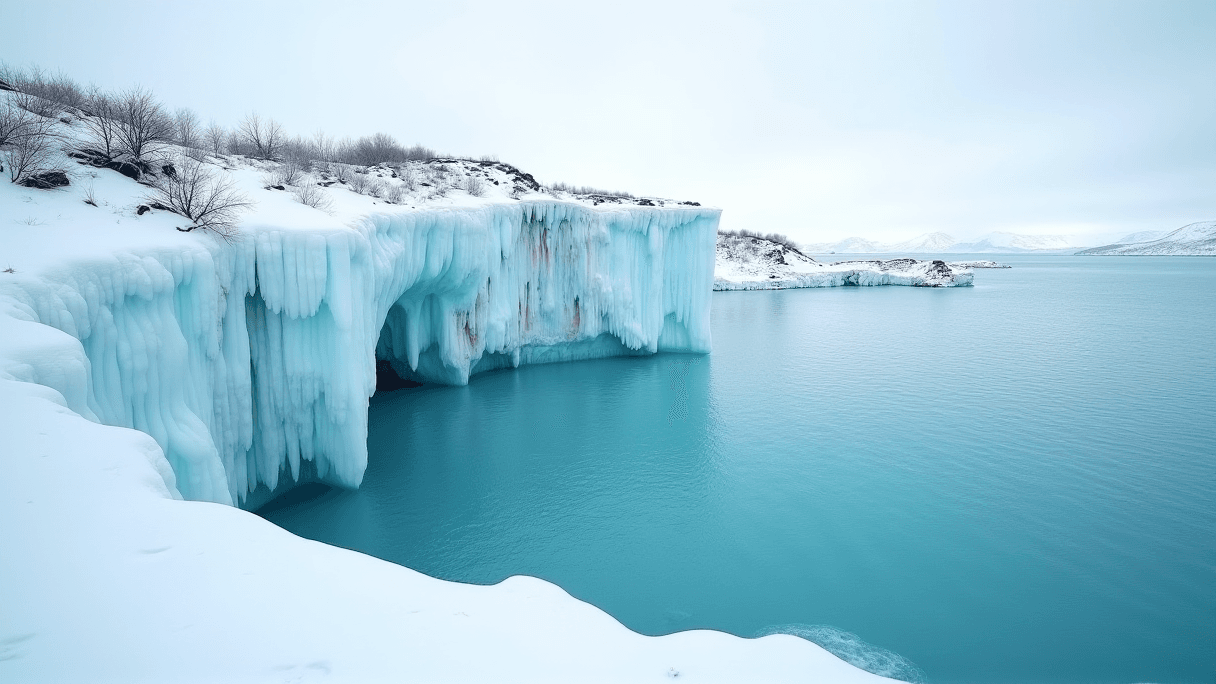
AI-generated image · Bay Street Wire
The disappearance of the Milne Fiord lake marks the end of a 4,000-year era and the loss of a unique Arctic ecosystem.
Scientists have confirmed the disappearance of Canada's final epishelf lake, a rare body of water where freshwater floated atop saltwater. As CBC News first reported, the Milne Fiord epishelf lake on Ellesmere Island in Nunavut vanished into the ocean in 2020 after the Milne Ice Shelf collapsed.
Jérémie Bonneau, an assistant professor at Laval University and lead author of a study published in the journal *Scientific Reports*, stated that the loss of the lake represents a "regime shift" and the end of a 4,000-year era. The lake had been protected for millennia by the Milne Ice Shelf, which acted as a dam that prevented freshwater from mixing with the Arctic Ocean.
The lake supported a highly specialized environment. Analysis by Mary Thaler and colleagues at Laval University revealed distinct communities of viruses, bacteria, and eukaryotic microbes in the freshwater and saltwater layers, with some species never before reported in the Arctic. Additionally, Andrew Hamilton, a University of Alberta researcher, used a remotely operated vehicle to document a flourishing ecosystem of sea stars, scallops, and sea anemones in the ice channel fed by the lake's nutrients.
Bonneau noted that the total disappearance of this once-common phenomenon highlights how a warming climate is fundamentally transforming the Arctic.