
The Unsung Hero of the AI Boom: Why Solid-State Transformers are the Real Grid Unlock

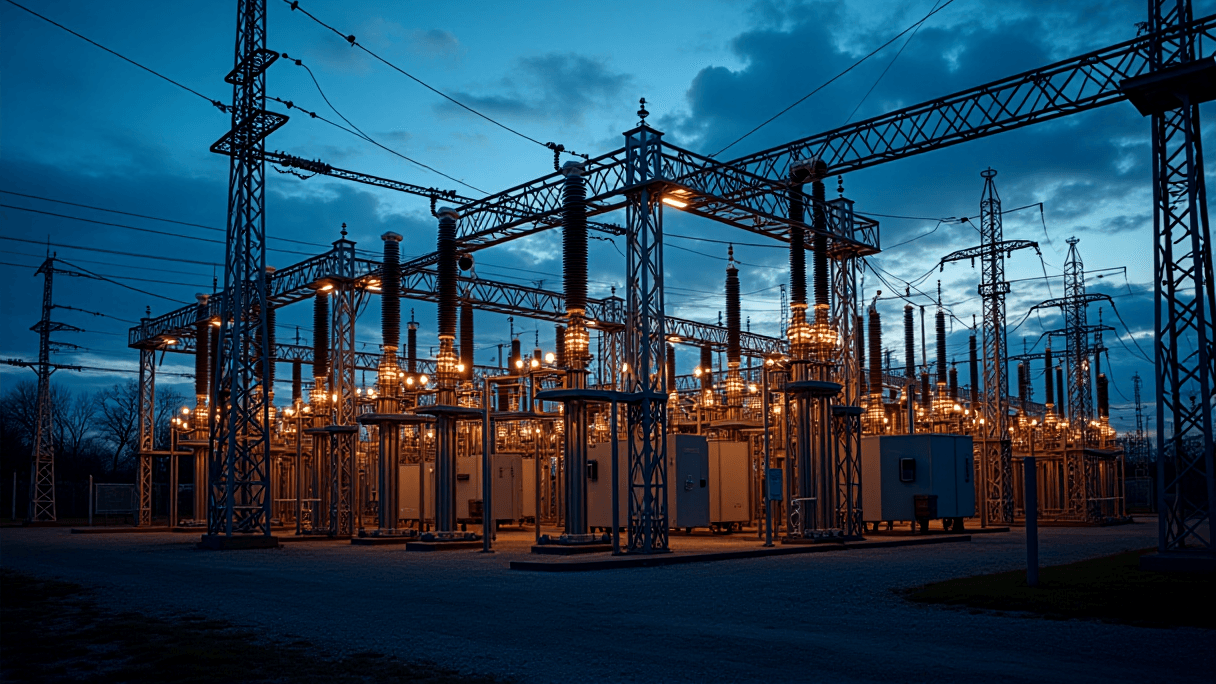
AI-generated image · Bay Street Wire
Opinion: While AI chips get the glory, the actual bottleneck for data center expansion is 19th-century hardware. Solid-state transformers are the pragmatic solution we need.
In the rush to build the future of artificial intelligence, the conversation usually centers on the cutting-edge: the chips, the models, and the massive server racks. But as a tech columnist focused on deployment, I've learned that the most sophisticated software in the world is useless if the hardware delivering the power is stuck in the 1880s.
As reported by Ars Technica, the surge in electricity demand driven by AI data centers is straining U.S. power grids. The bottleneck isn't just the amount of energy available, but the physical equipment used to move it. Current grids rely on conventional transformers—massive, custom-built devices consisting of copper wire coils wound around steel cores. Because these are painstakingly assembled by hand and cannot be mass-manufactured, utility companies are facing delivery waits of several years. This delay doesn't just stall the expansion needed for AI; it halts the critical replacement of aging infrastructure.
In my view, the only viable path forward is the rapid adoption of solid-state transformers (SSTs). Unlike their industrial-age predecessors, SSTs utilize high-frequency semiconductor switching and materials like silicon carbide. This shift transforms the transformer from a custom-built piece of heavy machinery into an electronics device that can be mass-manufactured.
For the AI industry, this is more than just a supply chain fix; it is a fundamental architectural upgrade. Srdjan Lukic, a professor of electrical and computer engineering at North Carolina State University, told Ars Technica that data centers are currently the "killer application" for this technology. Because modern AI server racks increasingly rely on direct current (DC) power, SSTs provide a critical efficiency gain: they can convert alternating current (AC) from the grid directly into DC power.
As Lukic describes it, the SST acts as a "magic box" that removes the need for separate electrical devices to handle AC/DC conversion, eliminating interoperability challenges and reducing the amount of wiring and trenching required. By consolidating these functions, developers can reduce their reliance on copper and free up valuable physical space.
We are already seeing the capital markets bet on this shift. Ars Technica reports that companies including DG Matrix, Heron Power, and Amperesand have collectively raised over $280 million in the past year to commercialize this tech.
While the AI surge is the primary catalyst, the ripple effects of SST deployment could be transformative for the broader energy transition. The same AC-to-DC conversion benefits apply to electric vehicle (EV) charging. For instance, a collaboration between the New York Power Authority and NC State—tested at the Electric Power Research Institute's site in Lenox, Massachusetts—demonstrated a 1 MW solid-state transformer capable of handling EV battery charging.
If we can move transformer production from a few specialized shops to a broader electronics manufacturing base, we solve a systemic vulnerability in the U.S. grid. The AI boom is providing the necessary investment to kill off a 140-year-old design. It is time we stop treating power delivery as an afterthought and embrace the semiconductor-driven hardware that will actually make the AI era sustainable.