
The Silence of the 2030 Target: Ottawa's Climate Denial is a Betrayal of Ontario

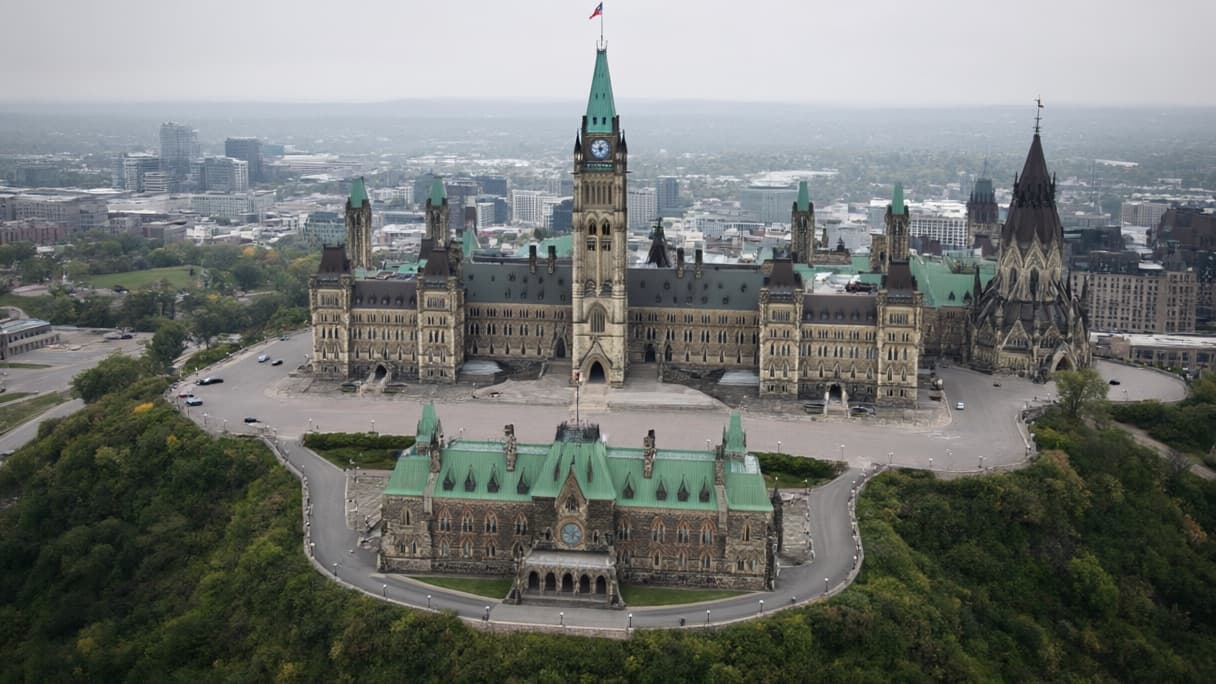
AI-generated image · Bay Street Wire
As the Carney government rolls back environmental policies and avoids admitting it will miss Paris Agreement goals, the impact is felt most acutely in our urban centers and rural heartlands.
### Opinion: A Betrayal of Trust
For those of us in Ontario, the climate crisis isn't a theoretical projection—it is the reality of intensifying wildfires in our rural north and the threat of flash flooding in our urban corridors. As CityNews Toronto first reported, the federal government's refusal to admit it has failed to meet its own benchmarks isn't just a diplomatic failure on the world stage; it is a betrayal of the specific, urgent commitments promised to the people of this province. By clinging to a vague 2050 horizon while ignoring the immediate 2030 failure, Ottawa is effectively choosing to leave us with a more dangerous environment.
***
### The Gap Between Rhetoric and Reality
According to reporting from CityNews Toronto, the federal government under Prime Minister Mark Carney is facing mounting evidence that Canada will not meet its emissions targets under the Paris climate accord. The accord required Canada to reduce emissions by 40 to 45 per cent of 2005 levels by 2030. However, the government's own emissions reductions progress report, published a year ago, indicated that even in a best-case scenario, the country would only achieve a 28 per cent reduction.
CityNews Toronto reports that the situation has worsened since those projections. Prime Minister Mark Carney stated in June that emissions would be higher in the coming years than previously estimated. This decline in performance follows a series of climate policy rollbacks implemented by the Carney government over the last year. One notable example is the scrapping of the electric vehicle sales mandate and the delay of more stringent tailpipe emissions standards, which are now not expected to take effect until at least 2029.
### The Silence of the Environment Minister
Despite these clear indicators, Environment Minister Julie Dabrusin has maintained that Canada remains committed to its Paris commitments. While attending a United Nations climate conference in Turkey last week, Dabrusin was publicly criticized by two of her predecessors, as reported by CityNews Toronto. When questioned directly on whether this commitment included the 2030 target, Dabrusin did not provide an answer.
In a statement provided to CityNews Toronto, Amy Falkner, press secretary to Minister Dabrusin, stated that Canada is "committed to its Paris agreement of achieving net-zero by 2050." The statement notably avoided addressing the specific 2030 target. Falkner emphasized a focus on "results that unite Canadians," citing mass electrification, low-carbon economy investments, and clean energy projects. Falkner further noted that Canada will report on its 2030 target to the United Nations Climate Change Secretariat next month and will continue reporting under the Net-Zero Accountability Act in December 2027.
### A Lack of Accountability
Critics argue that the government's refusal to acknowledge the failure of the 2030 target is a calculated move. Keith Stewart, a senior energy strategist with Greenpeace Canada, told CityNews Toronto that the government is likely afraid to admit the failure because it highlights a choice to allow flooding and wildfires to worsen. Stewart characterized Julie Dabrusin as the "worst environment minister in Canada's history," claiming the current administration has rolled back policies more aggressively than the government of Stephen Harper, which had set a target of 30 per cent.
This lack of accountability extends to the legislative framework. CityNews Toronto reports that during a House of Commons environment committee meeting on Thursday, B.C. Conservative MP Ellis Ross questioned the utility of the Net-Zero Accountability Act. Ross argued that since the government is falling short of targets and intends to expand emissions, the act lacks meaning. Elsa Da Costa, the interim environment commissioner, defended the act as an "important tool" for holding the government to account, though the act contains no fines or penalties for missing or abandoning climate targets.
### Political and Legal Fallout
The disconnect between government claims and environmental reality is beginning to manifest in public opinion. CityNews Toronto cites a July online poll of 1,770 Canadians conducted by the Angus Reid Institute, which found that climate change was the top issue for 21 per cent of respondents. The poll further suggested that one in six Liberal voters may be moving toward the NDP due to the Liberals' climate record, with climate being the primary concern for half of NDP supporters. (The Canadian Research Insights Council noted that such online surveys cannot be assigned a margin of error as they do not use random sampling).
Beyond the ballot box, the government's trajectory is facing legal scrutiny. CityNews Toronto reports that the federal government is currently fighting a lawsuit brought by a group of climate advocates regarding Canada's emissions trajectory.