
Opinion: The Legal Blueprint: How a Landmark Youth Trial Signals a New Era of Climate Accountability

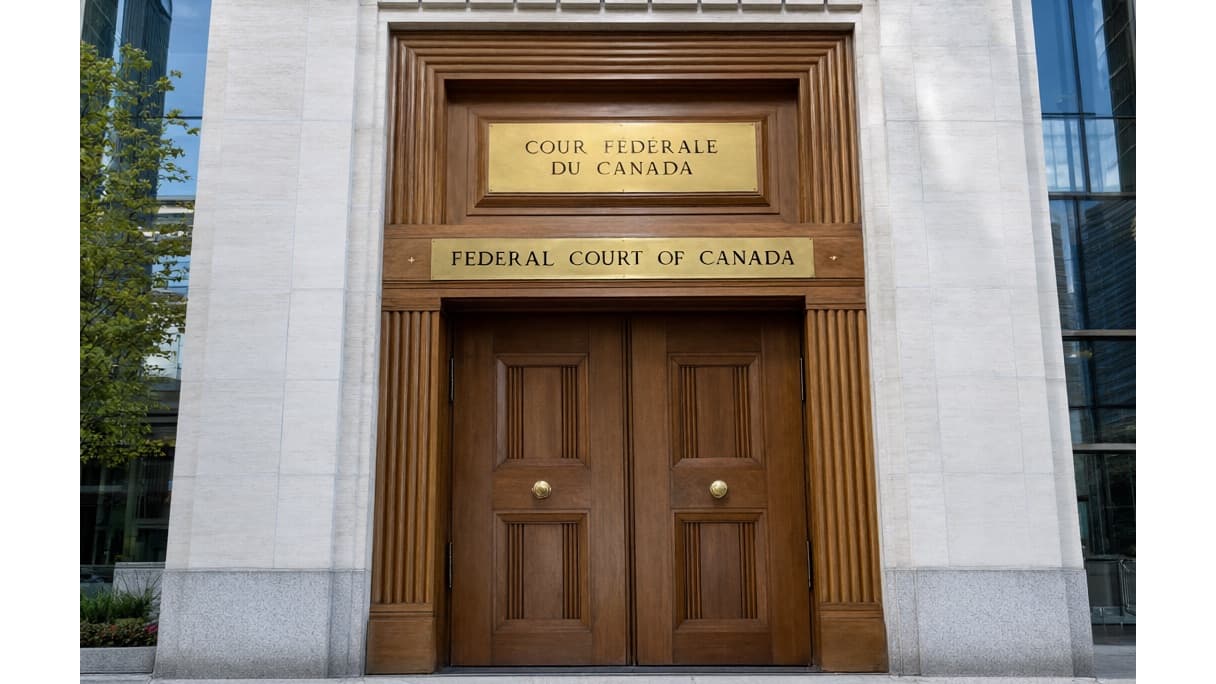
AI-generated image · Bay Street Wire
As the first full climate trial in Canadian history concludes, the outcome of La Rose et al. v Canada could reshape the legal landscape for residents facing escalating environmental costs in Ontario and beyond.
For residents across Ontario, the escalating costs of climate change are no longer theoretical—they are hitting our backyards. While the federal government often points to Canada's small share of global emissions as a shield against liability, a landmark legal battle in Vancouver is attempting to dismantle that defense and establish a new standard for governmental responsibility.
As CBC News first reported, witness testimony has just wrapped up in the Federal Court for *La Rose et al. v Canada*. This case, brought in 2019 by 15 youth applicants, marks the first time a climate lawsuit in Canada has reached a full trial. The plaintiffs argue that the federal government's failure to adequately reduce carbon emissions is a violation of their constitutional rights.
While the trial took place in British Columbia, its implications are national. According to Fraser Thomson, a lawyer with the environmental law charity Ecojustice, climate lawsuits in Canada have been "building off each other," with successful legal arguments in one case paving the way for others. This cumulative effect is critical for those of us in Ontario, where the fight for climate accountability is already well underway.
CBC News notes that a youth-led lawsuit in Ontario, *Mathur et al. v Ontario*, was filed in 2019 following the decision by Premier Doug Ford's government to weaken provincial emissions targets. The plaintiffs in that case alleged that these actions violated their constitutional rights to equality, as well as life, liberty, and security. Although the case was initially dismissed, an appeal court ordered a full hearing. However, the proceedings were put on hold after the Ford government repealed the law that required the province to set emissions targets. Thomson indicated he hopes to return to court in early 2027 to seek clarity on the matter.
Beyond the provincial level, the federal government is facing further scrutiny. Thomson is also representing plaintiffs in *Maltais et al. v Canada*, which challenges the government's adherence to its own Net-Zero Emissions Accountability Act. Thomson told CBC News that this case presents a more straightforward legal argument because the law explicitly requires the government to have a plan to set and meet emissions targets. A judge recently allowed this case to proceed, rejecting a government request for dismissal.
The defense in the *La Rose* case highlighted the complexity of these battles. CBC News reports that government witnesses, including University of Alberta energy and environmental economist Andrew Leach, testified that Canada's individual impact on global warming is limited, even as a major fossil fuel producer. Leach testified that stopping oil exports to the U.S. would not necessarily mean those emissions would not occur elsewhere.
Despite these defenses, legal advocates believe the tide is turning. Andrea Rodgers, deputy director at the legal non-profit Our Children's Trust, told CBC News that the *La Rose* case provides an opportunity for Canadian courts to prioritize and protect the interests of youth. As more courts acknowledge the "existential threat" of climate change, the outcome of these landmark trials will likely dictate whether the federal and provincial governments can be held legally accountable for the environmental disasters impacting Ontario residents.