
The November Mirage: Why Toronto's Erratic Warmth is a Warning, Not a Gift

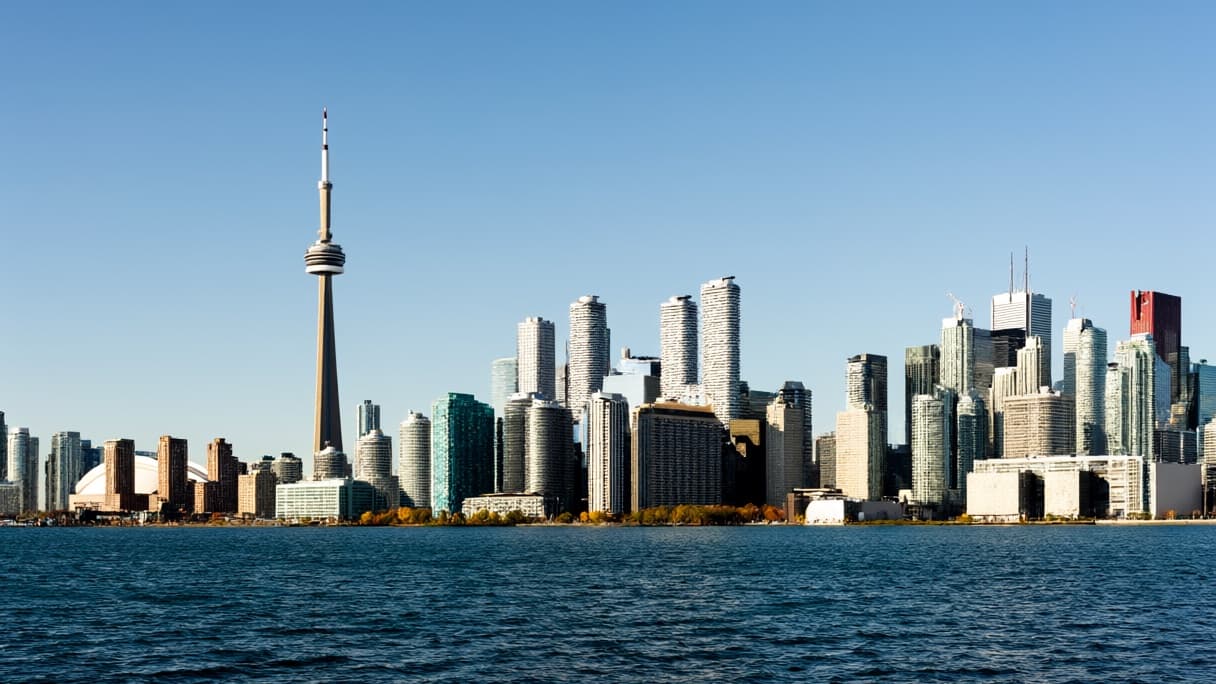
AI-generated image · Bay Street Wire
Opinion: The dramatic swing from 15-degree afternoons to freezing flurries in a matter of days reveals a destabilized seasonal rhythm in the GTA.
For many in the Greater Toronto Area, the middle of November has felt like a reprieve. We have spent the last several days basking in a stretch of weather that feels fundamentally out of place for the season. But as any resident of this city knows, the weather in southern Ontario is rarely a gift without a price.
As I look at the current forecasts, I see more than just a temporary spike in temperature; I see a stark reminder of how climate instability is shredding our traditional seasonal markers. We are no longer transitioning smoothly from the gold of autumn into the white of winter. Instead, we are experiencing violent oscillations that leave us—and our environment—whiplashed.
According to reporting from CBC Toronto, the city has been enjoying an unusually warm stretch. On Thursday, November 19, temperatures in Toronto were expected to hit 15 degrees C. To put that in perspective, CBC Toronto notes that the historical average high for November 19 is approximately 7.5 degrees C. We aren't just slightly above average; we are operating in a weather pattern that is nearly double the historical norm for this date.
CityNews Toronto further details this anomaly, with Chief Meteorologist Natasha Ramsahai reporting that temperatures between 14 C and 15 C persisted through the latter part of the work week, bolstered by high pressure and sunshine. On the surface, this feels like a win. It is the kind of weather that tempts us to leave the heavy coats in the closet and imagine a prolonged autumn.
But the cruelty of this instability lies in the speed of the reversal. The very same systems that brought us this warmth are now clearing the way for a dramatic collapse in temperature. CityNews Toronto reports that a cold front arriving Sunday will trigger a significant cooldown. While Sunday afternoon may still see highs between 11 C and 12 C, the shift will be abrupt.
By Monday, November 23, the mirage vanishes. Environment Canada, as reported by CBC Toronto, forecasts a dip to -4 C on Monday with a chance of flurries. CityNews Toronto provides even more granular detail on this crash: Monday morning may start around 9 C, but temperatures are expected to fall steadily throughout the day, reaching a high of only 4 C and a low of -4 C. The instability continues into Tuesday, November 24, with a forecast high of near 2 C and an overnight low of -3 C.
This is the volatility that defines our current era. We move from 15-degree sunshine to -4 degree flurries in a window of less than a week. This isn't a gradual cooling; it is a meteorological cliff.
When our seasonal markers are shredded this way, the impact is more than just a matter of wardrobe. As Natasha Ramsahai noted via CityNews Toronto, residents who relied on lighter jackets through much of the month will suddenly find themselves needing heavy winter outerwear by Monday and Tuesday. While the human cost is a matter of convenience and comfort, the ecological cost of these erratic swings is far more profound. Nature relies on predictable cues to prepare for winter; when those cues are replaced by 15-degree November afternoons followed by immediate freezes, the biological clock of our local environment is thrown into chaos.
We cannot afford to view these warm stretches as "pleasant" anomalies. They are symptoms of a system that has lost its equilibrium. The fact that we can swing from near-spring temperatures to freezing conditions in the span of a few days is a signal that the stability we once took for granted in the GTA is gone.
As we prepare for the flurries and the freezing wind chills predicted for early next week, let us remember that the warmth of the past few days was not a sign of a mild winter to come. It was a reminder that our climate is becoming increasingly erratic, and the traditional rhythms of the Ontario seasons are being replaced by a volatile unpredictability that we are only beginning to understand.