
The Neutron Delay: Rocket Lab's Valuation Now Hinges on Medium-Lift Viability

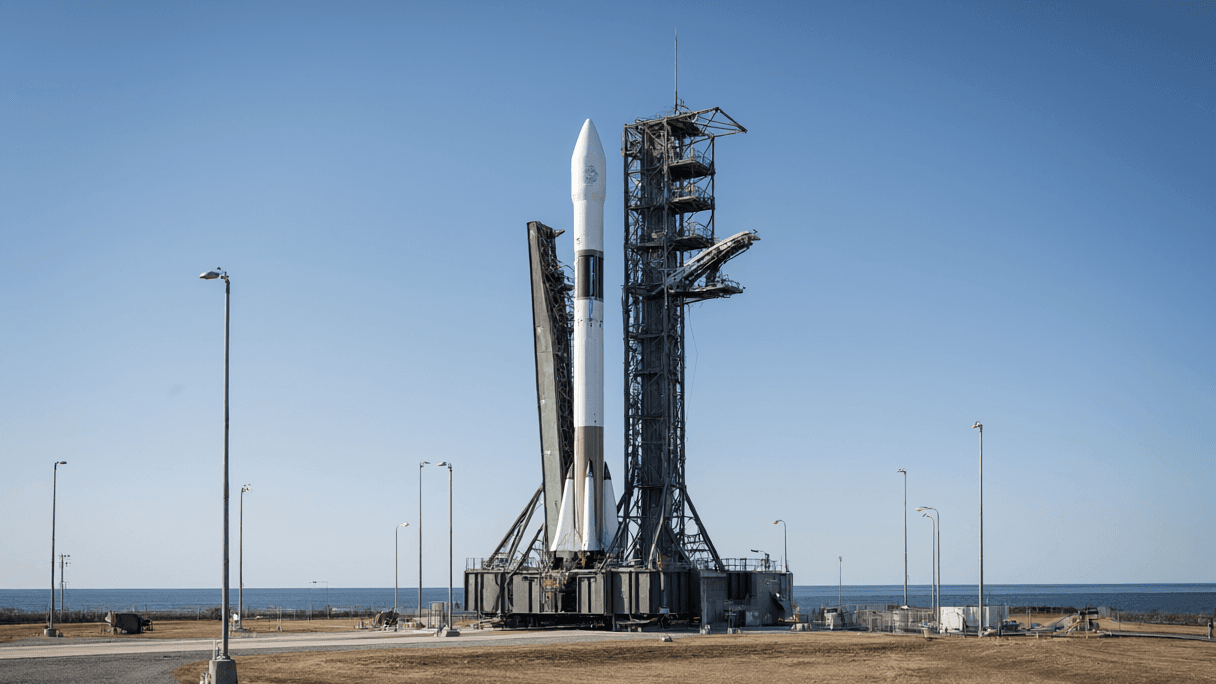
AI-generated image · Bay Street Wire
Opinion: By pushing the Neutron launch to 2027, Rocket Lab has shifted the goalposts for its market valuation, moving the needle from small-sat dominance to a high-stakes bet on medium-lift execution.
In the cold calculus of aerospace valuations, timing is a fundamental driver of enterprise value. When Rocket Lab (Nasdaq: RKLB) announced, as first reported by the Financial Post, that it had adjusted the target launch timing for its Neutron rocket to 2027, it signaled a critical inflection point in its corporate trajectory.
*Opinion: In my view, this delay transforms the investment thesis for Rocket Lab. The company is no longer being valued simply as the gold standard for small-lift services—a domain it has already mastered with the Electron and HASTE rockets—but as a speculative contender in the medium-lift arena. The 2027 timeline creates a valuation gap that can only be filled by proven viability in a more competitive tier of the launch market.*
According to the Financial Post, Rocket Lab has already established itself as an end-to-end space company, with satellites and components powering over 1,700 missions in Earth orbit and deep-space missions to Mars and the Moon. While this legacy provides a safety net, the growth premium is now tied almost exclusively to Neutron, a reusable medium-lift rocket designed for constellation deployment and missile defense.
By extending the timeline to 2027, Rocket Lab is navigating the dangerous leap from a niche leader to a broad-market competitor. For those tracking the company through a deals lens, the question is no longer whether Rocket Lab can build a small rocket, but whether it can survive the wait for a medium-lift one.