
Opinion: The Doug Field Effect: Why Mind Robotics is Primed for a Massive Capital Event

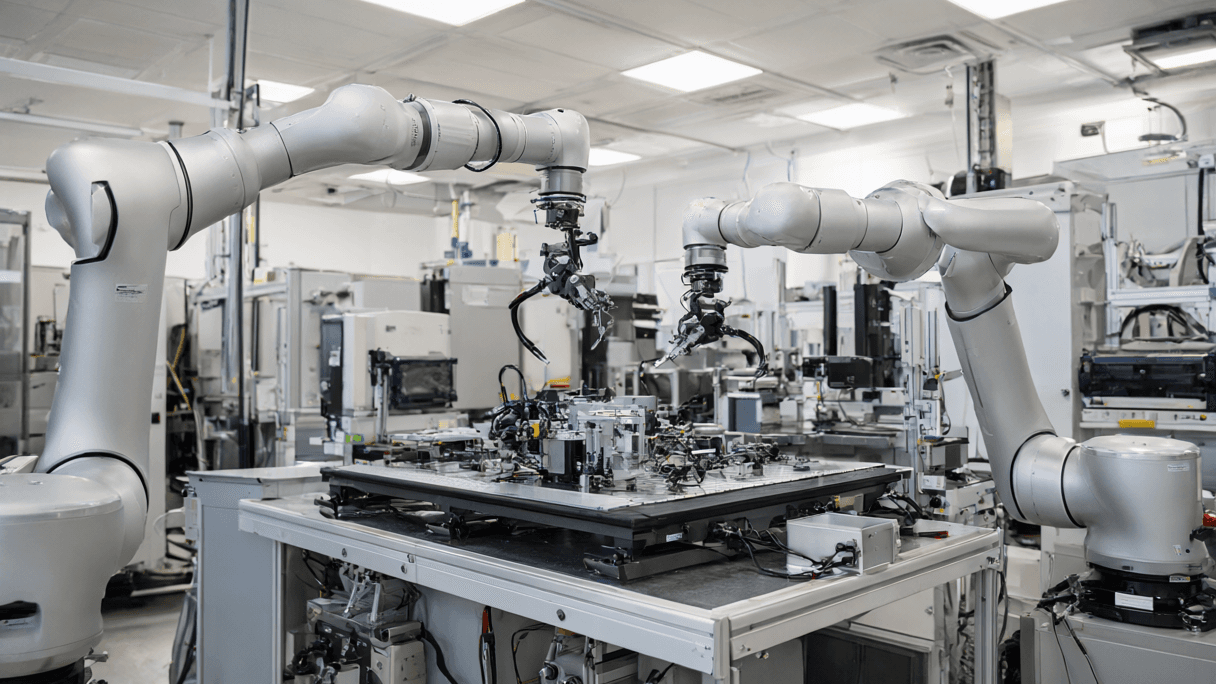
AI-generated image · Bay Street Wire
Opinion: The appointment of a heavy-hitting industry veteran to lead RJ Scaringe’s robotics spinoff signals a strategic shift toward aggressive scaling and a potential Rivian consolidation.
In the world of high-stakes venture, the hiring of a president is rarely just about filling a seat; it is a signal of intent. The announcement that Doug Field has joined Mind Robotics as president is a textbook example of this. By bringing in a leader with a pedigree that spans the most influential hardware and software efforts of the last decade, Mind Robotics is no longer just a secretive experiment—it is a venture positioning itself for a major liquidity or scaling event.
**Opinion: The Talent Consolidation Play**
From a deals perspective, Field is the ultimate 'scaling' asset. As reported by TechCrunch, Field was employee No. 1 at Segway and later served as the senior vice president of engineering at Tesla, where he was instrumental in navigating the Model 3 through its notorious 'production hell.' He further solidified his reputation as a leader of complex, moonshot initiatives as the de facto head of Apple's Project Titan—the autonomous electric car effort that The Verge notes was ultimately unsuccessful and canceled in 2024. Most recently, Field ran the electric vehicle and software division at Ford until April.
When you combine Field's history of managing massive engineering hurdles with the current state of Mind Robotics, a clear pattern emerges. The startup, founded in 2025 by Rivian CEO RJ Scaringe, is currently in a phase of aggressive expansion. According to The Verge, the company is on a hiring spree with 32 open positions. Field is not being brought in to tinker; he is being brought in to build. As TechCrunch reports, Field will now handle the day-to-day operations, including engineering, product, and operations, freeing Scaringe to maintain his role as chairman and acting CEO.
**The Capital Catalyst**
Mind Robotics has already demonstrated an incredible ability to attract top-tier capital. TechCrunch reports that the venture has raised over $1 billion from a powerhouse group of investors, including Andreessen Horowitz, Accel, Kleiner Perkins, Eclipse, and the venture arms of Salesforce and Volkswagen.
However, in the current climate of 'physical AI' hype, a billion dollars is often just the entry fee for industrial-scale robotics. By installing Field—a man who has operated at the highest levels of Ford, Tesla, and Apple—Mind Robotics is effectively 'institutionalizing' its leadership. This move likely serves two purposes: it provides the operational credibility necessary to trigger an even more aggressive capital raise, or it prepares the company for a strategic exit.
**The Rivian Connection: Strategic Synergy or Eventual Absorption?**
While RJ Scaringe has stated his desire to keep Mind Robotics separate from Rivian—unlike the integrated approach taken by Tesla—the two entities are inextricably linked. The Verge reports that Rivian owns equity in the startup, and TechCrunch specifies that as of June 30, 2026, Rivian owned approximately one-third of Mind Robotics.
Beyond the cap table, the operational synergies are profound. Mind Robotics is utilizing AI training data from Rivian, and the robots are being tested within Rivian's factories. Rivian is not only an investor but also the startup's first customer. Field himself highlighted this 'unique advantage' in a statement, noting the ability to learn inside a high-volume factory from day one.
From a strategic lens, this setup looks less like a permanent separation and more like a controlled incubation. By keeping Mind Robotics as a standalone entity, Scaringe can attract specialized venture capital (like the $1 billion already raised) and talent that might be hesitant to join a legacy automotive structure. However, once Field scales the technology to a point of industrial viability, the logic for a full acquisition by Rivian becomes overwhelming. Integrating a fully functional, AI-driven robotics stack into Rivian’s manufacturing process would provide a competitive moat that few other EV makers could match.
**The Industrial AI Bet**
It is also worth noting the specific direction Mind Robotics is taking. While competitors like Hyundai and Tesla are pursuing humanoid designs, Scaringe told TechCrunch that Mind Robotics will not attempt to mimic all human biomechanics. Instead, the focus is on 'universally capable robots' designed for industrial work, emphasizing 'dexterity and physical reasoning,' according to The Verge.
This pragmatic approach—avoiding the 'humanoid' trap in favor of industrial utility—combined with Field's track record of delivering successful products, suggests that Mind Robotics is prioritizing a viable commercial product over a PR stunt.
In summary, the appointment of Doug Field is the catalyst that transforms Mind Robotics from a well-funded startup into a formidable industrial contender. Whether this leads to a massive new funding round or a strategic reintegration into Rivian, one thing is clear: the 'secretive' phase of Mind Robotics is over. The scaling phase has begun.