
Sovereign Compute is the Only Way to Save Canada's AI Startups from Being Priced Out

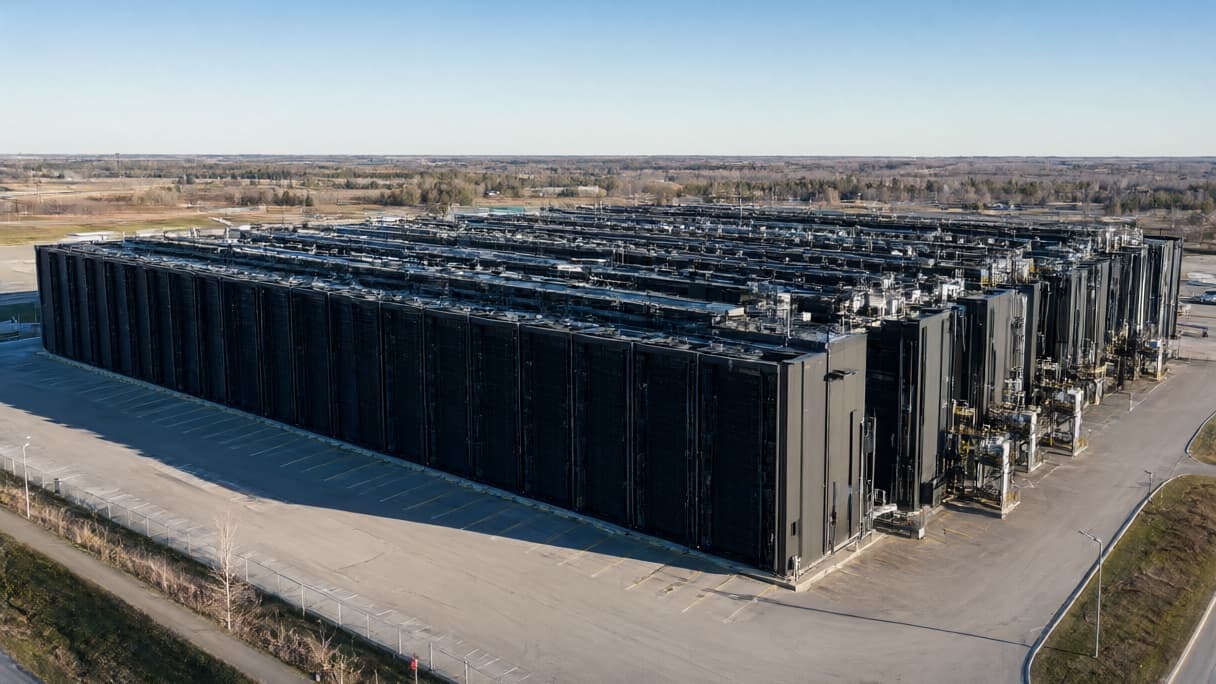
AI-generated image · Bay Street Wire
Opinion: The federal government's 500-MW compute pledge isn't a vanity project—it's a necessary intervention to stop domestic firms from being crowded out by global giants.
In the high-stakes race for artificial intelligence, compute is the new oil. For Canadian startups—including those tackling the urgent challenges of climate and clean tech—access to this processing power is no longer just a competitive advantage; it is a requirement for survival.
As a columnist following the deployment of new technologies, I view the federal government's recent commitment to enable 500 megawatts (MW) of sovereign AI compute—as first reported by BetaKit—not as a bureaucratic vanity project, but as essential infrastructure. Without it, our most innovative domestic firms risk being permanently sidelined by a market that currently favors the deepest pockets over the best ideas.
As reported by BetaKit, the government plans to use financial tools, including offtake agreements and backstops, to mobilize private capital. This is a pragmatic approach. According to Sean Mullin, a senior fellow at the University of Toronto’s Munk School of Global Affairs & Public Policy and former lead economic advisor to the Prime Minister, this strategy targets a specific "chicken-and-egg, Catch-22 problem."
Currently, data center developers require massive commitments to secure financing. However, because demand is so extreme, these developers can simply "pick of the litter" when it comes to buyers. Naturally, they prefer established foreign firms with strong credit ratings over nascent, cash-strapped Canadian startups. This creates a market failure where domestic companies are effectively crowded out of their own backyard.
Ali Asaria, co-founder and CEO of Transformer Lab, described the current state of GPU access to BetaKit as "close to impossible," noting that almost no capacity is available at any price. Asaria highlighted a brutal reality for startups: vendors often demand three-year commitments with upfront payments of 25 to 50 percent. Even after multimillion-dollar deposits, hardware may not be online for six months. For a startup without a massive balance sheet, this is, in Asaria's words, a "non-starter."
Adding to the urgency are shifting political winds in the United States. BetaKit reports that following the U.S. midterm elections, where Democrats took control of the House and Senate and voters approved various data center moratoriums, experts predict a slowdown and cost increase for U.S. construction. This makes Canada an attractive alternative, with firms like Microsoft, Meta, and Anthropic already seeking processing power here. While this influx of investment is positive, it intensifies the risk that domestic startups will be pushed further down the priority list.
We must recognize that 500 MW is a significant but modest start. A Boston Consulting Group report cited by BetaKit indicates Canada currently has 300 MW of AI data center capacity. While Bell is working to build a massive 1.2-GW facility in Saskatchewan, the federal government's targeted intervention is what ensures that capacity is actually accessible to smaller players.
As Jaxson Khan, CEO of Aperture AI and senior fellow at the Munk School, told BetaKit, if Canada sets the terms of this compute strategy correctly, it could become a "strong competitive advantage." Ideogram CEO and co-founder Mohammad Norouzi echoed this, telling BetaKit that expanding home-grown capacity is a "significant step" and that his company would welcome the chance to move a meaningful portion of its compute spending to Canada.
Finance Minister François-Philippe Champagne has labeled AI infrastructure as a project that will "power our future." To ensure that future includes Canadian-owned innovation, we cannot leave compute access to the whims of the open market. Sovereign compute is the only way to ensure our startups aren't just spectators in the AI revolution, but architects of it.