
Canada Pledges 500 MW of Sovereign AI Compute to Combat Startup Crowding

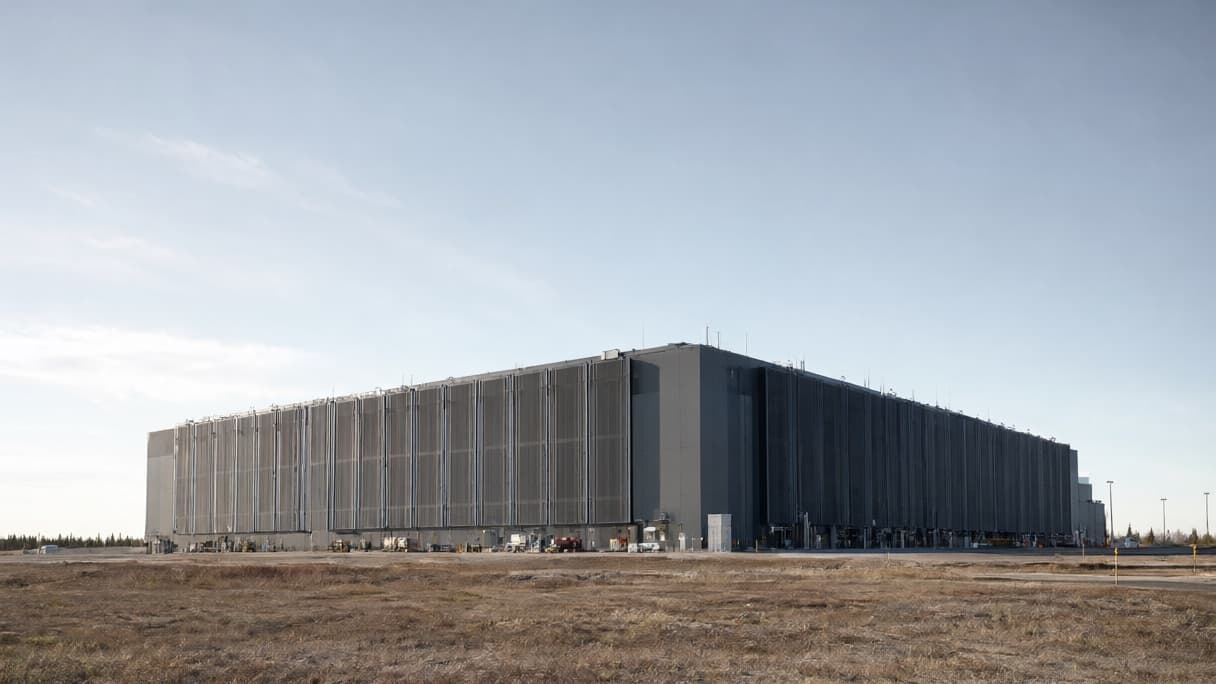
AI-generated image · Bay Street Wire
The federal government aims to use financial backstops and offtake agreements to ensure domestic AI firms aren't priced out by global hyperscalers.
As BetaKit first reported, the Government of Canada has committed to providing Canadian AI companies with access to 500 megawatts (MW) of sovereign AI compute. The federal government plans to utilize financial tools, including offtake agreements and backstops, to mobilize private capital and expand the nation's computing capacity.
This intervention addresses a market failure where smaller domestic startups are crowded out of the data center market. Sean Mullin, a senior fellow at the University of Toronto’s Munk School of Global Affairs & Public Policy and former lead economic advisor to the Prime Minister, told BetaKit that developers often prefer selling compute to established foreign firms with stronger credit ratings over cash-strapped Canadian startups, creating a “chicken-and-egg, Catch-22 problem."
Ali Asaria, co-founder and CEO of Transformer Lab, told BetaKit that securing graphics processing units is currently “near impossible,” noting that vendors often require multi-year commitments and upfront payments of 25% to 50%—terms Asaria called a “non-starter" for startups without massive balance sheets.
According to a Boston Consulting Group report cited by BetaKit, Canada currently has 300 MW of AI data center capacity. While the 500 MW target is a significant increase, Mullin suggested it may only be a small fraction of total demand by 2028 or 2029. Other private expansions are underway, including a project by Bell to build a 1.2-gigawatt (GW) data center in Saskatchewan.
The urgency is heightened by political shifts in the U.S. BetaKit reports that following U.S. midterm elections where Democrats took control of the House and Senate and voters approved data center moratoriums, experts predict increased construction costs and project slowdowns south of the border. Consequently, firms like Microsoft, Meta, and Anthropic have already looked to Canada for processing power.
Finance Minister François-Philippe Champagne highlighted AI infrastructure in his budget speech as a critical driver for the future. Jaxson Khan, CEO of Aperture AI and senior fellow at the Munk School, told BetaKit that appropriately set terms for this expansion could provide a strong competitive advantage. Mohammad Norouzi, CEO and co-founder of Ideogram, added that Ideogram would seek to bring a meaningful portion of its compute spending to Canada.