
Sovereign Compute as the Great Equalizer: Canada's 500 MW Bet Against the AI Energy Monopoly

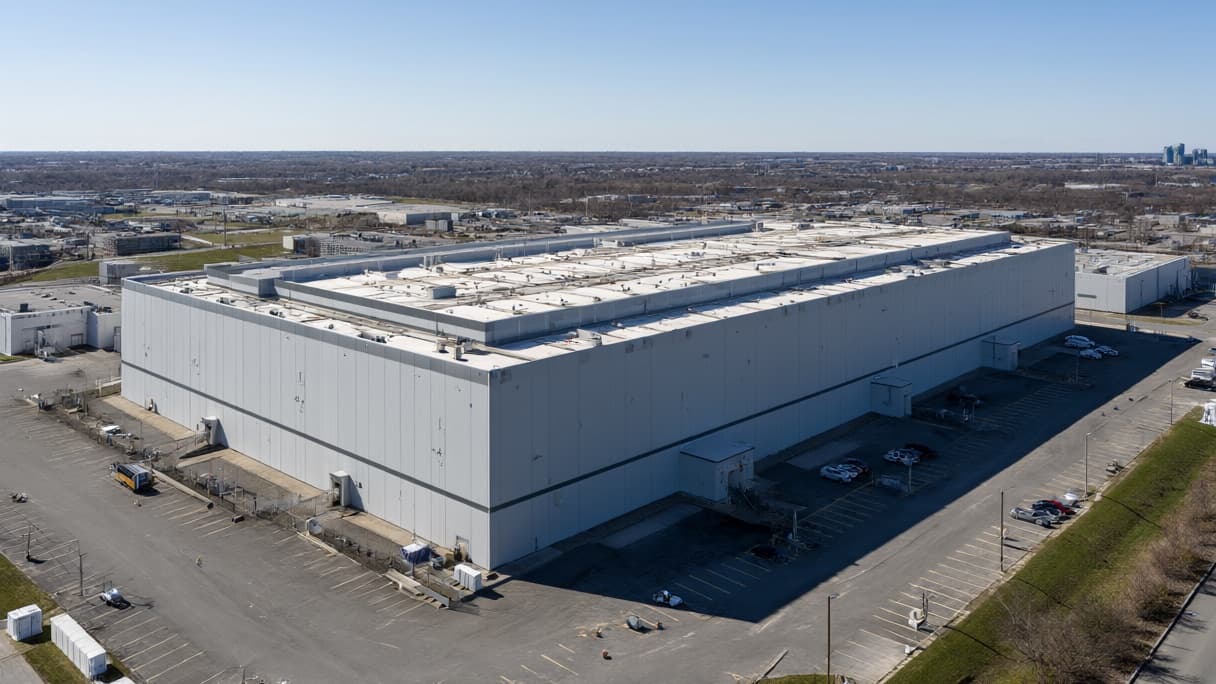
AI-generated image · Bay Street Wire
By leveraging backstops and offtake agreements to secure AI processing power, the federal government aims to prevent domestic startups from being crowded out by Big Tech's balance sheets.
### The Deployment Gap
In the race to scale artificial intelligence, the primary bottleneck is the physical infrastructure of compute. As BetaKit first reported, Ali Asaria, co-founder and CEO of Kitchener-Waterloo AI research startup Transformer Lab, describes current GPU access as "close to impossible." Asaria notes that vendors often demand three-year commitments with upfront payments of 25 to 50 percent, and even after multimillion-dollar deposits, hardware may take six months to come online—a "non-starter" for firms without massive capital reserves.
### The Sovereign Solution
To counter this, the Government of Canada has committed to enabling Canadian AI companies to access 500 megawatts (MW) of sovereign AI compute. Finance Minister François-Philippe Champagne identified AI infrastructure as a critical component that will "power our future."
The government intends to mobilize private capital through financial tools, including offtake agreements and backstops. Sean Mullin, a senior fellow at the University of Toronto’s Munk School of Global Affairs & Public Policy, told BetaKit this strategy addresses a "chicken-and-egg, Catch-22 problem" where data center developers prefer established foreign firms with strong credit over cash-strapped domestic startups.
### Scaling and Geopolitics
A Boston Consulting Group report cited by BetaKit indicates Canada currently has 300 MW of AI data center capacity. While the federal target is ambitious, private expansion is already underway; Bell aims to build the country's largest data center in Saskatchewan with a 1.2 gigawatt (GW) capacity.
External shifts in the U.S.—including recent midterm elections where Democrats took control of the House and Senate and voters approved data center moratoriums—may further accelerate this need. BetaKit reports that firms such as Microsoft, Meta, and Anthropic have already turned to Canada for processing power.
### Industry Outlook
Canadian AI entrepreneurs expressed cautious optimism. Ideogram co-founder and CEO Mohammad Norouzi told BetaKit that compute access is one of the biggest challenges for domestic companies, calling the pledge a "significant step" and expressing a desire to shift a "meaningful portion" of Ideogram's compute spending to Canada.