
Canada Pledges 500 MW of Sovereign AI Compute to Support Startups

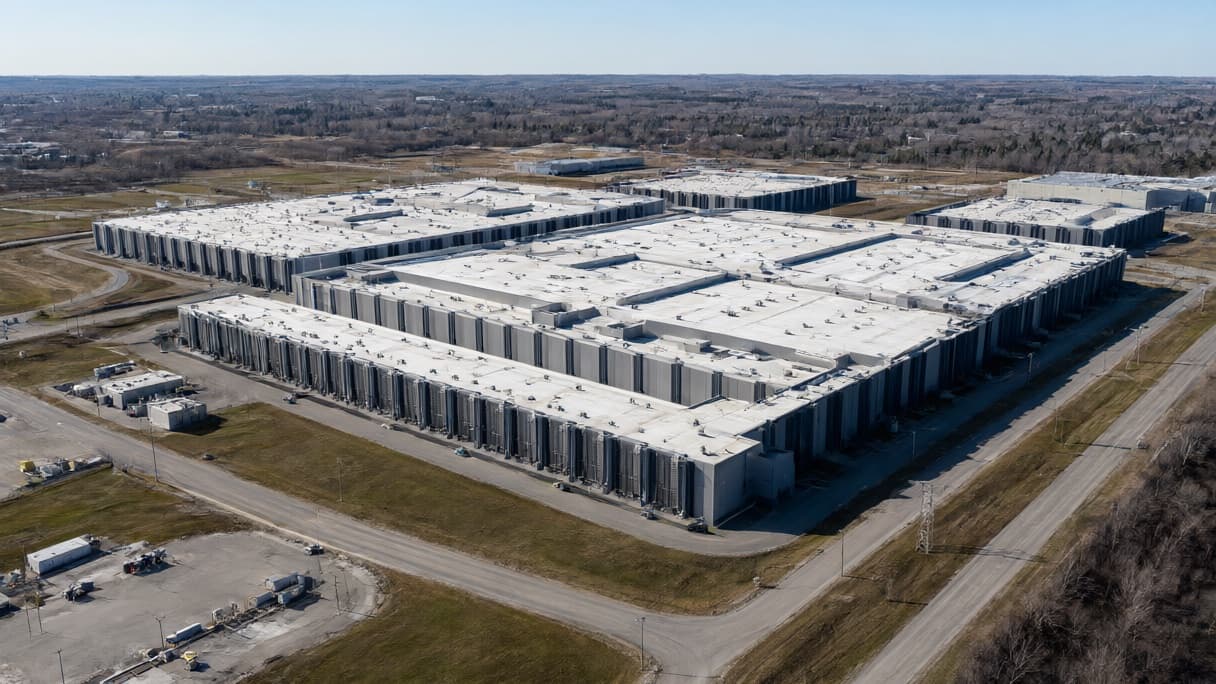
AI-generated image · Bay Street Wire
The federal government aims to mobilize private capital to expand data center capacity and prevent domestic AI firms from being crowded out by foreign giants.
The Government of Canada has announced a commitment to provide 500 megawatts (MW) of sovereign AI compute to help domestic companies access critical processing power, as BetaKit first reported.
Finance Minister François-Philippe Champagne identified AI infrastructure as a key driver for the country's future. To reach the 500 MW target, the federal government plans to use financial tools, including offtake agreements and backstops, to mobilize private capital. Sean Mullin, a senior fellow at the University of Toronto’s Munk School of Global Affairs & Public Policy and former lead economic advisor to the Prime Minister, told BetaKit that the initiative is designed to address a "market failure." He noted that data center developers often prefer established foreign firms with stronger credit ratings over cash-strapped Canadian startups, effectively crowding out domestic players.
According to a Boston Consulting Group report cited by BetaKit, Canada currently possesses 300 MW of AI data center capacity. While the government seeks to expand this, private sector growth is already underway; telecom giant Bell intends to construct a 1.2-gigawatt (GW) facility in Saskatchewan.
Industry leaders emphasize the urgency of the expansion. Ali Asaria, CEO and co-founder of Transformer Lab, told BetaKit that securing graphics processing units is currently "close to impossible," with vendors often requiring multi-year commitments and massive upfront deposits. Ideogram CEO and co-founder Mohammad Norouzi described access to compute as one of the primary hurdles for Canadian AI firms.
Jaxson Khan, CEO of Aperture AI and senior fellow at the Munk School, suggested that setting the right terms for this compute could provide a significant competitive advantage. Mullin added that the need for such intervention may intensify as shifting political winds and data center moratoriums in the U.S. drive firms like Microsoft, Meta, and Anthropic to seek processing power in Canada.