
Beyond the Handout: Why Data Center Growth Requires a New Community Compact

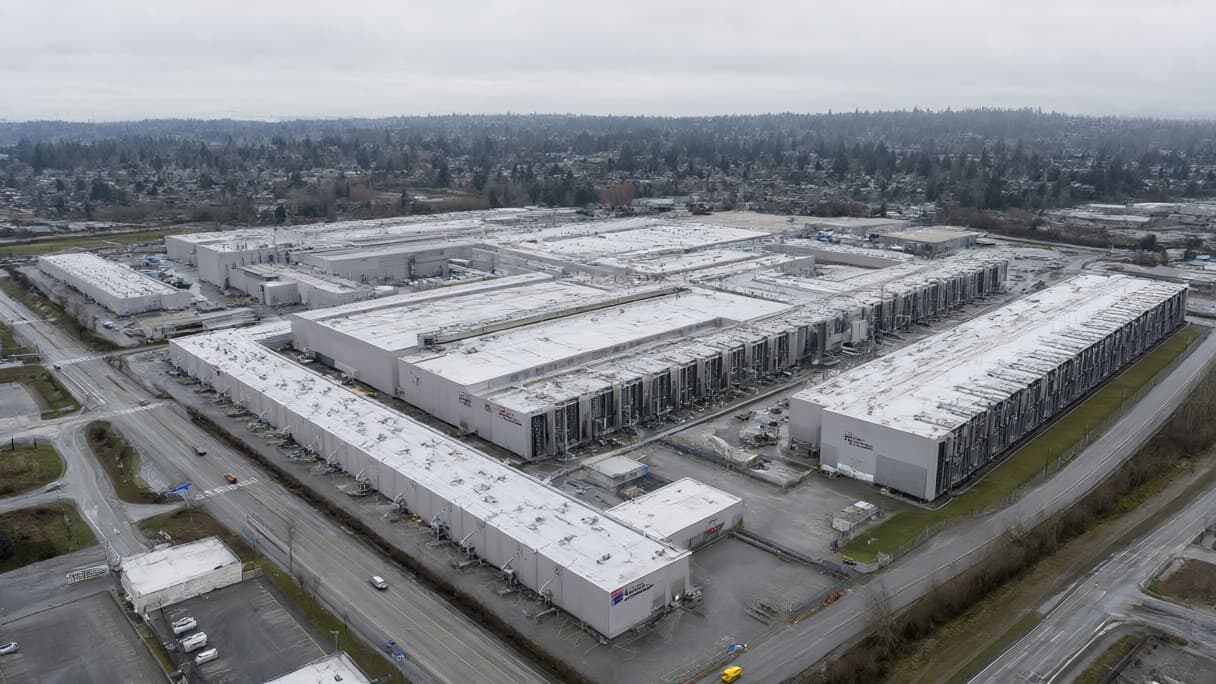
AI-generated image · Bay Street Wire
As local resistance halts projects and polls show widespread opposition, industry leaders argue that sustainable deployment depends on shifting from corporate concessions to genuine innovation.
The rush to build the infrastructure necessary for artificial intelligence is colliding with a growing wall of local resistance. As first reported by BetaKit, the friction is already manifesting in tangible losses; Telus recently withdrew from two planned data center projects in Vancouver due to a lack of local support.
This backlash is not an isolated incident but a broader trend. BetaKit notes that recent US midterm elections saw voters broadly reject measures intended to support data center development. In Canada, the sentiment is similarly cautious. Polling from the Angus Reid Institute indicates that more than two-thirds of Canadians oppose the construction of large AI data centers near their homes. The primary drivers of this opposition include concerns over noise and air pollution, as well as the massive consumption of electricity and water.
**Opinion: The Deployment Gap** *The industry has treated community acceptance as a hurdle to be cleared with superficial perks rather than a fundamental design requirement. For the AI buildout to succeed, developers must stop viewing local opposition as a PR problem and start viewing it as a catalyst for technical innovation. The path forward isn't through more corporate handouts, but through projects that are grid-positive and community-integrated.*
Christopher Fazekas, vice-chair of the board at Xnrgy Climate Systems, acknowledged during the MaRS Climate Impact conference in Toronto that the data center industry has "done a terrible job" of communicating the value these sites bring to the public. While Fazekas views the expansion of these facilities as inevitable, he argues that the industry's current drive for innovation is fueled primarily by the need to increase capacity for AI demand rather than community benefit.
To bridge this gap, Fazekas suggests that municipalities should establish strict ground rules for new developments. These include the total elimination of evaporative cooling and water use, the mitigation of noise pollution, and the creation of lasting local employment—such as the establishment of corporate campuses—rather than simply exporting processing power.
Irene Lam, director of client services at the strategy and risk management consultancy Mantle Climate, argues that there is a "happy medium" between total opposition and unconditional acceptance. According to BetaKit, Lam believes successful projects must be planned around existing energy system capacity and involve community input in decisions that affect their future.
Lam suggests that cities can hold developers accountable by implementing clear expectations, reporting requirements, deadlines, and penalties for non-compliance. By demanding innovation from the start, Fazekas believes communities can actually accelerate the pace of sustainable development, turning an industrial necessity into a responsible technological revolution.