
Vibe Coding for Hardware: Can Blueprint Actually Democratize Gadget Building?

AI-generated image · Bay Street Wire
A Toronto-based startup is attempting to do for physical devices what low-code tools did for apps, turning text prompts into buildable hardware plans.
Q: What exactly is "vibe coding" in the context of hardware, and who is attempting to bring it to the physical world?
A: While vibe-coding tools like Lovable and Replit allow users to create software and websites regardless of their coding experience, Toronto-based startup Blueprint is applying this concept to hardware. As BetaKit first reported, Blueprint aims to be the "Lovable for hardware," enabling users to convert text-based prompts into buildable designs for physical devices, regardless of their technical skill level.
Q: How does the Blueprint platform work, and what can be built with it?
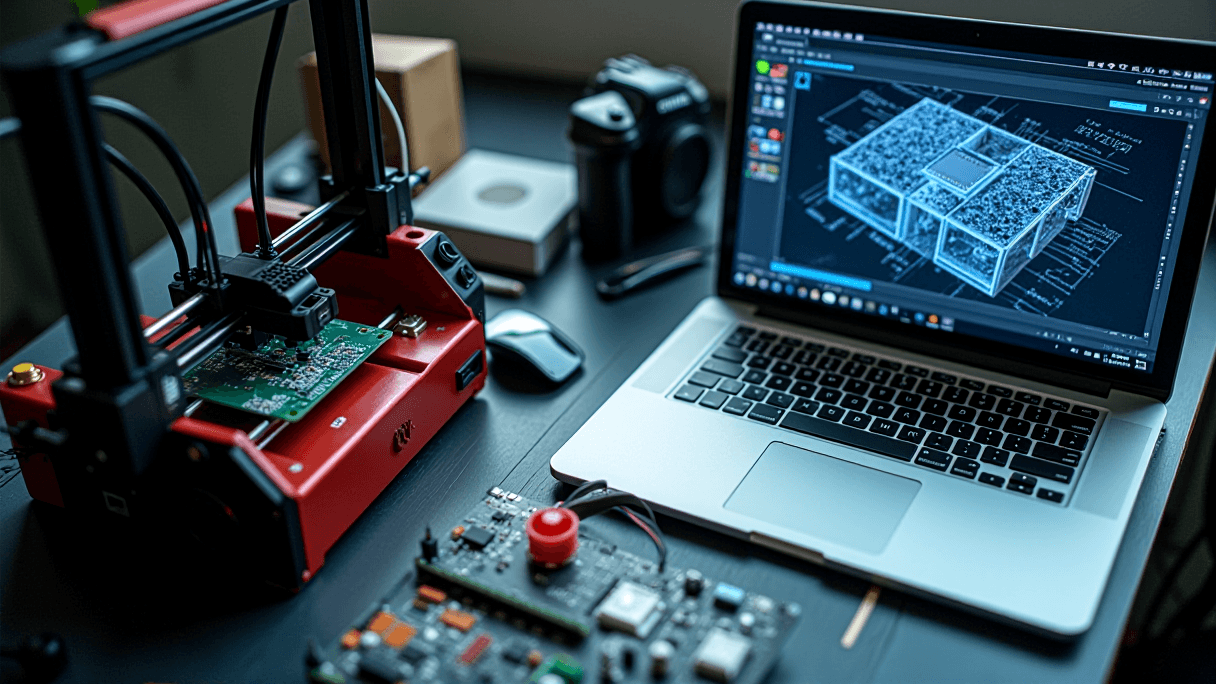
A: Users describe a gadget in simple language, and the AI generates project plans covering mechanics, wiring, and suggested off-the-shelf parts. BetaKit reports these plans include step-by-step assembly guides, including powering on and testing. To date, clients have produced over 200,000 plans, ranging from drones, RC cars, and AR glasses to more niche projects like a pickleball launcher and a urine-sampling machine prototyped by a medical device company in India.
Q: What are the technical requirements and safety limitations?
A: The model assumes users have a 3D printer and basic soldering experience. For example, if building an MP3 player, the tool specifies which screws to buy and which parts to 3D print. Regarding safety, Blueprint prohibits the design of explosives, ammunition, and guns; however, BetaKit notes that compound bows are permitted as "consumer sporting goods."
Q: Who is the target audience and what is the company's vision?
A: CEO David Feldt told BetaKit the platform serves hobbyist hackers and entrepreneurs building "one of ones" prototypes. COO Sajeel Purewal describes a "North Star vision" where Blueprint becomes a hybrid of Amazon and Lovable, eventually orchestrating manufacturing or providing one-click component sourcing. Currently, the company monetizes via monthly and annual subscriptions.
Q: What is the financial backing and leadership behind Blueprint?
A: Blueprint has raised more than $1 million USD ($1.4 million CAD) in pre-seed funding from Founders Inc, undisclosed angels, and the a16z speedrun accelerator. This includes $820,000 USD in SAFE funding from May and $225,000 USD from November. The company was founded by CEO David Feldt, COO Sajeel Purewal, and CTO Pranav Seelam, who are currently in San Francisco but plan to return to Toronto.