
The Matic Playbook: Why Smarter Autonomy Trumps Legacy Scale

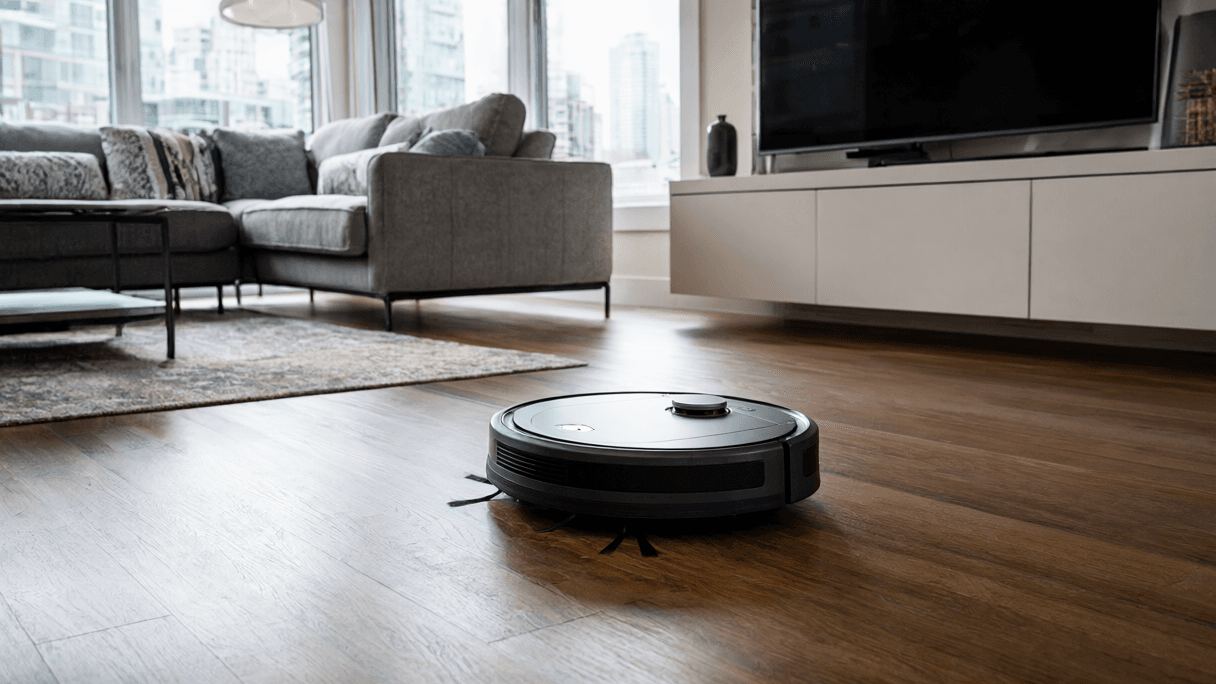
AI-generated image · Bay Street Wire
While the FCC navigates the complexities of import bans and waivers, Matic is positioning itself as the high-intelligence, US-assembled alternative to the robovac establishment.
As first reported by The Verge, the robot vacuum market is seeing a shift where strategic agility and intelligence are beginning to challenge the dominance of legacy giants. Matic is currently leading this charge by rethinking both the construction and the market strategy of the robovac.
According to The Verge, the FCC added the charging dock (model 4DK0008) and the Matic model 4MA0001 to its ban waiver list on October 2nd. While this appears to be a response to the FCC's broad restrictions on foreign-made robots, drones, and routers, Matic's operational model differs significantly from industry incumbents.
***
**OPINION: The Intelligence Moat**
*From my perspective as a reviewer, the real story here isn't the waiver—it's the philosophy. For years, the robovac market has been a race to the bottom on price and a race to the top on meaningless feature bloat. Matic is proving that the next generation of home robotics needs to be smarter and more autonomous to earn a permanent spot in our living rooms. By focusing on a high-compute architecture and a transparent, localized supply chain, they are building a moat that legacy brands, tied to massive overseas factories, simply cannot replicate overnight.*
***
The Verge notes that the Matic didn't actually require the waiver to be sold or function. The company uses an off-the-shelf Intel AX210 Wi-Fi and Bluetooth chip—hardware common in laptops and desktops—which received approval years ago. Since FCC bans target the import of future products rather than those with existing approvals, the waiver is largely symbolic.
A key distinction is that Matic assembles its robots in Mountain View, California. Mehul Nariyawala, Matic's co-founder and president, told The Verge that the company has grown from shipping 1,500 robots a year ago to 17,000 today. To support this, Nariyawala explained that Matic converted its 24,000-square-foot Mountain View site into a dedicated production plant and moved corporate offices to Menlo Park.
While Nariyawala admitted to The Verge that the company does not yet meet the 65 percent US-sourced component threshold to be officially labeled 'Made in the US,' they are aggressively pursuing that goal. Nariyawala stated the company utilizes Nvidia for its 'core compute platform' and sources other 'critical components' from US firms whenever possible.
This stands in contrast to other firms like Asus and Netgear, which The Verge reports received blanket approvals for their brands of routers; the FCC gave Matic a limited waiver specifically for the 4MA0001 and 4DK0008 models. By positioning itself as potentially the only floor cleaning robot built in America, Matic is turning regulatory friction into a primary value proposition.