
The Storage Squeeze: Why You're Overpaying for NAND and When the Bleeding Stops

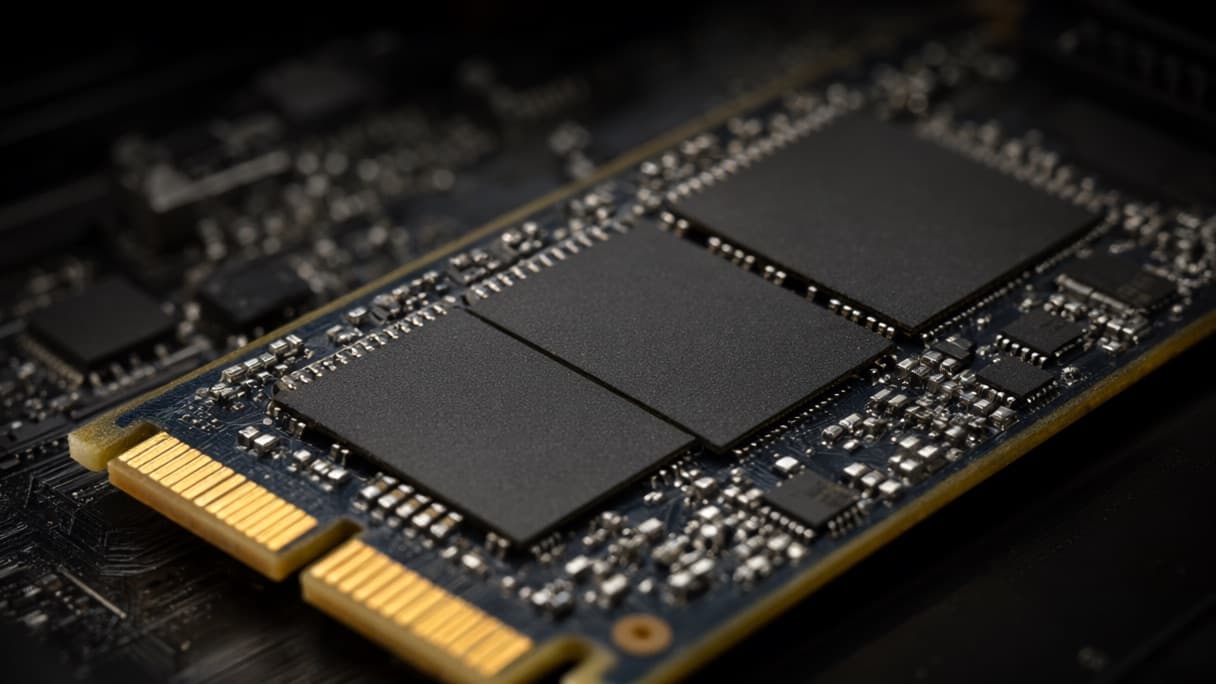
AI-generated image · Bay Street Wire
Hard drive and SSD prices have hit record highs, but analysts suggest a light at the end of the tunnel for flash storage by 2027.
If you've looked at storage pricing lately, you know the situation is grim. As DriveVault first reported, we are staring at record-high prices driven by a supply crisis, making the cost of entry for builders and archivists exorbitant.
**Opinion:** The current market is a nightmare for consumers. We are seeing artificial scarcity driven by data center demand and AI; unless you absolutely need storage for work right now, paying these premiums is a losing game.
The data is stark. Citing a price tracker from ComputerBase, hard drive prices have surged 134% compared to September 2025, while SSDs have climbed 129%. Specific examples include the Kingston NV3 1TB SSD jumping from €50 to €144, and the Toshiba MG09 18TB rising from €288 to €858.
When does the overpaying stop? According to DriveVault, the timeline differs by tech:
**SSDs:** Tied to NAND flash chips produced by firms like Samsung, SK hynix, Kioxia, Micron, Sandisk, and YMTC. Memory pricing firm TrendForce forecasts the NAND shortage will end in the second half of 2027, leading to a gradual price slide.
**HDDs:** Hard drives face a longer deadlock. Dominant players Seagate and Western Digital are not building new factories, and Seagate has already allocated most data center capacity into 2028. DriveVault suggests prices won't ease until 2028 at the earliest.
**The Bottom Line:** If you are buying speculatively, wait. If you must buy, favor SSDs, as they are the first likely to see price corrections. Until then, the most cost-effective terabyte is the one you already own.