
The Case for the 'Dumb' TV: Why DIY Connectivity Beats Smart Hardware

AI-generated image · Bay Street Wire
A deep dive into the frustrations of modern TV longevity and a blueprint for reclaiming the living room using minimal hardware and a bit of code.
In the current hardware landscape, the 'smart' TV is often a liability—a cycle of forced updates and bloated features that compromise the longevity of the screen. For those who value hardware that actually lasts, the solution isn't a newer model; it's stripping the intelligence away and building it yourself.
**The DIY Alternative to Smart Bloat**
As first reported on Hacker News, the most efficient way to handle a living room setup is to start with a 'dumb' TV—one devoid of internet connectivity and the accompanying 'ask-me-again-later' updates. The goal is to maintain a basic, functional display while offloading the 'smart' capabilities to a separate, controllable machine.
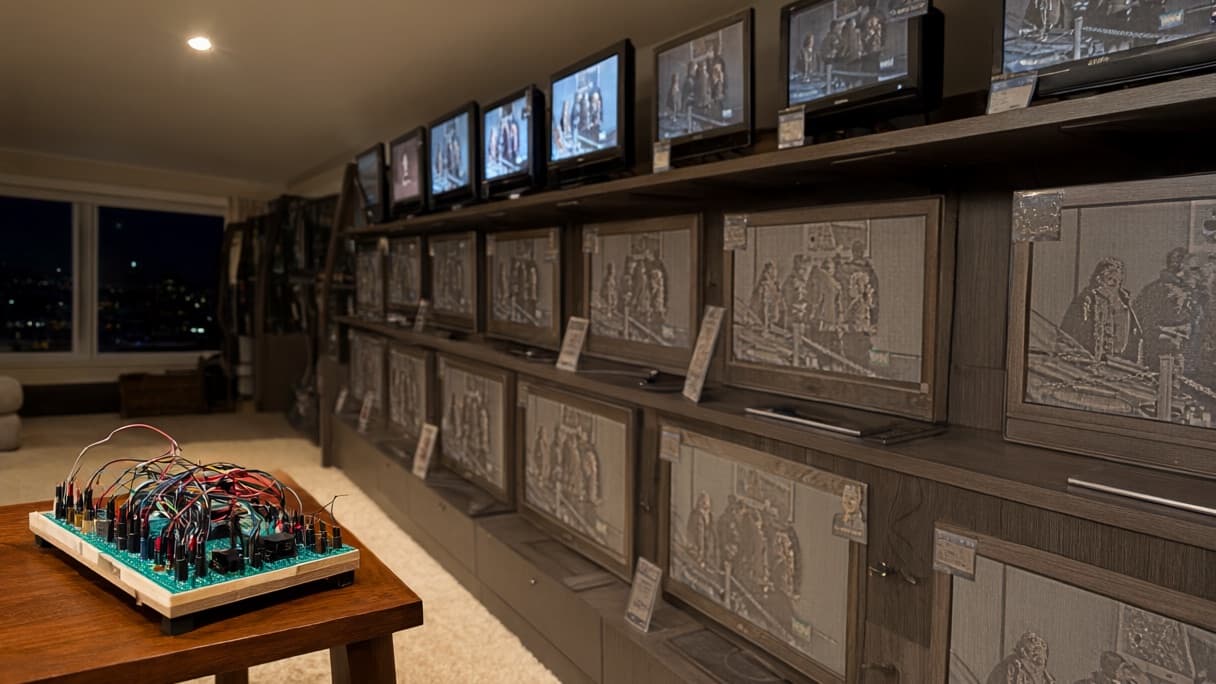
One user shared their process of connecting an old, cheap TV to a desktop computer via HDMI. Using an ESP32-C3 Mini devboard, a mini-breadboard, and jumper wires, they integrated an IR transmitter and receiver to allow a standard TV remote to trigger complex actions on the PC.
**Expanding the Ecosystem**
By leveraging RC-5 IR codes and assistance from the AI model Claude (specifically Opus 5.5), the user created a system where single button presses on the remote could launch entire environments, including:
* **Gaming Hubs:** Integration of emulators including DuckStation, PCSX2, Dolphin, Cemu, and ES-DE, as well as Steam in Big Picture mode. * **Atmospheric Modes:** A 'Fireplace mode' designed to play 10-hour ambient videos. * **Advanced Control:** A custom admin panel that allows for virtual gamepad inputs and real-time streaming of the display.
**Solving the Software Friction**
To prevent windows from opening on the wrong screen, the user transitioned to a 'multiseat' configuration. This setup utilizes two separate X sessions, allowing the TV and the primary monitor to operate independently.
While the user noted that Claude occasionally introduced bugs, the AI significantly reduced development time. The project took approximately 10 hours, with the bulk of that time spent configuring console emulators.
**Theo's Take: Opinion**
This is exactly how consumer electronics should work. We are sold TVs with built-in OSs that are obsolete in three years, forcing a hardware upgrade when only the software is broken. By using a 'dumb' screen and a DIY bridge—like the ESP32 setup described here—you decouple the display's lifespan from the software's decay. It's a minimal, sustainable approach that puts the user back in control.