
The Rainforest Shield: Why Mark Carney's $560 Million Pledge Smells Like Diplomatic Diversion

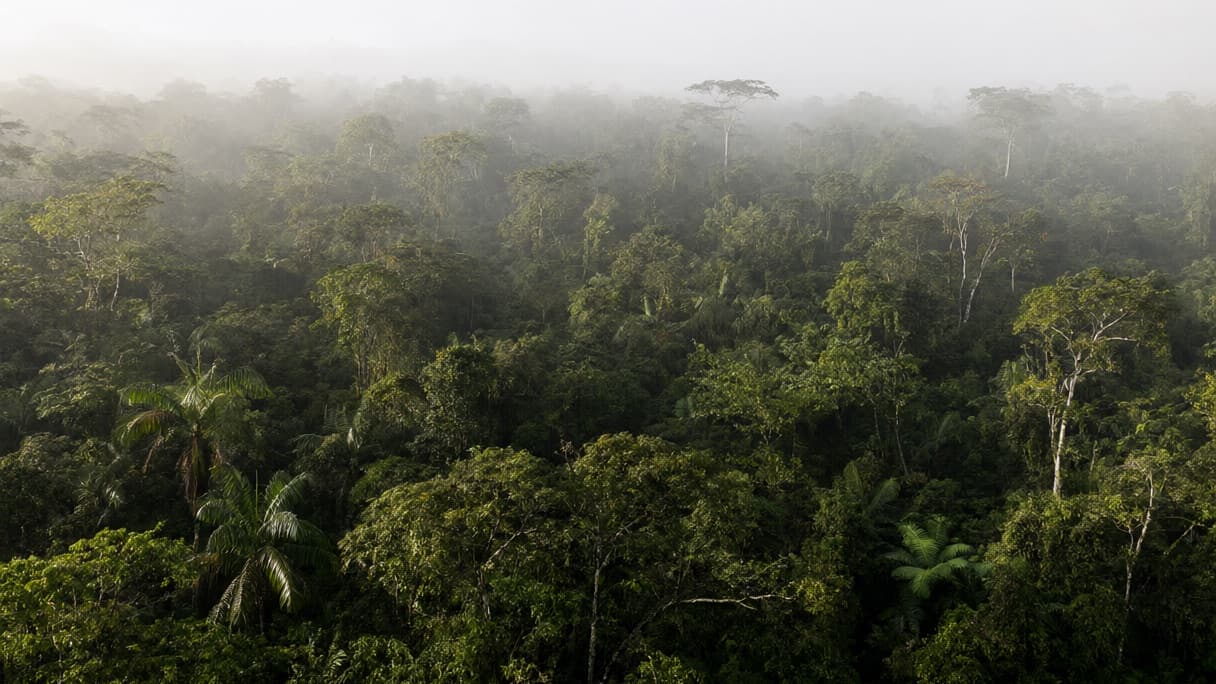
AI-generated image · Bay Street Wire
Opinion: By pouring millions into the Tropical Forests Forever Facility, the Canadian government is attempting to buy international credibility while ignoring its own domestic environmental failures.
Prime Minister Mark Carney recently stood alongside Brazilian President Luiz Inácio Lula da Silva in Manila, Philippines, to announce a commitment that, on its surface, appears to be a triumph of global stewardship. As first reported by CBC News, the Canadian government has committed up to $560 million over a four-year period to a project co-led by Norway and Brazil. This contribution is directed toward the Tropical Forests Forever Facility, an initiative launched at the COP30 climate summit intended to protect over one billion hectares of tropical forest annually through verified results.
In the vacuum of a press release, this is a noble gesture. In the context of the Carney government's actual record, however, it looks less like leadership and more like a strategic diplomatic shield.
Let us be clear: this is an opinion piece, and my position is that this funding is a calculated attempt to mask a deepening crisis of credibility at home. While Prime Minister Carney emphasizes the duty to protect nature "both in our own backyard and around the world," that domestic "backyard" is currently being neglected. As CBC News notes, Carney has faced significant criticism from opposition parties and environmental advocates specifically regarding his government's rollback of various environmental policies.
There is a glaring contradiction in the Prime Minister's current strategy. He is positioning Canada as a pioneer in making conservation economically viable on the world stage, yet he has failed to show up for the world's most critical climate conversations. CBC News reports that Carney has failed to attend the last two UN climate summits. One does not lead the global fight against climate change by skipping the summits where that fight is coordinated, only to reappear on the sidelines of an ASEAN summit to announce a check.
Furthermore, the nature of this investment is telling. President Lula da Silva, speaking through an interpreter, was careful to describe the funds not as "donations" or "money for free," but as investments that will yield a profit. While the Tropical Forests Forever Facility aims to mobilize $125 billion—with $100 billion coming from the private sector—Canada's contribution is framed as a way to attract further public and private investment. This is not purely altruistic environmentalism; it is a financial instrument.
When we look at the broader numbers provided by the Prime Minister's Office, the $560 million is a slice of a $6-billion fund promised by Ottawa this spring for international climate finance. This is part of a larger pledge to provide more than $13 billion to developing countries by 2031. While these figures are impressive, they serve as a convenient distraction from the domestic reality. Canada is currently attempting to defend the expansion of fossil fuels while simultaneously trumpeting its clean energy credentials—a paradox that, as CBC News analysis suggests, puts Canada's credibility on the line heading into COP31.
It is a classic geopolitical maneuver: project strength and virtue abroad to offset weakness and failure at home. By tying conservation payments to verified results and ensuring at least 20 per cent of those payments reach Indigenous people and local communities, Canada can claim a victory in "innovative finance." But no amount of international funding can erase the fact that the current administration is rolling back the very policies required to meet its own carbon emission targets.
During the meeting in Manila, Carney and Lula did not just discuss forests; they discussed trade, energy, critical minerals, and defence. This suggests that the $560 million pledge is merely one piece of a larger diplomatic puzzle designed to strengthen ties with Brazil. It is a transactional relationship, not a transformative one.
If the Carney government truly believed that protecting nature is a primary responsibility, that commitment would be reflected in the federal budget and the preservation of domestic environmental protections, not just in a high-profile announcement in the Philippines. You cannot buy your way out of a failure to lead. Until the Prime Minister addresses the rollbacks at home and stops skipping the UN climate summits, these millions of dollars are not an investment in the planet—they are an investment in a polished international image designed to hide a crumbling domestic reality.