
The Prairies as a Deep Tech Sandbox: Why AgTech is the Ultimate Hardware Stress Test

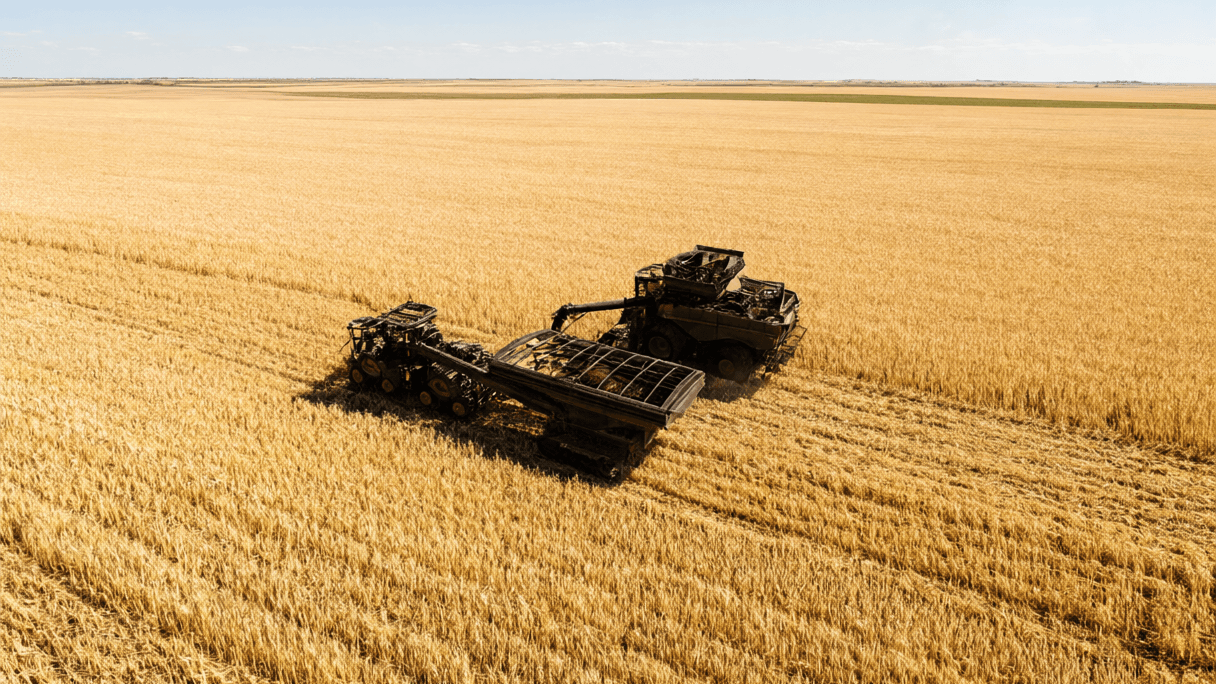
AI-generated image · Bay Street Wire
From autonomous combines to solar simulators, Edmonton's deep tech ecosystem is leveraging the agricultural sector to validate complex engineering before scaling globally.
For any hardware engineer or deep tech founder, the ultimate validation isn't a clean room—it's the field. As the industry pivots toward more complex sensor fusion and edge computing, the Canadian Prairies are emerging as a premier sandbox for technology that must survive brutal real-world conditions.
During Edmonton Startup Week, a panel of experts highlighted AgTech as a primary engine for the next wave of innovation. Douglas Mills, vice-president of external relations at the Canadian Agri-food Automation and Intelligence Network (CAAIN), told BetaKit that the sector is uniquely positioned for a boom due to its tendency toward early adoption and lower regulatory hurdles. Mills emphasized that the opportunity extends far beyond the tractor, spanning a massive value chain that includes robotics, computer vision, AI research, biotech, analytics, and logistics.
From a hardware perspective, the agricultural sector is often years ahead of the consumer market. Colin Coros, COO of Nanostics, noted that while the general public is still debating the arrival of autonomous vehicles, the agriculture sector has utilized them for over a decade; Coros pointed out that virtually every combine in Alberta is already self-driven. This appetite for productivity-boosting tech makes AgTech an ideal proving ground for entrepreneurs who want to avoid the grueling regulatory timelines of other sectors. Coros suggested that deep tech healthcare founders, who may face a 15-year journey to market, could potentially validate their technology in livestock within five years before pivoting to human medicine.
This ethos of "real-world validation" is a recurring theme in Edmonton's broader deep tech push. At the city's first Deep Tech Day, founders like Ryan Tucker, CEO of G2V Optics—which develops LED solar simulators for testing solar cells—discussed the necessity of bridging the gap between technical engineering and commercial viability. The day also featured insights from Jalene Anderson-Baron, co-founder and COO of biotech firm Future Fields, and John P. Davis, a University of Alberta physicist and founder of Zero Point Cryogenics.
For those looking to deploy dual-use technology, the advice is simple: go to the source. BJ Fuchs, a cattle rancher and founder of Business Wide View, told BetaKit that producers should be the first point of contact for anyone testing innovations, whether they are drones or water-trough monitors, to truly understand the operational challenges.
While the technical hurdles are high, the investment community is signaling confidence in the region. Allen Lau, co-founder of Two Small Fish Ventures, and Janet Bannister, managing partner of Staircase Ventures, both told BetaKit that Edmonton is well-positioned to build world-class deep tech companies. Lau noted that while Silicon Valley remains unique, Edmonton provides the scale and talent necessary to grow a company to hundreds of employees before expanding globally.