
The Prairies Are the Ultimate Stress Test for Deep Tech

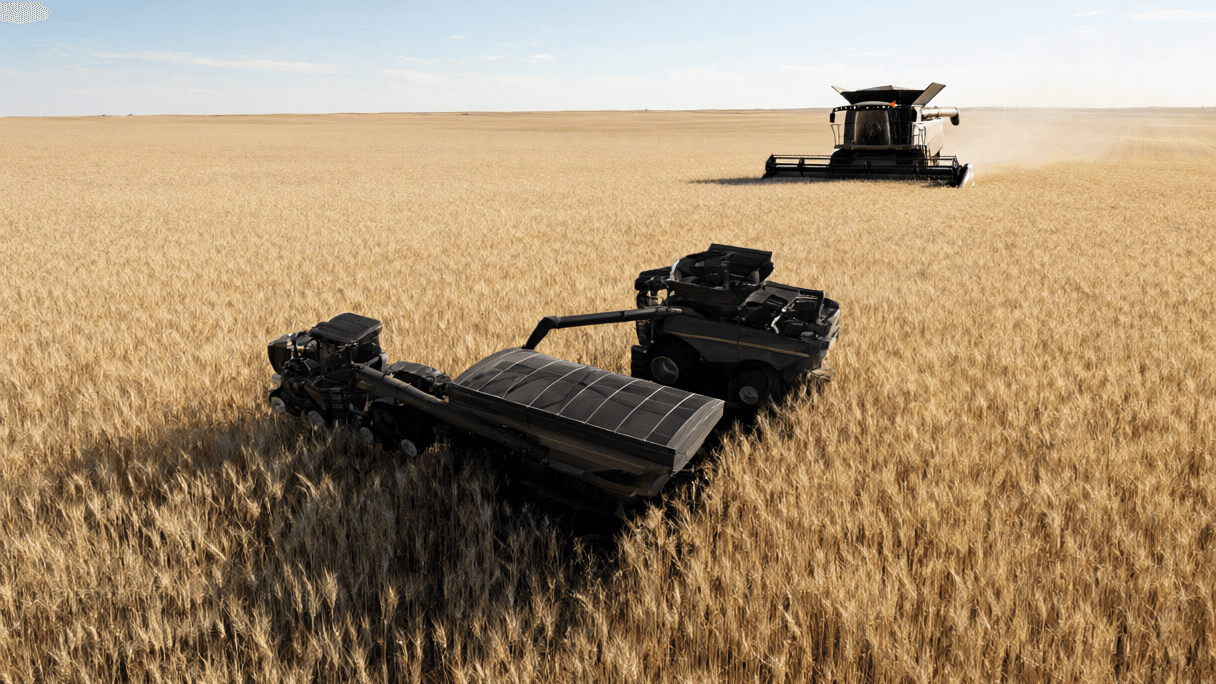
AI-generated image · Bay Street Wire
Opinion: For hardware founders, the agricultural sector in Alberta offers a faster, less regulated path to validation than almost any other industry.
In the world of deep tech, there is a recurring tension between the laboratory and the market. As highlighted during Edmonton Startup Week, technical founders—the physicists, molecular biologists, and engineers—often struggle with the 'commercialization gap.' While Edmonton Unlimited is addressing this with its Deep Tech Foundry program launching in 2027 to help founders move from prototypes to customers, the real question is where that validation should happen.
In my view, the answer is the field. Specifically, the Canadian Prairies are becoming the premier sandbox for hardware that needs to survive the real world.
As Douglas Mills, vice-president of external relations at the Canadian Agri-food Automation and Intelligence Network (CAAIN), noted during an Edmonton Startup Week panel, AgTech is uniquely positioned for an innovation boom. He argues that the sector is rich with opportunity because it presents real-world problems that demand innovative solutions across a massive value chain—ranging from robotics and computer vision to biotech and analytics.
From a hardware perspective, agriculture is the ultimate stress test for edge computing and sensor fusion. When you are deploying drones or water-trough monitors—technologies mentioned by cattle rancher and AgTech supporter BJ Fuchs—you aren't dealing with the controlled environment of a lab. You are dealing with the chaos of the outdoors.
But the real draw for deep tech founders isn't just the environmental challenge; it's the speed of adoption. Colin Coros, COO at Nanostics, pointed out a stark reality: while the world is still debating the arrival of autonomous vehicles, they have already been operational in agriculture for over a decade. Coros noted that in Alberta, virtually every combine is self-driven. In this sector, if a solution increases productivity, producers adopt it faster than almost any other industry.
This creates a strategic shortcut for founders. Coros suggests that AgTech can serve as a vital stepping stone for those in highly regulated fields like medtech or biotech. He noted that a journey into the medical space can take 15 years; however, a founder might get a technology into the livestock market in five years, work out the technical kinks, and then pivot to healthcare.
This is where the 'can-do' attitude mentioned by Janet Bannister of Staircase Ventures meets practical application. While Allen Lau of Two Small Fish Ventures observes that there are essentially two types of ecosystems—Silicon Valley and everyone else—Edmonton is positioning itself as a world-class hub for deep tech. With the city's technical talent pool and the affordability praised by companies like Zero Point Cryogenics, the infrastructure is there.
However, the hardware doesn't just need a lab; it needs a producer. As BJ Fuchs suggests, the best way to validate a dual-use technology is to talk directly to the people running the operations.
If you are building robotics, AI, or advanced materials, the Prairies offer something Silicon Valley cannot: a high-velocity, low-regulation environment where the only metric that matters is whether the machine works in the dirt. For the deep tech founder, the field isn't just a market—it's the most honest validator in existence.