
The Yield War: Why Niobia's AI Bet is About More Than Just Spotting Defects

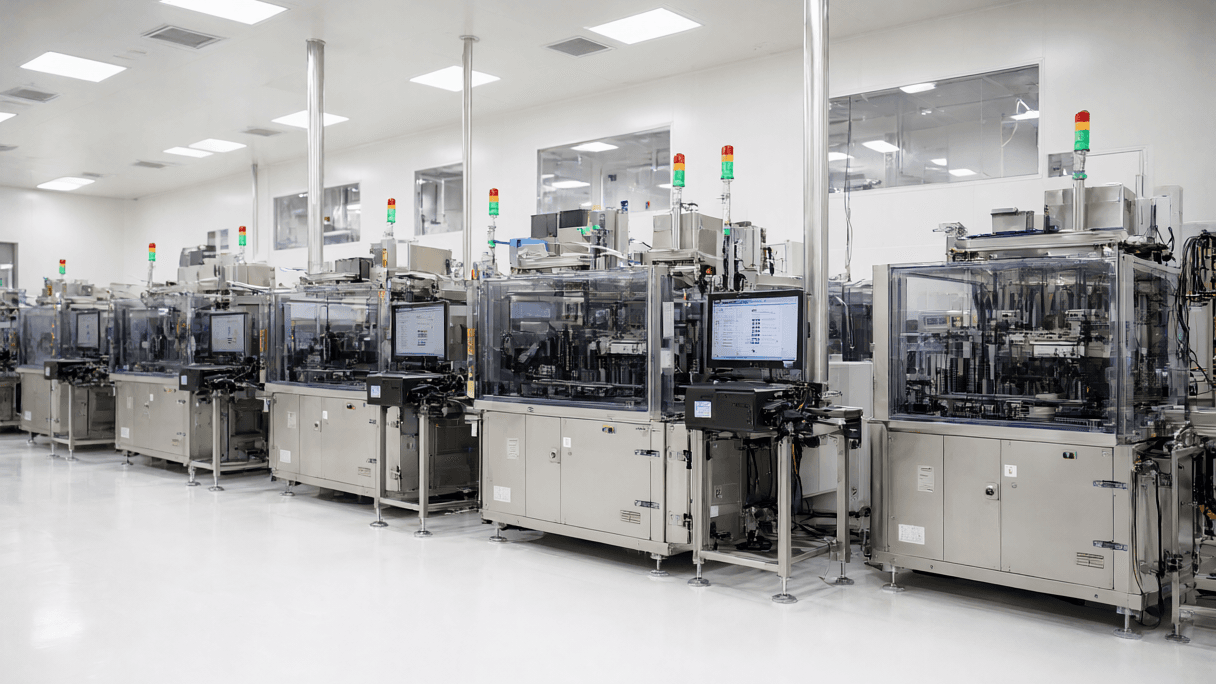
AI-generated image · Bay Street Wire
By slashing the time engineers spend diagnosing production failures, San Francisco startup Niobia is targeting the multimillion-dollar cost of yield loss in semiconductor and battery fabrication.
In the high-stakes world of semiconductor and battery fabrication, the difference between a profitable quarter and a financial disaster often comes down to a single word: yield. When a production line hits a snag, the cost isn't just the ruined silicon or the defective cell—it's the clock.
As first reported by TechCrunch, San Francisco-based startup Niobia is positioning itself at the center of this friction point. While the company's software is designed to flag production defects, the real value proposition isn't merely the detection of a flaw; it is the drastic reduction of the time required to understand *why* that flaw occurred.
**The Cost of the 'Guesswork' Phase**
For engineers working on next-gen hardware, the discovery of a defect is only the beginning of a grueling process. According to TechCrunch, when things go wrong during research and development, engineers typically spend days or longer diagnosing the root cause before production can restart. In an industry where chips and batteries are increasingly in short supply, these delays are catastrophic. TechCrunch notes that a single mistake or flaw can result in costs reaching into the millions of dollars and significantly derail manufacturing timelines.
Niobia's approach is to replace this multi-day diagnostic cycle with a streamlined, AI-driven workflow. The company deploys AI agents directly onto production lines, utilizing self-contained GPUs mounted on manufacturing equipment. These agents function similarly to sensors, capable of identifying microscopic, pinhole-sized flaws, such as scratches.
Once a defect is flagged, Niobia's software aggregates the relevant data, allowing human engineers to interact with a chatbot to determine the cause of the failure. The goal, as detailed by TechCrunch, is to deliver answers in minutes rather than days, effectively neutralizing the 'guesswork' that leads to ruinous yield loss.
**Hardware Constraints and the Cloud Dilemma**
From a technical architecture standpoint, Niobia is making a calculated bet on edge computing and open-source models. Co-founders Gaurav Jha and Harveen Kaur, both of whom hold PhDs in chemistry and have previous experience at battery and chip manufacturers, explained to TechCrunch that the company utilizes open-source models which are further trained on chip and battery research data.
This architectural choice is driven by the extreme sensitivity of the fabrication industry. Jha told TechCrunch that customers are unwilling to send proprietary data to a public AI cloud, fearing the information could be used to train external models. To solve this, Niobia ensures data remains localized. Furthermore, to address the cybersecurity risks inherent in the global race for chip and battery supremacy, Niobia allows customers to hold their own encryption keys, ensuring the startup itself cannot decrypt client data.
**Targeting the 'Invisible' Infrastructure**
While the general public focuses on the end-product—the smartphone or the electric vehicle—Niobia is focusing on the invisible processes that make those products possible. Jha noted that while the market is niche, it is a multibillion-dollar industry that powers nearly every consumer product, from headphones to shoes.
Currently, Niobia is focusing its efforts on three specific technical specialties: 1. **Film coating** 2. **Electroplating** (the process of using an electric current to coat a surface with metal) 3. **Fluidized bed reaction** (a chemical process involving the suspension of solid particles in gas or liquid)
**Opinion: The Path to the Autonomous Fab**
*In my view, Niobia's current focus on diagnostic speed is the necessary first step toward a larger industry shift. By proving they can reduce the cost of human-led diagnosis, they are building the data foundation required for the 'self-driving factory' Jha mentioned to TechCrunch. If you can automate the detection and the diagnosis, the leap to automated correction—where the AI adjusts the machinery in real-time to prevent the next defect—becomes a matter of when, not if.*
As a Battlefield finalist at TechCrunch Disrupt 2026, Niobia is betting that the future of hardware isn't just about better designs, but about the ruthless elimination of production downtime. In the race for next-gen fabrication, the winner won't necessarily be the one who makes the fewest mistakes, but the one who can fix them the fastest.