
The Policing Paradox: Assessing the Impact of Mayoral Safety Pledges on Toronto's Newcomers

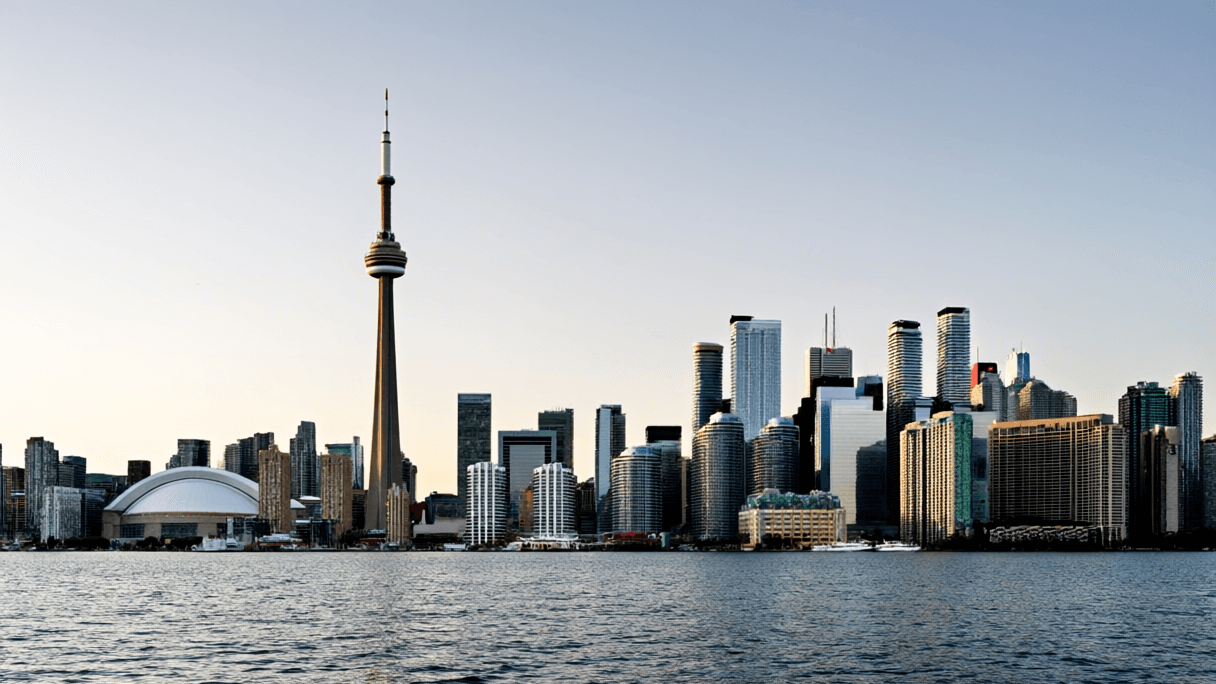
AI-generated image · Bay Street Wire
As Olivia Chow and Brad Bradford debate the scale of police expansion, the tension between crime statistics and public perception creates a precarious environment for the city's most vulnerable populations.
In the lead-up to Toronto's 2026 mayoral election, the discourse surrounding public safety has shifted toward the expansion of the police force. While the debate between Mayor Olivia Chow and challenger Brad Bradford focuses on the numerical scale of recruitment, the implications of this push extend to the fundamental trust and safety of Toronto's newcomer communities.
As first reported by CBC Toronto, the two candidates offer starkly different interpretations of the city's current safety climate. Mayor Olivia Chow has pointed to data indicating that most crime statistics are trending downward and noted an eight per cent decrease in homelessness as evidence that her approach is yielding results. In contrast, Brad Bradford has centered his campaign on the premise that Torontonians do not feel safe, specifically citing concerns regarding public drug use in parks and on transit.
For newcomers, this divergence is critical. The tension between objective data—which CBC Toronto notes shows serious crime is down—and the subjective feeling of insecurity can lead to a volatile environment. Prioritizing increased policing as the primary answer to perceived insecurity risks intensifying scrutiny on marginalized communities who may already view law enforcement with apprehension.
The scale of the proposed expansion is significant. CBC Toronto reports that Olivia Chow implemented a five-year hiring plan approved in 2024, aiming for a gross total of 1,800 new hires. However, due to attrition—with Chow's campaign forecasting 991 officers will leave—the net increase is lower. Her campaign estimates a net addition of 809 officers from 2024 to 2029, while the Toronto Police Service’s 2026 operating budget estimated a net increase of 500 officers. Clayton Campbell, president of the Toronto Police Association, confirmed to CBC Toronto that the force saw a net increase of 627 officers during Chow’s three-year tenure.
Brad Bradford's proposal is more aggressive, promising a net total of 1,000 new police officers over four years, averaging 250 net hires annually. CBC Toronto notes that to achieve this, Bradford would need to recruit roughly 450 officers per year to account for attrition. His campaign estimates this plan would cost $143 million over four years.
The feasibility of Bradford's plan remains uncertain. Clayton Campbell told CBC Toronto that the Toronto Police Association was not consulted and noted that success depends on provincial cooperation and the capacity of the Toronto Police College. Currently, the provincial training allocation is maxed out at four classes of 90 new officers per year. To circumvent this, Bradford has proposed asking the province to establish a "satellite campus" of the Ontario Police College in Etobicoke.
From a newcomer's perspective, the push for more "boots on the ground" is rarely neutral. While proponents argue more officers increase safety, the delivery—particularly where drug use and homelessness are highlighted—can increase interactions between police and vulnerable populations. As Toronto decides between Chow's data-driven approach and Bradford's perception-based expansion, the central question remains whether more officers inherently lead to more safety, or if the focus on policing further alienates those settling in a new city.