
The Long-Term Care Crash: Why Ontario's 'Missing Middle' is a Policy Time Bomb

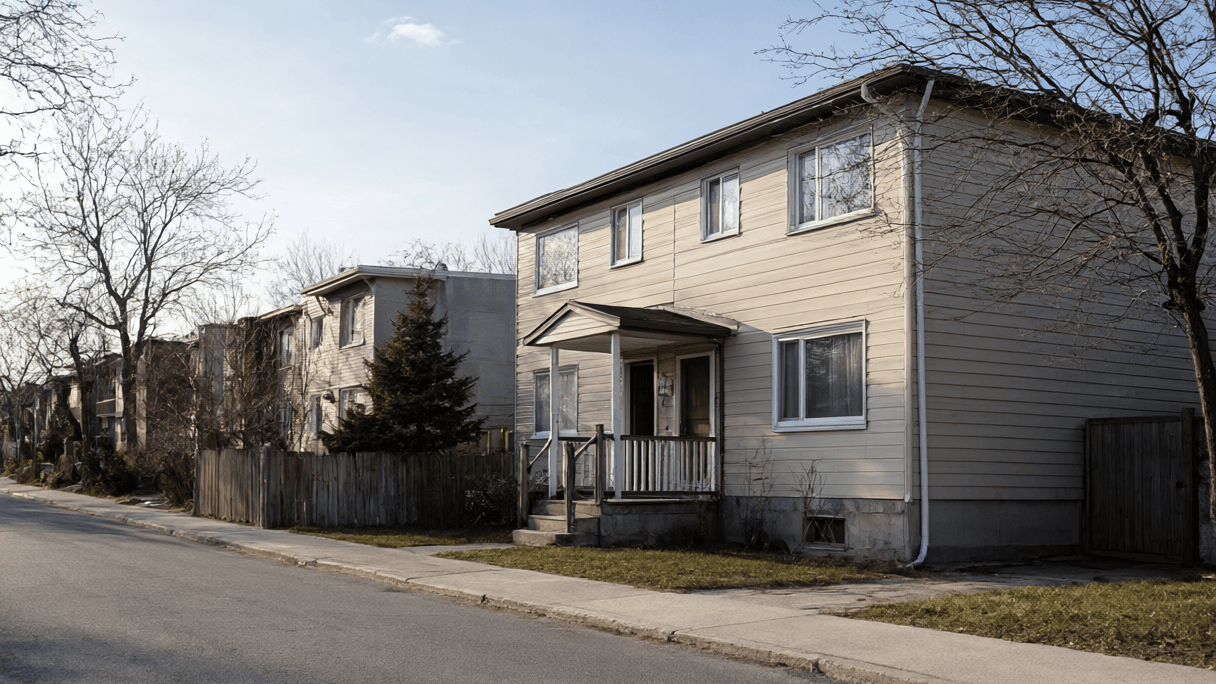
AI-generated image · Bay Street Wire
Opinion: By ignoring the need for permanent funding for Enhanced Assisted Living, the province is steering the seniors' care system toward an avoidable collapse.
For years, the provincial government has treated the crisis in seniors' care as a simple math problem: more beds equals more solutions. But as CBC Toronto first reported, throwing billions at the end of the pipeline does nothing to fix the leak at the start.
Ontario is currently facing a systemic failure in its housing continuum—a 'missing middle' that is a structural flaw threatening to crash the long-term care (LTC) system. Experts are now calling for dedicated funding for Enhanced Assisted Living (EAL) to prevent the bankruptcy of healthcare resources.
EAL serves older adults who require more support than standard home care can provide, yet do not necessitate a full LTC bed. Dr. Samir Sinha, director of health policy research at the National Institute on Aging, describes the current reality as a binary choice: seniors either stay in their homes with minimal care or end up in a nursing home.
This gap forces seniors into institutional settings prematurely. Eric Mariglia, senior director of public affairs at WoodGreen Community Services, notes that without wrap-around supports, these clients frequently end up in hospitals or on LTC waitlists.
The financial argument is stark. A policy paper co-authored by WoodGreen, the Ontario Community Support Association, and AdvantAge Ontario reveals that EAL models can cut taxpayer costs in half. Mariglia estimates the cost to the healthcare system at approximately $92 to $169 per day—significantly cheaper than LTC or hospitalization.
WoodGreen's 'cluster care' model, where eight to ten seniors share living spaces with 24/7 support, diverted 83 per cent of its residents from entering LTC homes. Yet, Dr. Sinha points out that while the government earmarks $6.4 billion for 30,000 LTC beds, investing even a fraction of that into community care would divert thousands from needing those beds entirely.
The barrier is a lack of a formal pathway. Lisa Levin, CEO of AdvantAge Ontario, explains that while channels exist for hospitals and LTC homes, there is no such pathway for EAL funding, leaving a 'patchwork' of one-off services.
Ministry of Health spokesperson Lily Barnes pointed to $5.6 billion invested this year in home care and $724 million for community housing. However, this does not address the policy paper's core demand: an official provincial definition of EAL and a permanent, dedicated funding stream.
Without this, we tell seniors they must be 'sick enough' to qualify for help. As Levin suggests, the province needn't commit to new construction; existing buildings could be retrofitted for cluster living. If Ontario continues to treat EAL as a boutique project rather than a core pillar, we are simply waiting for the system to break.