
The Infrastructure Gap: Why Canada's Immigration Targets Must Be Measured by More Than Just Numbers

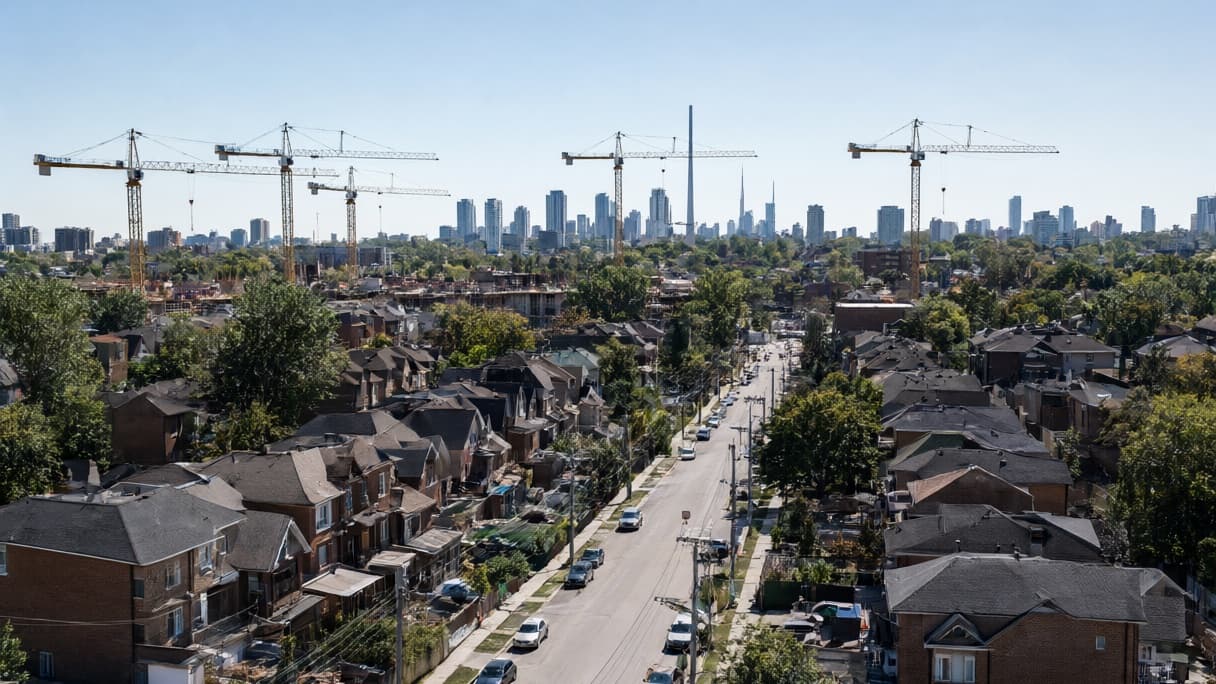
AI-generated image · Bay Street Wire
Opinion: While the federal government argues that many new permanent residents are already integrated, the scaling of housing and healthcare must keep pace with the overall influx of newcomers.
The federal government recently unveiled its updated immigration levels plan, as detailed in the November 5 budget. While targets are lower than the peaks of the Trudeau years, a series of "one-time" measures have pushed expected permanent resident admissions for 2027 to 662,000 people.
As a columnist covering newcomers, I believe we must look beyond these raw totals. The central tension—highlighted by reporting from CityNews Toronto—is whether Canada possesses the infrastructure to support these targets. While the government maintains that many newcomers are already within our borders and will not create new demand for housing or services, this logic overlooks the systemic pressure cumulative growth places on essential infrastructure.
The 2027-2029 plan broadly targets 380,000 new annual permanent residents (ranging from 352,000 to 422,000). This include roughly 245,000 economic immigrants—including 100,000 for skilled worker programs and 95,000 via the Provincial Nominee Program—alongside 81,000 for family reunification and just over 49,000 for refugees and protected persons.
To clear backlogs, the government introduced a one-time initiative to admit up to 200,000 permanent residents via worker and humanitarian categories. This includes 100,000 slots for those waiting over a decade for residency—including roughly 32,000 former Hong Kong residents and 19,000 Ukrainians—and 45,000 slots for spouses and children. Additionally, 77,000 people from a 2025 initiative are expected to be admitted in 2027.
Conservative MPs have criticized these one-time measures, as reported by CityNews Toronto, arguing Canada cannot accommodate such volume while unemployment remains above six per cent. Beyond permanent residency, the plan targets 370,000 new temporary resident admissions annually, including 220,000 temporary foreign workers (170,000 via the International Mobility Program and 50,000 via the Temporary Foreign Worker Program).
If we are to maintain a sustainable system, the government's focus on the fact that many are "already here" cannot substitute for an infrastructure strategy. Without a commitment to scaling housing and healthcare, we risk creating a system where the promise of permanent residency is undermined by a lack of basic necessities.