
The Human Cost of Political Deadlock: Ontario's Vulnerable are Paying the Price

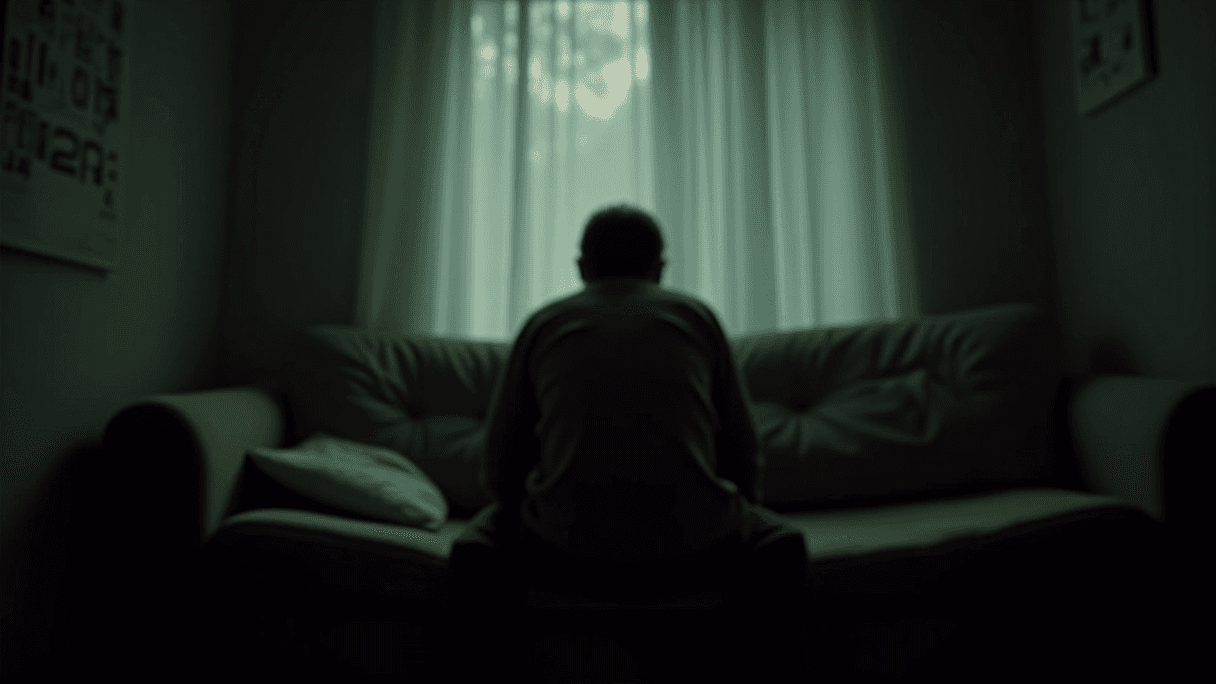
AI-generated image · Bay Street Wire
Opinion: While the provincial government and unions clash over budgets and bargaining, the resulting collapse of disability and community care is leaving families in a state of crisis.
In the sterile language of government press releases and union demands, the current labor dispute involving Ontario's community, health, and social services workers is framed as a matter of 'contingency plans' and 'retroactive wage increases.' But for the families trapped in the wake of this strike, there is nothing sterile about the experience. It is a visceral, daily collapse of essential care.
As reported by Global News Toronto, approximately 4,000 workers—including developmental service workers, shelter staff, and social workers—have been off the job since the spring. While the Ontario Public Service Employees Union (OPSEU) and the provincial government trade accusations of stonewalling and insufficient funding, the real-world consequences are manifesting as trauma within the home.
Consider the case of Linda Umlauf. Since the group home in London, Ont., where her 28-year-old autistic daughter, Nicky, lived, closed in May, Linda has been forced into the role of full-time caregiver. Global News Toronto describes a harrowing reality where a daughter, who is non-verbal and relies on rigid routine, has become increasingly confused and aggressive. Linda Umlauf reports that she and her husband have had to retreat into a locked 'safe room' to protect themselves from physical attacks, including bite marks. This is not merely a 'service disruption'; it is the erasure of a support system that allows vulnerable citizens to live with dignity and their caregivers to maintain their own mental health.
The systemic failure is underscored by a staggering disconnect in funding. In an interview with Global News Toronto, OPSEU President JP Hornick noted that while the government claims record investments, autism service waiting lists continue to grow. The numbers back this concern: Ontario's financial accountability office has predicted a funding shortfall for the Ministry of Children, Community and Social Services that will climb from $1.5 billion in 2025-26 to $3.1 billion by 2027-28.
Even the workers themselves are being pushed to the brink. Patricia Crooks, a community support worker at the Sistering center in Toronto, told Global News Toronto that she has relied on her son to pay most of her rent since the strike began. Hornick noted that many striking workers are living paycheque to paycheque, with some forced to use food banks alongside the very clients they serve.
The Ministry of Children, Community and Social Services maintains that collective bargaining is a matter between the union and employers, citing nearly $4 billion in investments this year. However, this bureaucratic distancing is cold comfort to parents like Annie Fayyaz, who told Global News Toronto that seeing workers dancing on picket lines while her autistic son suffered at home was heartbreaking.
When the government speaks of 'strong contingency plans,' they are ignoring the fact that for many families, there is no contingency. There is only the exhausted parent, the confused patient, and a mounting sense of abandonment. We cannot allow the essential care of Ontario's most vulnerable to be a bargaining chip in a budget war. The human cost has already become too high.