
The High-Stakes Push for Maritime Transparency

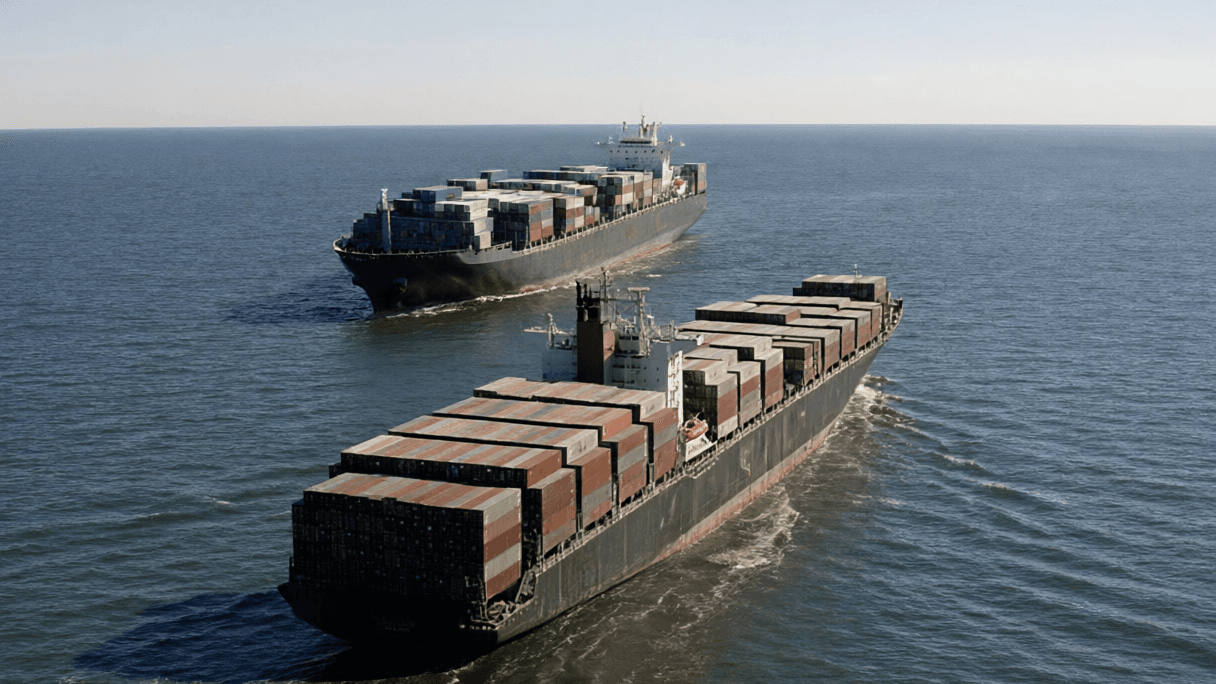
AI-generated image · Bay Street Wire
Quartermaster's massive funding surge signals a critical shift toward real-time ocean intelligence in an era of global shipping instability.
In the world of climate-critical logistics, the ocean has long been described as the largest blind spot on Earth. For too long, the industry has relied on the Automatic Identification System (AIS), which, as TechCrunch first reported, is essentially just a series of location pings. This lack of transparency is a bottleneck for efficiency and safety, but a new wave of capital suggests the tide is turning.
Arlington, Virginia-based startup Quartermaster is positioning itself to solve this crisis. After closing a $43 million Series A in May, the company has now secured a much larger Series B round of $140 million. According to TechCrunch, $100 million of this funding came from First Round Capital, software-focused firm Insight Partners, and defense-focused firm Overmatch Ventures. An additional $40 million was provided via a debt facility from investment bank Stifel.
**Opinion:** From my perspective, this capital injection is more than just a venture bet; it is a signal that solving the transparency crisis in global shipping is the next high-stakes frontier. For logistics to meet climate and efficiency goals, we cannot rely on intermittent pings. We need the granular, real-time awareness that Quartermaster is scaling.
Quartermaster’s approach centers on its "SmartMast" hardware—a system of cameras and radios mounted on a ship's mast. Unlike AIS, these sensors capture and relay real-time maritime data, recording tens of gigabytes per day. Founder and CEO Neil Sobin told TechCrunch that the company is leveraging this data to address "low hanging fruit" and create value for customers, ranging from reducing shipping lane congestion and avoiding collisions to rescuing lost mariners.
The urgency behind this deployment is driven by geopolitical instability. Sobin noted in an interview with TechCrunch that the shipping chaos caused by the war in Iran helped drive conviction and urgency regarding the company's core thesis. This demand is already manifesting in the fleet: Sobin reports that over 800 SmartMasts have been shipped, with more than 650 vessels currently equipped across 25 countries.
As the company moves toward deploying systems to entire fleets, it is scaling its operations to match. Sobin told TechCrunch that the startup has doubled its manufacturing capacity and is refining hardware designs to speed up production. Nick Sinai, a managing director at Insight Partners, told TechCrunch that the firm's decision to lead the investment was driven by strong demand for maritime awareness and the team's ability to execute.
By integrating AI with a proprietary source of maritime data, Quartermaster is attempting to modernize a field that Sobin claims has ignored mariners for a long time. As the company doubles down on its strategy, the goal is clear: turning the ocean's largest blind spot into a transparent, data-driven network.