
The High Park Car Ban is a Transit Failure Masquerading as a Green Initiative

AI-generated image · Bay Street Wire
Opinion: While Ward 4 candidates bicker over the aesthetics of the High Park Movement Strategy, City Hall is ignoring the glaring lack of viable alternatives for those who need them most.
As the October 26 municipal election looms, the race for the Ward 4 seat in Parkdale-High Park has devolved into a predictable ideological clash. On one side, you have the visionaries; on the other, the traditionalists. But as a watchdog of City Hall, and as first reported by CBC Toronto, I find the current debate over the High Park Movement Strategy (HPMS) to be a distraction from the real failure: the city's inability to provide a functional transit alternative before cutting off the public.
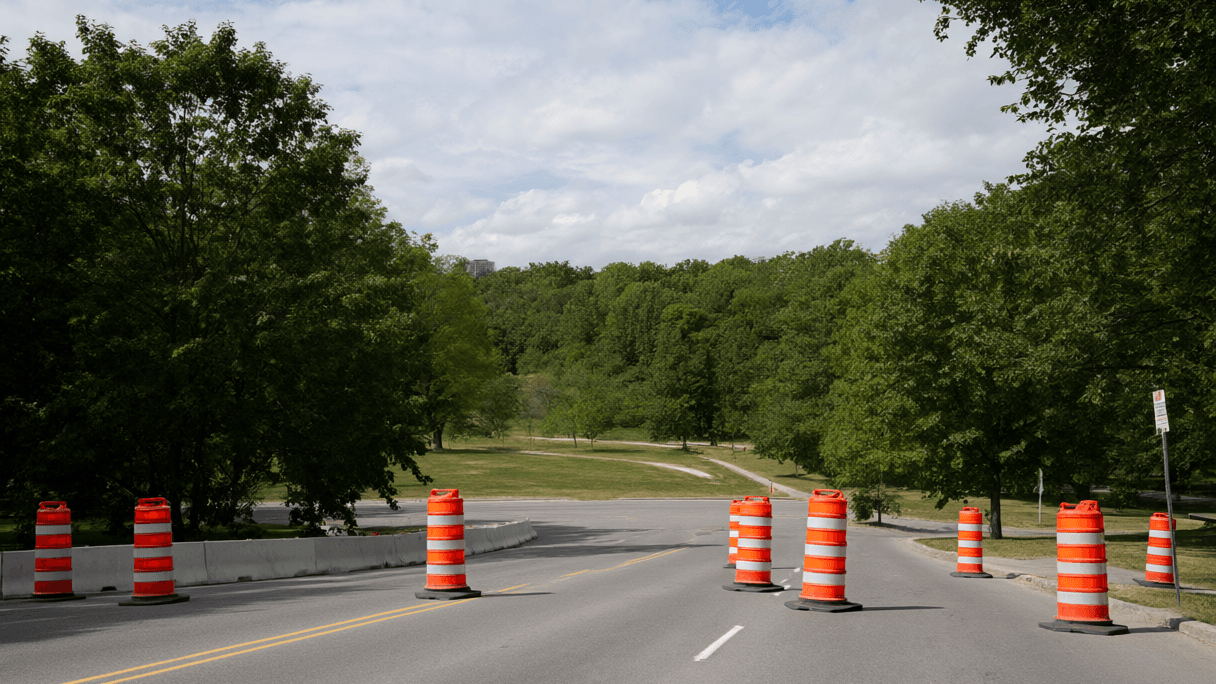
According to reporting from CBC Toronto, the HPMS—approved by council in 2023—aims to revamp the 400-acre park by limiting vehicular traffic and fully closing certain roads to cars. We are already seeing the results of this 'vision' in the form of pylons and construction barriers. The city has already removed approximately 300 parking spaces to prioritize cycling and walking.
Now, the candidates are splitting themselves down the middle. Some, like Nadia Guerrera, have called to immediately suspend the plan and redo consultations, citing inadequate online outreach and accessibility concerns. Others, such as TDSB Trustee Debbie King and housing advocate Diana Chan McNally, support the car restrictions and the reimagined vision for the park, though Chan McNally notes that accessibility measures must be increased before the ban is fully implemented.
But let's be clear: this isn't just about 'green space' versus 'car culture.' It is about basic utility. Marshall Leslie, director of the advocacy group High Park Access, has pointed out a critical flaw in the city's logic. Many of the park's essential amenities—including soccer fields, tennis courts, and a skating rink—are located in the center of the park. Leslie argues that banning cars will 'doom' summer camps and youth sports leagues because families and small children will struggle to reach these facilities.
Even more damning is the impact on the most vulnerable. Luke Anderson, executive director of the Stop Gap Foundation, has highlighted the need for clarity on which vehicles are permitted, arguing that only those with accessible parking permits should be allowed inside. While Faraz Golizadeh of Safe Parkside argues that limiting cars actually makes the park safer for people with disabilities, the reality on the ground is that accessible parking has already been significantly reduced.
City Hall is playing a dangerous game of 'remove first, solve later.' They are stripping away the only reliable way for families and people with disabilities to access the heart of the park without first establishing a robust, accessible alternative.
It is easy for candidates to posture about 'reimagining' a park from the comfort of a campaign trail. It is much harder to explain to a parent with a toddler or a person with limited mobility why they can no longer reach the skating rink. Until the city can prove that a viable, accessible transit alternative exists, the HPMS is less of a strategic movement and more of a logistical nightmare. The city isn't just limiting cars; it's limiting the public's ability to actually use the park.