
The Hardware Bridge: Why the Home Assistant Connect Aux-2 is a Win for Legacy Gear

AI-generated image · Bay Street Wire
Most smart home tech treats 'dumb' devices as problems to be replaced. Nabu Casa's new $69 multi-tool treats them as features to be integrated.
For years, the smart home industry has operated on a 'rip and replace' philosophy. If a device isn't connected, it's a legacy problem. But as The Verge first reported, Nabu Casa—the commercial arm of the Open Home Foundation—is taking a different approach with the Home Assistant Connect Aux-2.
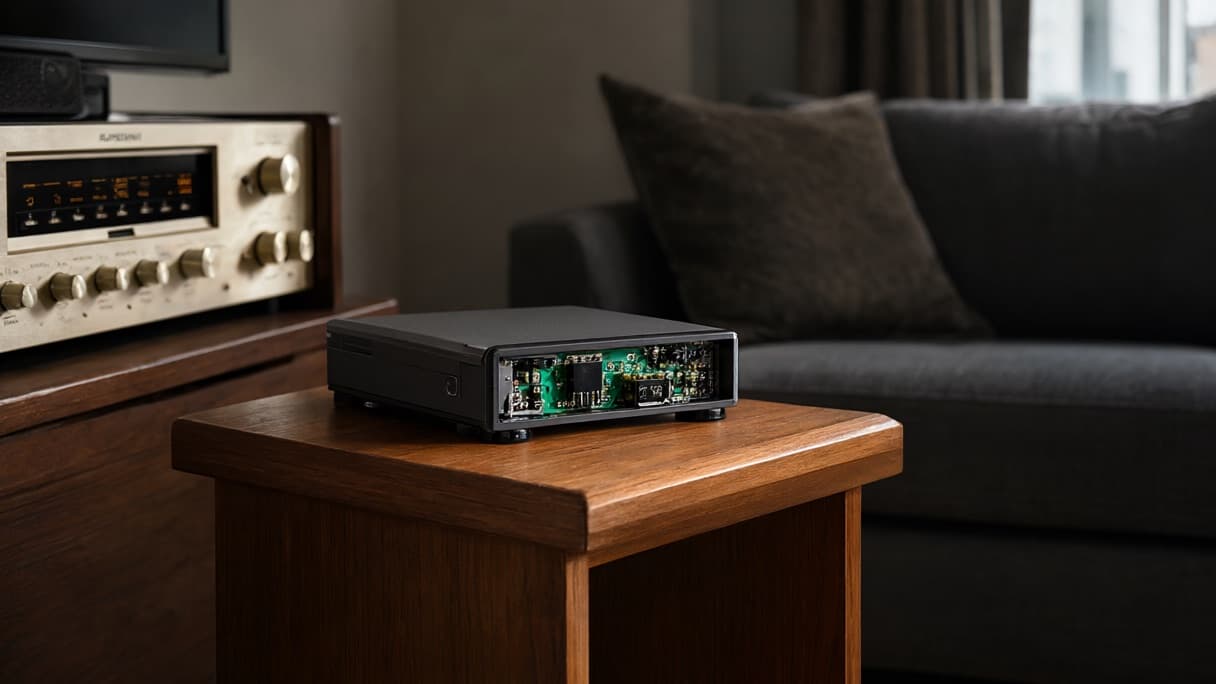
In my view, this is exactly how hardware should work. Instead of forcing you to buy a new smart amplifier or a proprietary sensor ecosystem, the Aux-2 acts as a bridge for the gear you already own. It is a $69 box roughly the size of a deck of cards that turns 'dumb' hardware into first-class citizens of a smart home.
As reported by The Verge, the Aux-2 is packed with connectivity options. It features 2.4GHz Wi-Fi, Bluetooth, Ethernet (with PoE support), USB-A, and USB-C. For the DIY crowd, it includes a Grove port for LEDs, buttons, and sensors, as well as two RS-232 serial ports for controlling hardware like solar inverters, AV receivers, and TVs.
One of the most compelling aspects of the device is its ability to breathe life into old audio equipment. By utilizing an audio jack, users can connect powered speakers or an amplifier to stream music. According to The Verge, this functionality is powered by SendSpin and Music Assistant, both of which are currently in active development.
Beyond audio, the Aux-2 serves as a critical utility for signal stability. It can function as a Bluetooth proxy—allowing users to integrate Bluetooth devices into Home Assistant—or as a mounting point for Nabu Casa Z-Wave or Zigbee antennas if the primary hub is poorly positioned.
Under the hood, the device is built on ESPHome, an open platform for DIY smart home devices. The Verge notes that the serial integration was developed earlier this year, and the setup process is designed to be user-friendly. Nathan Edwards of The Verge describes a streamlined onboarding process where firmware is installed via a browser, followed by a setup wizard within the Home Assistant interface that guides users through the device's capabilities.
Whether it's monitoring a garage fridge via Govee Bluetooth hygrometers or finally activating a set of dormant in-wall speakers, the Aux-2 proves that the most sustainable way to build a smart home is to stop ignoring the hardware we already have.