
The Chopstick Pivot: Why SpaceX's Mechanical Catch is the Hardware Key to the Cosmos

AI-generated image · Bay Street Wire
Capturing a 124-metre behemoth with giant mechanical arms isn't just a spectacle—it is the definitive engineering shift required to move from rare orbital excursions to a high-frequency interplanetary transit system.
In the world of hardware, there is a massive difference between a successful prototype and a viable system. For years, the industry has watched SpaceX iterate on the Starship—a 124-metre stainless steel behemoth—with a mix of skepticism and awe. But the events of November 14, 2026, shifted the conversation from *if* the vehicle can fly to *how* it will be recycled.
***
**Opinion:** *The 'chopstick' catch is not merely a theatrical stunt designed for a viral clip. It is the definitive hardware pivot that makes rapid, sustainable space travel actually viable. By eliminating the need for landing legs and traditional touchdown pads, SpaceX is moving toward a future where rockets are treated less like precious aircraft and more like high-turnover transit vehicles.*
***
### The Mechanics of the Catch
According to reporting from Ars Technica, the maneuver is a masterclass in narrow margins. As the Starship upper stage descended toward Starbase, Texas, it flew horizontally before three Raptor engines ignited to swoop the craft into a vertical position. The actual point of contact is incredibly precise: the rocket features two nubs, each protruding only about one foot, which serve as the sole purchase points for the mechanical arms.
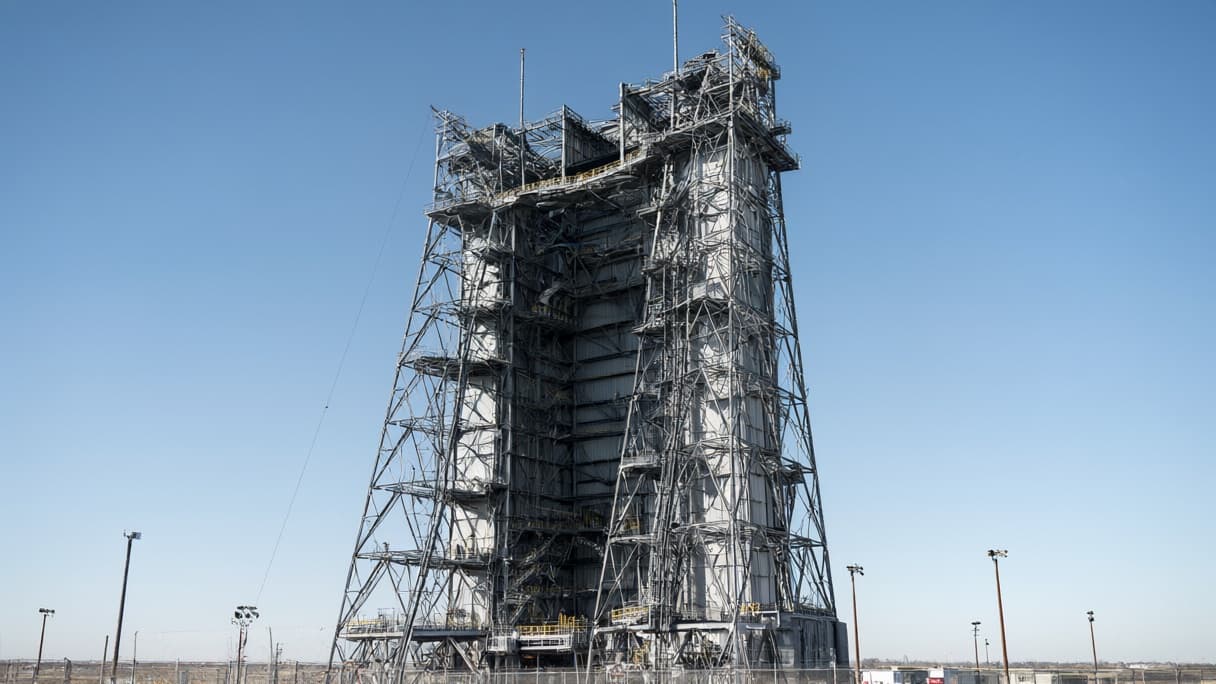
These arms, part of the "Mechazilla" launch and catch tower, extended to snag the vehicle mid-air. As described by The Verge, the spacecraft eased itself between these arms at approximately 4:20 PM ET, marking the first time this specific maneuver was successfully executed on the Starship vehicle itself. While SpaceX has previously performed these catches with boosters, the upper-stage recovery is the centerpiece of the company's decade-long effort to develop a fully reusable rocket, as reported by CBC.
### The Ghost of the Space Shuttle
To understand why this hardware pivot matters, you have to look at the failures of the past. Ars Technica notes that NASA's Space Shuttles, while engineering marvels of the 1970s, were not designed for rapid reuse. The orbiters acted as gliders during reentry and relied on delicate heat shields that required exhaustive, painstaking refurbishment after every flight.
This design philosophy led to a staggering gap between projection and reality. NASA initially envisioned carrying dozens of people into space with cargo costs as low as $25 per pound; instead, crew capacity capped at seven and costs soared to roughly $25,000 per pound. Over 30 years, the shuttle program completed 135 flights. In contrast, SpaceX is aiming for a scale that sounds like science fiction: flying 135 times a year, eventually scaling to thousands of flights.
### Scaling the Factory
Hardware viability is driven by production capacity. Ars Technica reports that SpaceX currently has five Starships in advanced development at Starbase, with components for a dozen more in the factory. The South Texas "Starfactory" is currently producing a ship every three weeks, though the facility was specifically sized to produce one every three days.
This industrial scale is what transforms the chopstick catch from a trick into a utility. If the rocket can be caught, inspected, and reflown without the lag of traditional landing and refurbishment, the cost-per-pound of orbital delivery plummets.
### The Friction of Progress
Despite the triumph of the upper-stage catch, the mission was not without hardware failure. CBC reports that the first-stage booster exploded shortly after liftoff on Friday, failing the company's goal of a "double catch." SpaceX's Kate Tice explained that the booster's engines stopped firing too early during the descent. The guidance system, detecting the rocket was out of position, automatically triggered a self-destruction over the Gulf of Mexico.
However, The Verge notes that this failure is likely not an insurmountable obstacle, as SpaceX has successfully caught boosters on previous launches. Even with the booster loss, the mission achieved significant milestones: the spacecraft completed 14 laps around Earth—far exceeding the one to two laps of previous missions—and successfully released 26 advanced Starlink satellites from an altitude of 265 kilometres.
### The Interplanetary Roadmap
The implications of this hardware shift extend far beyond Texas. NASA Administrator Jared Isaacman described the catch as "almost magic" via X, noting it brings the agency one step closer to the moon. NASA is investing billions into Starship to land Artemis astronauts on the lunar surface later this decade and establish a permanent lunar base.
Upcoming milestones include launches from Florida's Kennedy Space Center for Artemis missions, where astronauts will practice docking with Starship and Blue Origin's Blue Moon. NASA is targeting as early as 2028 for Artemis IV, which would be the first moon landing since the Apollo era.
Beyond the moon, SpaceX CEO Elon Musk maintains a grander vision: utilizing a fleet of Starships to build a city on Mars. While the heat shield remains a primary technical hurdle for rapid reuse, the successful capture of the upper stage proves that the most daring part of the hardware loop—the catch—is now a reality. As Ars Technica suggests, what feels like stepping into the future today will eventually become routine.