
The Grid's Hard Ceiling: Texas Pauses the AI Epicenter

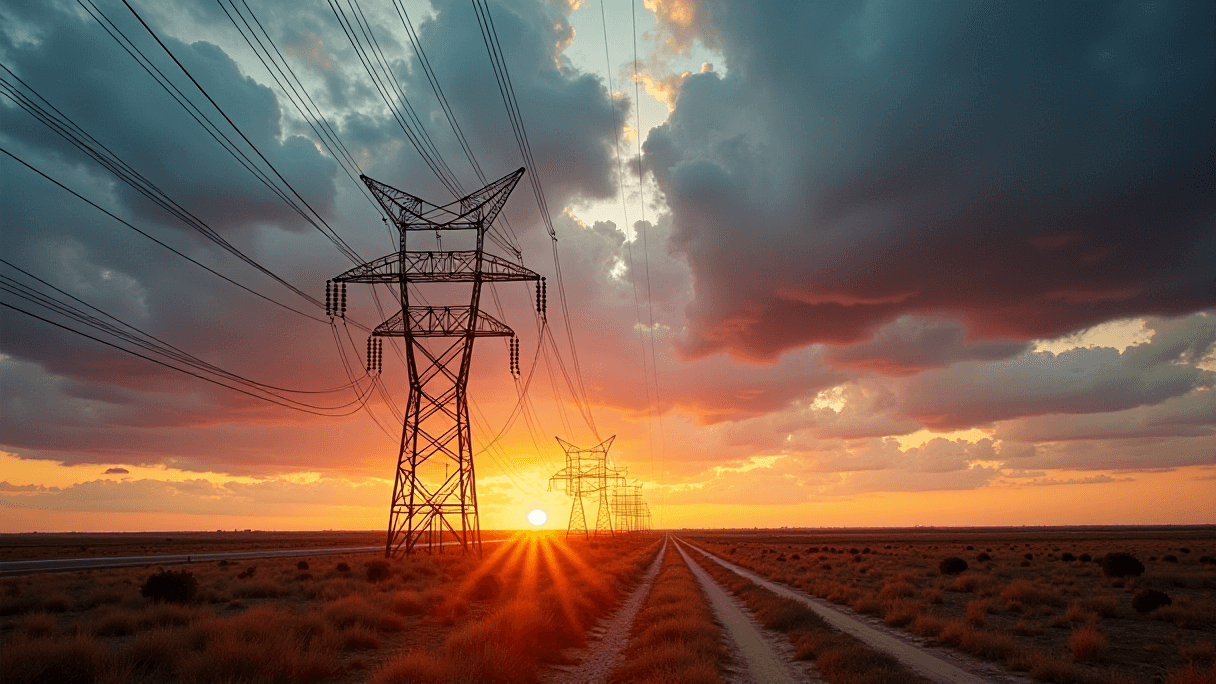
AI-generated image · Bay Street Wire
Governor Greg Abbott's moratorium on data center grid connections reveals a collision between venture-backed AI scaling and the physical limits of power infrastructure.
For the past few years, the narrative surrounding Texas has been one of unchecked expansion. With cheap land, loose regulations, and a business-friendly climate, the state positioned itself to potentially surpass Virginia as the top U.S. data center market. Governor Greg Abbott even branded the state the “epicenter of AI development.”
But as a practitioner in the AI space, I've always maintained that the most sophisticated model is still beholden to the laws of physics. In Texas, that reality has finally hit the hard wall of grid capacity.
On August 3, 2026, Governor Abbott issued a directive to the Public Utility Commission of Texas (PUCT) and the Electric Reliability Council of Texas (ERCOT) to halt all new power grid connections for data centers. This moratorium is not a suggestion; it is a mandatory audit of every project currently in the interconnection queue.
***
**Opinion: The Scaling Fallacy**
*The industry has operated under the assumption that capital can solve any bottleneck. We saw this with GPU shortages, and we are seeing it now with land acquisition. But you cannot 'disrupt' the physical capacity of a power grid. The Texas situation proves that the AI boom is no longer a software problem—it is a heavy industrial problem. When the demand for power exceeds the physical limits of the transmission system, the 'epicenter' fantasy evaporates.*
***
According to reporting from Ars Technica, the scale of the demand is staggering. The ERCOT interconnection queue currently holds over 1,800 projects requesting more than 474 gigawatts of power. To put that in perspective, that is more than five times the record peak electricity demand for the state. ERCOT reports that approximately 90 percent of these requests originate from data centers.
While TechCrunch notes that many of these are merely "paper proposals" from developers trying to secure a spot in line, the aggregate pressure is unsustainable. The Texas Tribune reports that ERCOT forecasts statewide electricity demand could double its current record by 2032.
Beyond the raw wattage, the economic and environmental costs are mounting. Ars Technica reports that a 2014 bipartisan tax break has evolved into over $1 billion in annual subsidies for developers, with state government estimates suggesting a loss of $3.2 billion in sales tax revenue over the coming two years.
There is also the water crisis. While Abbott's directive asks for data on cooling systems, Ars Technica points out a critical blind spot: the water used by power generation. A Sierra Club report indicates that in 2024, Texas natural gas, coal, and nuclear plants consumed a combined 118 billion gallons of water. In contrast, data centers directly used 8 billion gallons for cooling, though they remain dependent on those water-intensive power sources.
Interestingly, the moratorium contains a loophole for the wealthiest players. Projects building their own on-site power generation—a "behind-the-meter" strategy—are exempt. CleanView research identifies Meta, Microsoft, Amazon, Oracle, OpenAI, and Anthropic as companies utilizing this approach, which typically relies on natural gas.
Texas is proving that while AI can scale in a virtual environment, it cannot bypass the physical constraints of the grid. The audit is a signal that the era of frictionless expansion is over.