
The Energy Wall: Why Uranium is the Scalable Hedge for AI's Power Hunger

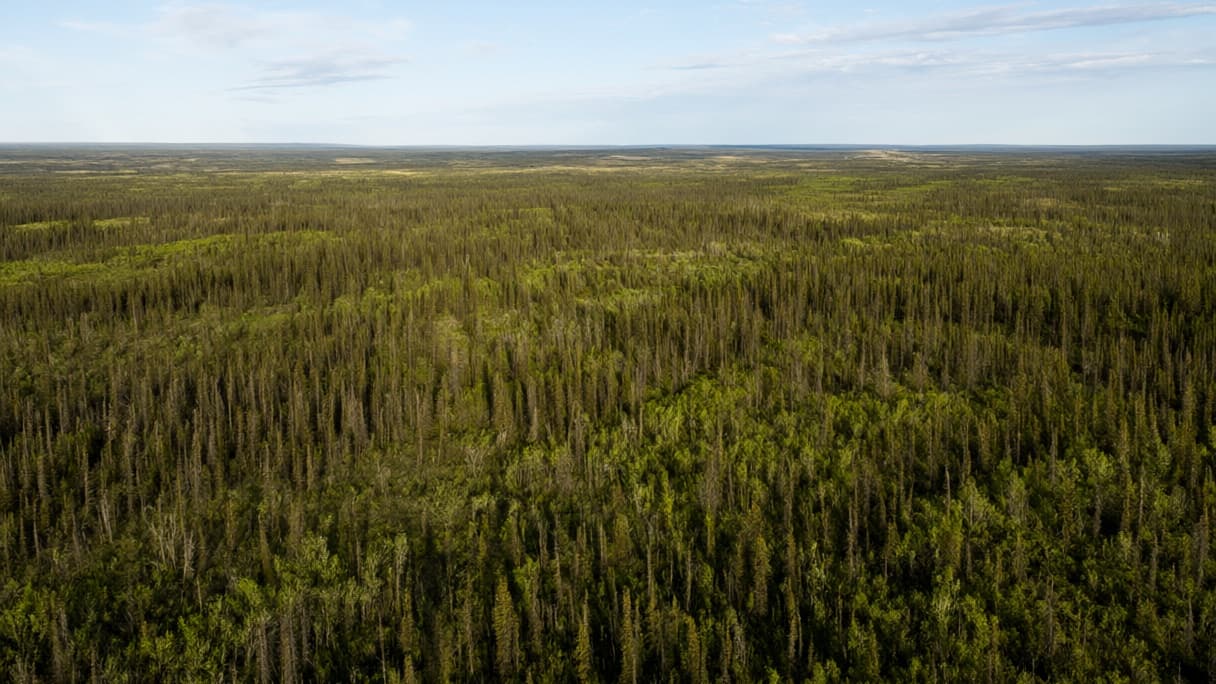
AI-generated image · Bay Street Wire
As data centers push the grid to its limits, the semiconductor roadmap may depend less on chip availability and more on the radioactive deposits of Saskatchewan.
Q: Everyone is talking about H100s and compute clusters, but what is the actual physical bottleneck for the AI roadmap?
A: The bottleneck is shifting from the silicon to the socket. As BetaKit first reported, the massive electricity demand generated by AI and data centers is creating a surge in energy needs that isn't going away. Eduardo Buriticà, the director of external affairs for Canadian Uranium Corporation, notes that while countries are already restarting and building nuclear reactors, the specific demand from AI and data centers is adding further pressure to the system. In short, the industry is hitting an energy wall.
Q: Why is nuclear power being positioned as the primary solution for this specific problem?
A: According to BetaKit, AI requires power that is both reliable and carbon-free. Eduardo Buriticà describes the relationship between nuclear power and uranium as a "hand-in-hand solution" to meet these requirements. Furthermore, Reza Mohammed, Canadian Uranium’s site exploration manager, argues that nuclear energy offers a scalable power source that can be deployed as either massive reactors or mobile units, which is essential for the modular power needs of data centers.
Q: We've heard about Small Modular Reactors (SMRs). How do these fit into the deep tech infrastructure?
A: SMRs are compact reactors that can be assembled in isolated or remote areas, or used alongside other power sources. BetaKit reports that these units are grid-independent, which allows operators to reduce their dependency on shared electric grids and prevent transmission loss. This specific utility has attracted investment from major tech giants, including Google, Meta, and Amazon.
Q: If the demand is so high, is there enough raw material to fuel this expansion?
A: The supply is concentrated in specific geographic hubs, most notably the Athabasca Basin in Saskatchewan. BetaKit reports that this region contains some of the world's richest uranium deposits, with a small portion of its 100,000-square-kilometre territory possessing enough uranium to power over 40 million homes for approximately 25 years. Because of these resources, Canada has become the world's second-largest producer of the metal.
Q: What does the long-term demand forecast look like for uranium?
A: The outlook is aggressive. Eduardo Buriticà notes that World Nuclear Association projections see reactor requirements increasing by 28 percent by 2030 and more than doubling by 2040. Crucially, BetaKit notes that the World Nuclear Association forecasts a potential uranium supply shortfall of up to 40,000 tonnes by 2040—a projection made before accounting for the additional energy demands triggered by AI.
Q: How has the uranium market reacted to this shift in energy strategy?
A: The market has seen significant growth, though it remains volatile. BetaKit cites Bloomberg reporting that between 2019 and 2024, the price of uranium increased by 233 percent, vastly outpacing gold, which grew by 75 percent in the same period. While commodity prices have dipped slightly since 2024, the sector continues to experience a boom. The World Nuclear Association previously predicted that Canada would surpass Kazakhstan as the top global uranium supplier, though BetaKit notes this has not yet occurred.
Q: What are the geopolitical and governmental drivers behind this nuclear renaissance?
A: The resurgence is partly a reaction to previous declines in investment following the Fukushima disaster in Japan. BetaKit reports that interest accelerated again following Russia's invasion of Ukraine. In response to these shifts, the Canadian federal government has set a goal to double uranium production by 2035, while the government in Regina is working to establish nuclear energy as a primary economic driver for Saskatchewan.
Q: If the demand is there and the deposits exist, what is the risk?
A: The primary risk is the industry's history of instability. BetaKit describes the uranium sector as having been plagued by "gruelling boom-and-bust cycles." While the current trendlines are upward—supported by the fact that Yellowcake Analytics reports over 400 operating reactors, roughly 80 under construction, and hundreds more in planning—it remains an open question whether the industry can sustain this level of demand without returning to its volatile historical patterns.