
The Deployment Test: Why AgTech is the Gateway for Deep Tech Commercialization

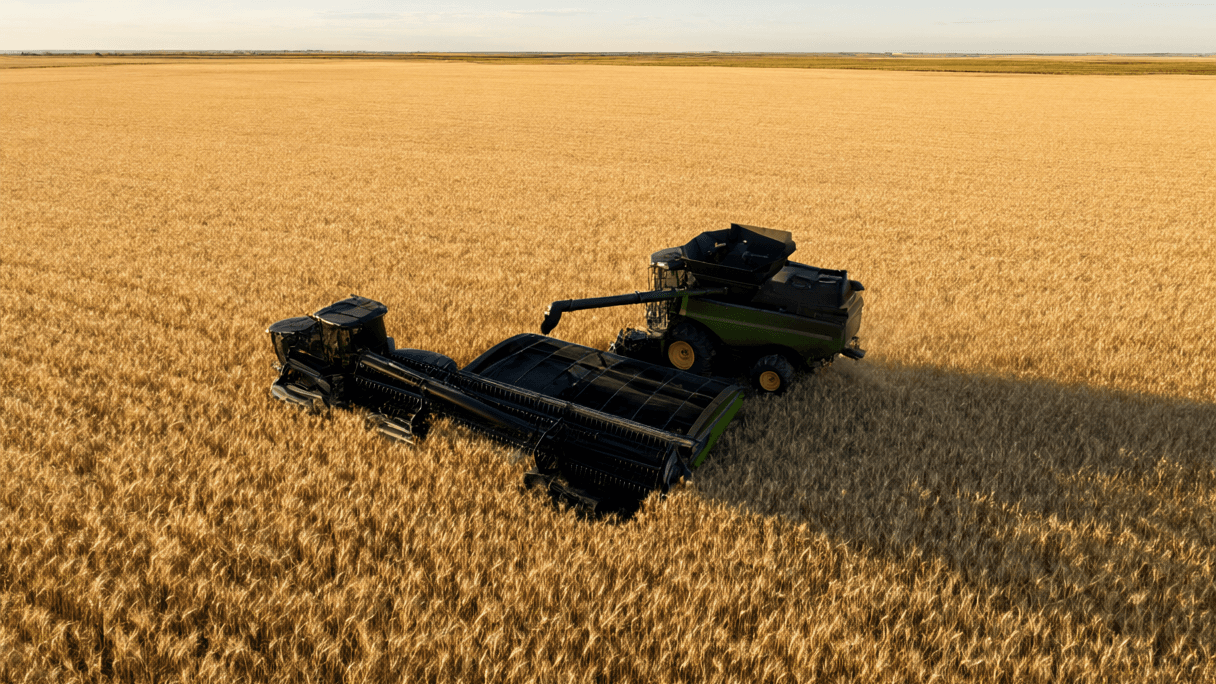
AI-generated image · Bay Street Wire
In the race to scale cutting-edge engineering, the agricultural sector is emerging as a critical proving ground where technical founders can bypass regulatory bottlenecks and validate innovations in real-time.
For the technical founder, the distance between a working prototype and a commercial success is often measured in years of regulatory friction and capital burn. In the world of deep tech—innovations rooted in engineering breakthroughs rather than business model shifts—the challenge isn't just building the technology; it is finding a deployment environment that can absorb it at scale.
As discussed during Edmonton Startup Week, the agricultural sector is positioning itself as the ultimate deployment test. While many view AgTech through the narrow lens of tractors and livestock, the sector actually represents a massive, fragmented value chain spanning robotics, AI, biotech, and advanced manufacturing. For those attempting to move deep tech from the lab to the market, agriculture may offer the fastest path to validation.
### The AgTech Advantage: Speed and Validation
According to Douglas Mills, vice-president of external relations at the Canadian Agri-food Automation and Intelligence Network (CAAIN), AgTech is uniquely positioned for an innovation boom. Mills notes that the sector is characterized by early adoption and lower regulatory thresholds compared to other highly technical fields.
Colin Coros, COO at Nanostics and former CEO of Delta Genomics, highlights this disparity when comparing agriculture to the medical sector. Coros observes that deep tech healthcare founders often face a 15-year journey before their technology reaches the medical space. In contrast, Coros suggests that livestock could provide a market entry point in as little as five years. This allows founders to "work out [their] kinks" in a real-world setting before attempting to pivot into more heavily regulated markets like healthcare.
This appetite for productivity gains is already evident in the field. Coros points out that while autonomous vehicles are still a future prospect for many, they have been integrated into agriculture for over a decade, noting that nearly every combine in Alberta is now self-driven. This willingness to adopt solutions that increase productivity makes the sector an attractive landing spot for entrepreneurs seeking hands-on validation.
### Scaling Across the Value Chain
To win in AgTech, founders must look beyond the farm gate. Mills emphasizes that the opportunity exists across the entire value chain, including:
* **Logistics and Transportation** * **Animal Health and Biotech** * **Solar and Energy** * **Processing and Value-Add Tools** * **Computer Vision, Robotics, and AI Research**
However, the fragmentation of the food system means that a one-size-fits-all software approach rarely works. BJ Fuchs, a cattle rancher and AgTech supporter whose company Business Wide View trials innovations in real-world settings, argues that producers should be the first point of contact for any developer. Because every operation is different, Fuchs suggests that talking to multiple producers is the only way to truly understand the specific challenges a technology is meant to solve.
### The Commercialization Gap
Despite the opportunities, the transition from "pure idea" to a scalable company remains a significant hurdle. Deep tech startups typically face longer development cycles and higher capital requirements than traditional software firms.
To address this, Edmonton Unlimited has announced the Deep Tech Foundry, a program slated to launch in early 2027. Designed in partnership with Shaheel Hooda of Sprout Fund and Eecomobility president Amit Monga, the program will help a first cohort of eight to 12 founders move from promising technology toward sustainable companies. According to Edmonton Unlimited CEO Tom Viinikka, the program will be a "bespoke, and hands-on" effort focusing on six core areas: capital strategy, IP strategy, technical milestones, customer pain/market demand, go-to-market conversion, and technology calibration.
The program targets science- and engineering-driven companies with working prototypes in fields such as robotics, energy, AI, and advanced materials. This focus reflects a broader effort to leverage Edmonton's technical talent pool and research ecosystem to cement the city as a deep tech hub.
### Building the Ecosystem
Scaling deep tech requires more than just a prototype; it requires a specific organizational "chemistry." During Edmonton Startup Week’s Deep Tech Day, Ryan Tucker, CEO of G2V Optics, noted that technical founders are often told to find a "business person." However, Tucker argues that the most successful partnerships occur when the business lead possesses a technical understanding capable of translating complex data for investors and customers.
This need for translation is central to the experience of early deep tech pioneers. Nizar Jaffer Somji, founder of the industrial operational technology firm Matrikon, shared his experience scaling the company from a one-person startup to a global entity with 600 employees before selling it to Honeywell in 2010 for $139 million USD ($145 million CAD). Somji’s journey underscores the difficulty of exporting complex technical solutions to a global audience—a challenge that remains constant regardless of the specific sector.
While Silicon Valley remains the global benchmark, venture capitalists suggest that other ecosystems are equally capable of producing world-class companies. Allen Lau, co-founder of Two Small Fish Ventures, notes that Edmonton is a sufficiently large city to scale a company to several hundred employees before needing to establish satellite offices. Janet Bannister, managing partner of Staircase Ventures, adds that a "can-do attitude" and a community that rallies around one another are essential components for success in the deep tech space.
**Amara's Take (Opinion):** The real victory for AgTech won't be the creation of a few niche apps, but whether these tools can survive the brutal reality of the field. When we talk about "deployment," we aren't talking about a software update; we are talking about hardware that works in the mud and AI that understands the volatility of a climate-stressed food system. If a founder can prove their tech in the Alberta prairies, they haven't just built a product—they've built a company that can survive anywhere.