
The Data Centre Dilemma: Mississauga's Legal Battle Over Land and Power

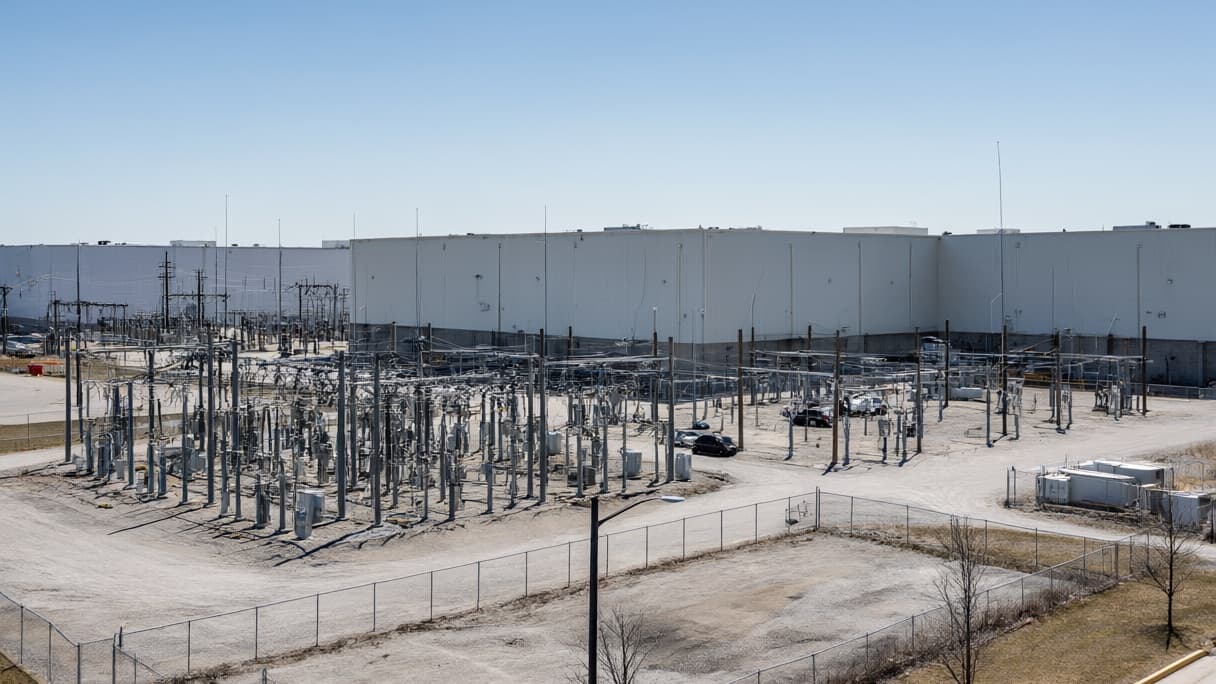
AI-generated image · Bay Street Wire
As Mayor Alvin Tedjo fights to uphold a moratorium on AI data centres, a clash with real estate giants exposes the friction between courting tech investment and protecting community infrastructure.
OPINION: In the race to capture the artificial intelligence boom, land is the ultimate currency. But as Mississauga discovers, the cost of courting big-tech investment is often a collision with the basic needs of the community.
Mississauga is currently locked in a high-stakes legal battle at the Ontario Land Tribunal. On one side is the city, led by newly sworn-in Mayor Alvin Tedjo, who is defending a one-year moratorium on AI data centres. On the other are two powerful real estate entities: U.S.-based Prologis and Toronto-based Montcrest Asset Management.
According to reporting from CBC Toronto and CityNews Toronto, the city's interim control bylaw, passed in September, blocks data centres with energy demands exceeding 10 megawatts—an amount of electricity CBC Toronto notes is enough to power approximately 10,000 homes. The moratorium is intended to provide a window for the city to study noise, land-use, and grid strain before implementing guardrails.
The tension is palpable. Mayor Tedjo told CBC News that residents are clear about not wanting American real estate investment trusts to dictate local development. He described the current state of the industry as the "wild west," arguing that the pause is necessary to prevent "runaway developments" that consume massive amounts of power.
However, the developers see this as a barrier to economic growth. Prologis, which proposed a 40-megawatt facility on Tenth Line, argues the bylaw is "poorly conceived" and lacks a clear planning rationale. Mattie Sorrentino, a spokesperson for Prologis, told CBC Toronto that the restriction is creating uncertainty and delaying investment. Similarly, Montcrest Asset Management is challenging the ban regarding its Tahoe Centre property, with spokesperson Melissa Fernandez telling CBC Toronto that the company seeks clear guidelines for future building.
This conflict highlights a dangerous precariousness. While Premier Doug Ford has framed data centres as promising investments—introducing a framework in August based on economic development and data sovereignty—municipal leaders feel adrift. CityNews Toronto notes that a number of municipal leaders feel they have received insufficient guidance or enforceable standards. Even Toronto Mayor Olivia Chow has campaigned on implementing a similar moratorium.
As City Councillor Martin Reid told CityNews Toronto, "We can never put development before planning." The risk here is not just about noise or power grids; it is about the permanent allocation of land. When 40-megawatt facilities are prioritized over sustainable community growth, the long-term cost is borne by the residents.
Kyle Gossen, a partner at Davies Howe LLP, told CBC Toronto that interim control bylaws are an "extraordinary" and rare tool for municipalities. The fact that Mississauga felt compelled to use one suggests a systemic failure in how Ontario balances tech-driven industrial growth with local livability. If the city loses this fight, it sets a precedent that investment capital outweighs municipal planning—a trade-off that rarely benefits those struggling with the region's affordability and infrastructure crises.