
The Bank of Canada is Playing a Dangerous Game of Chicken With Homeowners

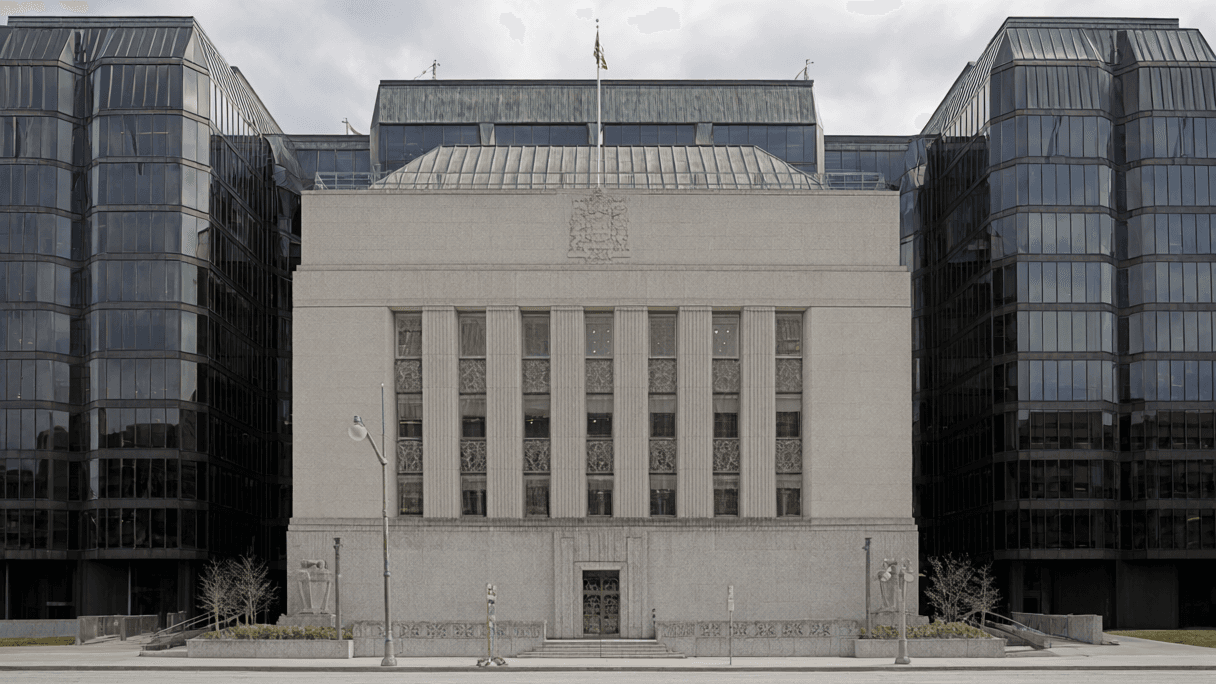
AI-generated image · Bay Street Wire
Opinion: With the housing market already on its knees, a potential rate hike would be less of a policy tool and more of an anchor for a drowning real estate sector.
For the average Canadian homeowner, the current economic climate feels less like a managed transition and more like a precarious ledge. As reported by CBC News, we approach the Bank of Canada's October 28 meeting, and the central bank appears to be playing a high-stakes game of chicken with a population already stretched to the breaking point. While Governor Tiff Macklem has signaled that borrowing costs may need to rise to combat stubborn inflation, doing so now would be catastrophic for a housing market that is already struggling to breathe.
Let's be clear: this is an opinion piece. From where I sit at the pocketbook level, the prospect of a rate hike isn't just a technical adjustment of the policy rate—which has sat at 2.25 per cent since October 2025—it is a direct threat to the financial stability of thousands of families.
As reported by CBC News, the housing market is currently in a state of collapse. Ben Rabidoux of Edge Realty Analytics notes that nationwide home sales volume has plummeted to a 25-year low. He describes buyer confidence as "unbelievably weak" across the country, driven by a cocktail of anxieties including the impact of AI on employment and the ongoing Canada-U.S. trade war. According to Rabidoux, per capita home sales have regressed to levels seen in the 1990s, a period characterized by a severe recession.
In this environment, the Bank of Canada is considering a move that would effectively pull the rug out from under the remaining stability in the market. Scott Terrio, manager of consumer insolvency at Hoyes Michalos & Associates, put it bluntly to CBC News: "The housing market is kind of on its knees right now, and rising rates is like tossing a drowning guy an anchor."
If the Bank of Canada proceeds with a hike, the reverberations would be immediate and brutal. Variable-rate mortgage holders would see their payments spike instantly, and those seeking new fixed mortgages would face higher costs, further shrinking the pool of eligible buyers. This shift in power—away from sellers and toward a dwindling group of qualified buyers—could trigger a "gradual grind lower" in home prices over the next three to six months, according to Rabidoux.
The Bank of Canada's justification for this potential cruelty is inflation, which Statistics Canada reported rose to 3.1 per cent in September, pushed higher by fuel prices. Governor Tiff Macklem has specifically pointed to the conflict in the Middle East and its effect on global energy markets as a reason to potentially raise borrowing costs. While the Bank of Canada's latest survey suggests businesses are bracing for higher prices, the reality is that the people paying those prices are the same ones currently staring down the barrel of a mortgage renewal.
Market sentiment is already shifting toward a hike. CBC News reports that while a Bloomberg survey previously pointed to a hold, the Bank of Montreal, RBC Dominion Securities, and Desjardins Group have all flipped their predictions for the October 28 meeting from a hold to a hike. Even more alarming is the overnight swap market, where traders now place the odds of a 25-basis point hike at 87 per cent, up from 70 per cent earlier in the week.
Economists are lining up to support this move. Derek Holt, head of capital markets economics at Scotiabank, wrote in a research note that there is "probably enough supporting evidence for a hike." David Doyle, an economist with Macquarie Group, has gone even further, predicting a steady rate hike cycle that could see the policy rate rise by 125 basis points by the end of 2027.
But these analysts are looking at spreadsheets; I am looking at the people. The Canadian Real Estate Association (CREA) has already downgraded its 2026 home sales forecast for the third consecutive quarter, citing a "notably more hawkish tone" from the Bank of Canada. CREA now expects only 444,530 homes to be sold by the end of the year, which marks a 5.2 per cent decline compared to 2025.
When you combine this with the broader economic drag—such as Deloitte lowering its growth forecast for next year by 20 per cent due to the U.S. trade war—the Bank of Canada's insistence on fighting inflation via interest rates feels dangerously out of touch. We are not dealing with an overheating market; we are dealing with one that is, in Terrio's words, "on its knees."
To raise rates now is to gamble with the solvency of Canadian homeowners. It is a policy move that ignores the human cost of "tamping down" inflation. If the Bank of Canada chooses to toss that anchor, they shouldn't be surprised when the entire housing market sinks along with it.