
Smith and Carney Align as U.S. Tariffs Trigger Trade Crisis

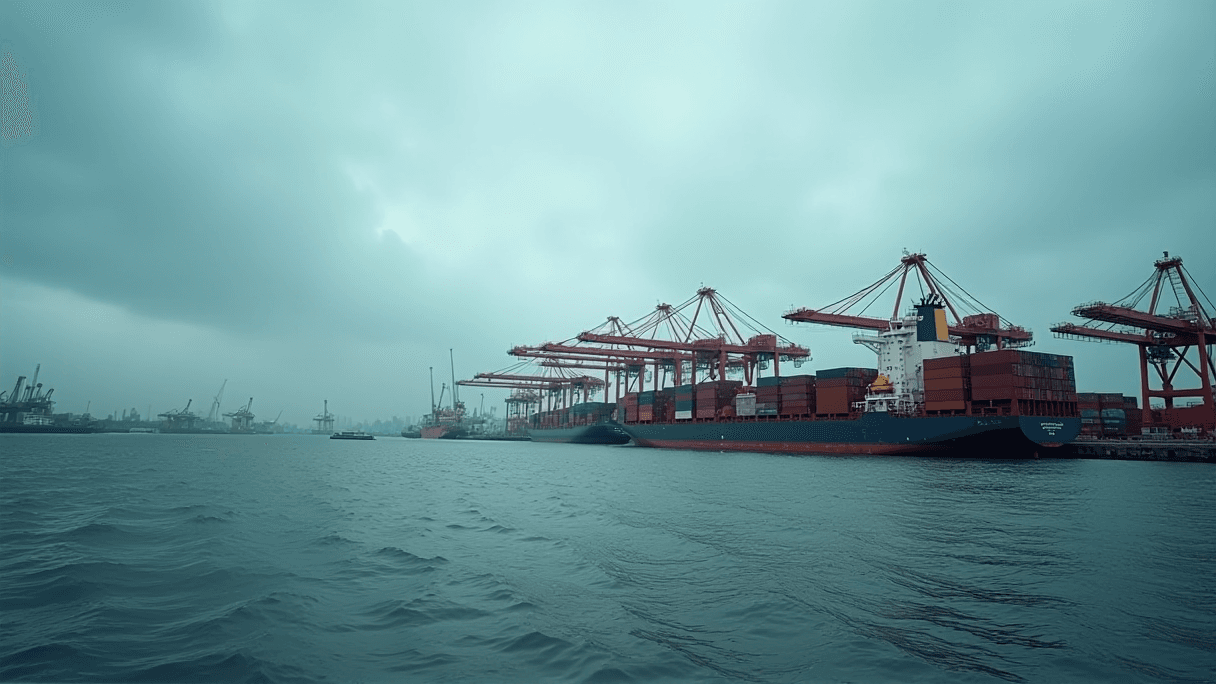
AI-generated image · Bay Street Wire
Alberta's Premier and the Prime Minister present a unified front after the collapse of Washington trade talks, though concerns remain over the impact of retaliatory measures.
The collapse of trade negotiations in Washington has triggered a 50 per cent tariff on Canadian exports, prompting an unexpected alignment between Alberta Premier Danielle Smith and Prime Minister Mark Carney, as first reported by CBC News.
According to reporting from CBC News, Premier Smith expressed hope that federal negotiators will return to the table to secure a "fair" deal. While Smith described the last-minute demands from American negotiators as "too painful" and "untenable" for Canada, she emphasized the urgency of constructive conversations to mitigate the pain of the tariff war.
Prime Minister Mark Carney announced on Aug. 22 that Canada will implement dollar-for-dollar retaliatory tariffs on U.S. goods starting Sept. 8. During a news conference in Ottawa, Carney stated that American negotiators sought to limit Canada's ability to enter trade agreements with other nations. He further noted that the proposed deal would have harmed the Canadian automotive industry and included objections to Canadian subsidies for French cultural programs. Carney concluded that the U.S. "asked too much and offered too little."
Despite the shared stance against U.S. demands, Smith expressed caution regarding the federal government's retaliatory strategy. She noted that while retaliation may feel emotionally satisfying, it results in higher costs for those purchasing American products. Specifically, Smith stated she has no interest in banning U.S. alcohol imports, noting that Alberta and Saskatchewan are the only provinces currently without such a ban. She also raised concerns regarding the vulnerability of honey producers, furniture makers, and farmers.
While Smith indicated that Alberta's primary exports of oil and natural gas would not be severely impacted, the broader economic fallout is significant. Smith noted that approximately $1.5 billion of Alberta's $188 billion in trade volume with the U.S. is facing disruption.
Kayode Southwood, a senior policy analyst for the Canadian Federation of Independent Business (CFIB), told CBC News that small businesses will face "immediate and significant effects," noting that 40 per cent of Alberta's small businesses export to the U.S. and that half of them bring in American goods.
Deborah Yedlin, president of the Calgary Chamber of Commerce, told CBC News she supports Carney's decision to end the talks but warned that up to 100,000 jobs across Canada are now vulnerable. Yedlin suggested the breakdown is an opportunity for Canada to expand international trade relationships, noting that while Canada has agreements with 51 countries covering 60 per cent of global GDP, exports to those regions currently stand at 33 per cent.
Premier Smith is scheduled to meet with her cabinet on Tuesday to review federal relief proposals and the scope of the new trade measures.