
Musk’s Mobile Gambit: A Necessary Shake-up for the Telecom Oligarchy

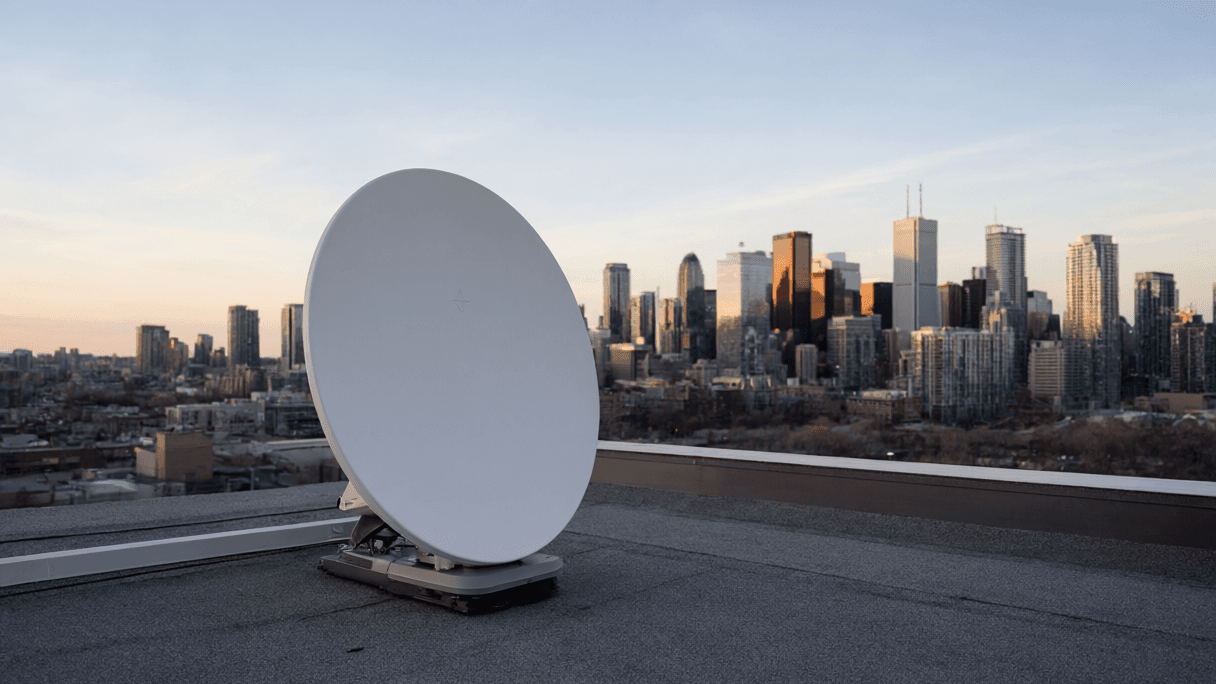
AI-generated image · Bay Street Wire
SpaceX is aggressively acquiring spectrum to challenge the Big 3, signaling a potential end to the stagnant era of AT&T, Verizon, and T-Mobile.
For years, the American wireless landscape has been a predictable, suffocating oligarchy. As *The Verge* first reported, AT&T, Verizon, and T-Mobile have held a stranglehold on connectivity, operating in a sector that, as Nilay Patel of *The Verge* puts it, is a business everyone loves to hate. But the status quo is facing a legitimate existential threat in the form of Elon Musk and SpaceX.
**Opinion:** From a consumer advocacy standpoint, any disruption to this three-player game is a victory. Whether SpaceX succeeds or fails, the mere act of forcing the Big 3 to defend their dinner plates should drive innovation and competition in a market that has long felt stagnant.
According to reporting from *The Verge*, SpaceX is no longer just playing at the edges of connectivity with satellite internet; it is positioning itself to become the fourth major mobile carrier in the United States. This isn't a vague ambition—it is a capital-intensive offensive. Walter Piecyk, a partner and analyst at LightShed Partners, told *The Verge* that SpaceX is aiming for a "trillion-dollar enterprise value business" in the U.S. alone, with global aspirations for its mobile telephone service.
To build what SpaceX describes as "the world's most advanced mobile network," Musk is aggressively securing the raw materials of wireless communication: spectrum. *The Verge* reports that SpaceX recently agreed to purchase a significant portion of low-band spectrum. Specifically, Piecyk indicates that SpaceX spent $8 billion to acquire 800 MHz spectrum. This particular spectrum has a long, convoluted history; it was originally Nextel spectrum that Sprint was required to divest during its sale to T-Mobile. It was later held by a firm called Grain Management before SpaceX stepped in to buy it.
This latest acquisition follows a previous, massive investment. *The Verge* reports that SpaceX spent nearly $20 billion last year on separate EchoStar spectrum. When combined with the FCC's approval to deploy 15,000 next-generation Starlink satellites, the pattern is clear: SpaceX is building a terrestrial and orbital hybrid that could bypass the traditional limitations of the Big 3.
Piecyk suggests that Musk’s approach is iterative, noting that the rocket mogul "learns as he goes." After initial spectrum purchases from EchoStar received positive investor feedback, SpaceX doubled down. While the telecom industry is often defined by lobbyists and complex regulatory hurdles, SpaceX is attempting to cut through the noise with sheer scale and capital.
Historically, the telecom world is a "graveyard of pivots, bad ideas, and failed acquisitions," as Patel observes. However, the sheer aggression of SpaceX's spending—approximately $28 billion across these spectrum deals—suggests this is more than a pivot. It is a direct assault on the mobile carrier establishment. For the consumer, the arrival of a fourth major player isn't just a tech story; it's a chance to finally break the grip of the Big 3.