
The Tower War: SpaceX's Bold Play to Break the Wireless Oligopoly

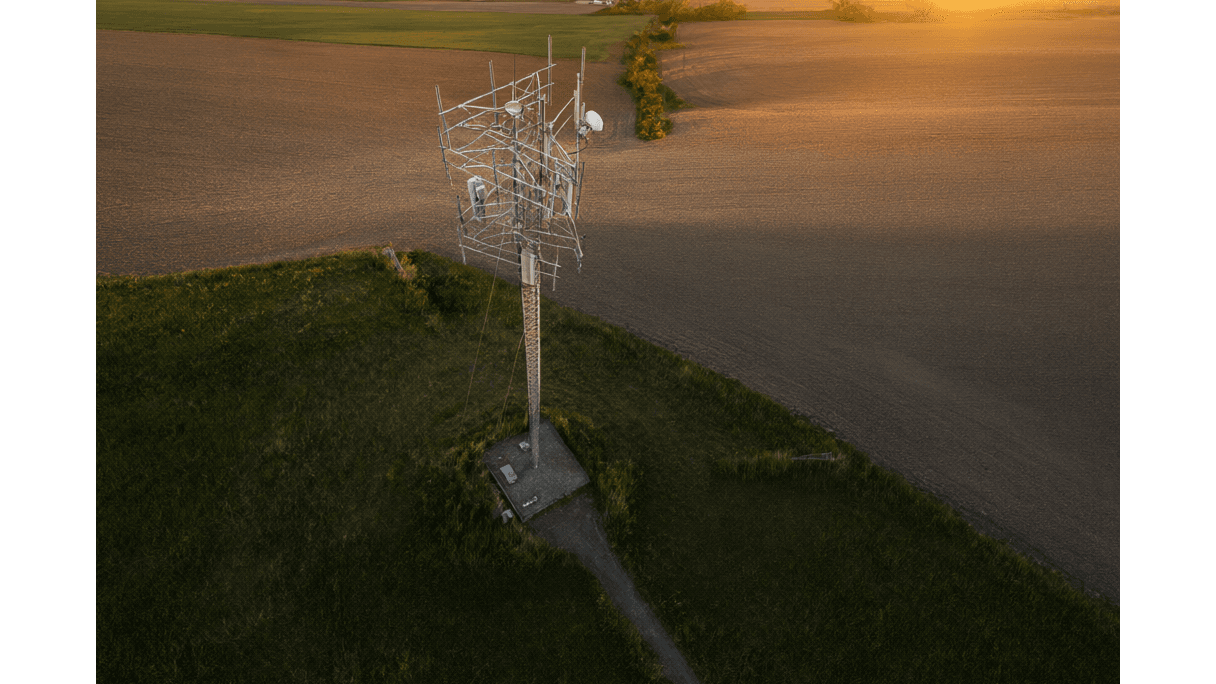
AI-generated image · Bay Street Wire
By targeting 80,000 cell sites and leveraging a massive satellite constellation, Elon Musk's SpaceX is positioning itself to challenge the dominance of the Big 3.
OPINION: For too long, the American wireless consumer has been held hostage by a cozy oligopoly. We've all felt it—the creeping price hikes, the bloated bills, and the feeling that whether you choose Verizon, T-Mobile, or AT&T, you're essentially paying the same corporate overlords for the same stagnant service. But the wind is finally shifting.
As The Verge first reported, SpaceX is no longer just looking at the stars; it is coming for the ground. The Elon Musk-owned company is reportedly in talks with Crown Castle Inc., one of the largest owners of cell towers in the United States, to gain access to at least 80,000 cell sites. This isn't just a minor expansion; it is a direct offensive against the established wireless giants.
To put the scale of this ambition into perspective, Reuters reports that there are currently 158,500 operational cell towers across the U.S. If SpaceX secures this deal, they would have access to roughly half of the nation's existing tower infrastructure. When asked during a Wednesday earnings call about potential partnerships with SpaceX, Amazon, or other satellite providers, Crown Castle CEO Chris Hillabrant declined to provide customer-specific details but noted that the company is "talking to all parties."
What makes this move particularly dangerous for the Big 3 is that SpaceX isn't relying on towers alone. The company's strategy is a hybrid assault: pairing a massive network of terrestrial cell towers with its own constellation of direct-to-cell satellites.
SpaceX has already been laying the groundwork for this transition. The company recently received the green light from the FCC to launch 15,000 upgraded V2 Starlink Mobile satellites, according to The Verge. Furthermore, SpaceX has been aggressively acquiring the spectrum necessary to operate as a legitimate carrier. This includes a recent acquisition of low-band spectrum licenses and a massive $17 billion purchase of 2GHz spectrum from EchoStar last year.
For the average consumer, this is the kind of disruption we've been desperate for. The wireless industry has operated as a closed loop for decades, with the major carriers comfortably splitting the market. By integrating satellite capabilities with a massive footprint of physical cell sites, SpaceX is attempting to build a network that could potentially outperform the legacy carriers in both reach and reliability.
SpaceX has explicitly stated that these moves—the spectrum acquisitions and the satellite upgrades—are intended to "pave the way" for Starlink Mobile to emerge as a "major" carrier in the U.S. market.
While the Big 3 might view this as a niche satellite play, the numbers suggest otherwise. You don't negotiate for 80,000 cell sites and drop $17 billion on spectrum just to provide emergency texting in the middle of the woods. This is a play for the mainstream mobile market. If SpaceX can successfully leverage Crown Castle's infrastructure and its own V2 Starlink satellites, the bloated wireless bills that have become the norm for Verizon, T-Mobile, and AT&T customers may finally face some real downward pressure.
It is about time a competitor with this level of aggression entered the fray. The wireless industry has been stagnant for too long, and the prospect of a truly global, hybrid network forcing the legacy carriers to actually compete on price and value is the best news wireless subscribers have had in years.