
The Sky is the Limit, But the Big 3 are Stuck on the Ground

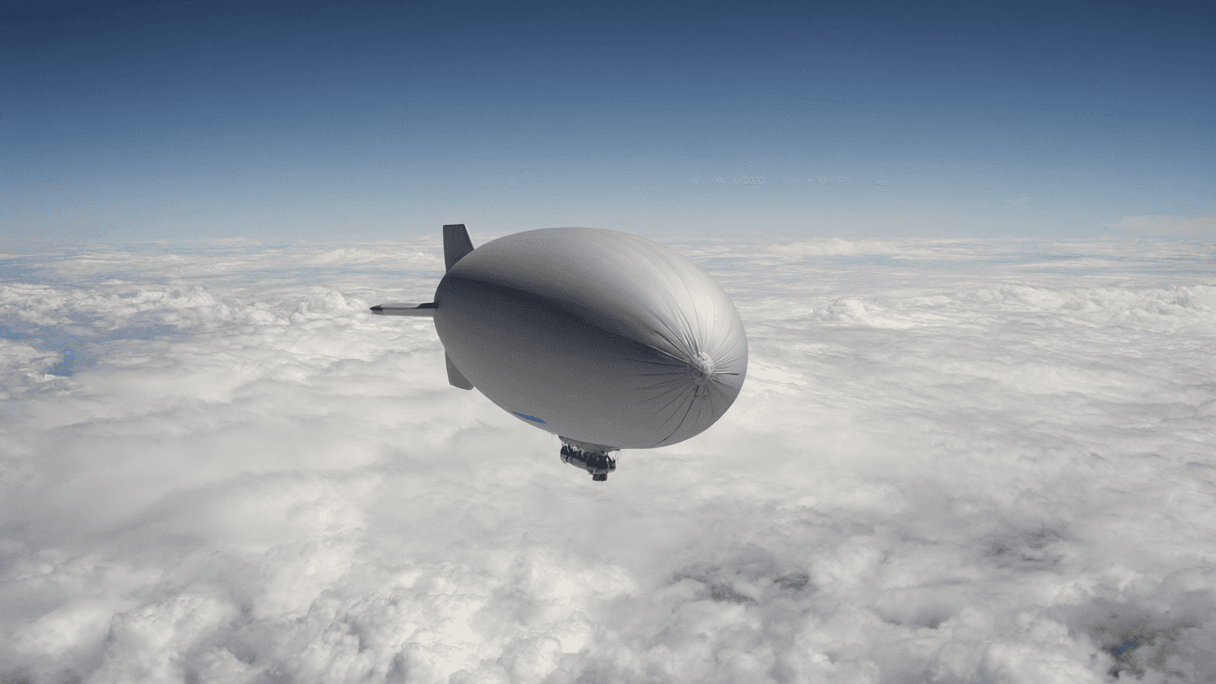
AI-generated image · Bay Street Wire
Opinion: While Sceye proves that stratospheric 'cell towers' can revolutionize connectivity, legacy carriers continue to prioritize rate hikes over genuine innovation.
For years, the Big 3 carriers have operated on a predictable cycle: hike the monthly rates, promise 'enhanced' coverage, and deliver a service that still drops the moment you hit a dead zone. As a consumer advocate, I've watched these legacy boardrooms treat connectivity as a commodity to be squeezed rather than a service to be evolved. But while our carriers are playing it safe with incremental updates, real innovation is happening in the stratosphere.
As Ars Technica first reported, the US aerospace company Sceye has successfully demonstrated a high-altitude platform system (HAPS) that essentially functions as a cell phone tower in the sky. Between August and September 2026, Sceye's uncrewed, helium-filled airship completed a massive round-trip journey from New Mexico to Japan and back. This wasn't just a flight of fancy; it was a proof of concept for a future where connectivity isn't tethered to expensive, ground-based infrastructure that fails during disasters.
Sceye CEO and founder Mikkel Frandsen told Ars Technica that these platforms operate at roughly 60,000 feet—twice the height of standard air traffic and well above the jet stream. By utilizing top-mounted solar panels and onboard batteries, the system can hover over a specific area of operation indefinitely. The potential here is staggering; according to Ars Technica, the coverage provided by a single Sceye platform could eventually equal that of 500 ground-based cell towers.
Think about that for a second. While the Big 3 spend billions maintaining aging ground networks and charging us premiums for the privilege, a single stratospheric platform could theoretically replace hundreds of towers. Sceye CTO Johnny Truong explained to Ars Technica that the platform uses an auto-navigation system to handle local wind conditions, allowing it to 'park' itself during bad weather—such as the typhoon season encountered during the Japan mission—until it is safe to move again.
Moreover, the technical leaps are tangible. Frandsen noted that the discovery of graphene in 2004 allowed Sceye to optimize battery energy density and hull strength. This has led to a 270-foot version of the platform capable of lifting payloads up to 551 pounds. To put that in perspective, Helena—a US nonprofit with a for-profit investment arm that has invested in Sceye—states this capacity is 25 to 50 times greater than competing stratospheric drones.
So, why aren't our carriers screaming from the rooftops about this? Because the Big 3 aren't in the business of disruption; they are in the business of rent-seeking. It is far more profitable to keep consumers locked into mediocre coverage and rising bills than it is to pivot toward a paradigm shift that could democratize broadband access, especially in disaster scenarios.
Sceye has already proven the tech works, with a 13-day journey across the Pacific and previous flights to Brazil. The innovation is there. The capability is there. The only thing missing is a carrier with the courage to stop protecting its legacy margins and actually invest in the future of connectivity. Until then, we'll keep paying more for less, while the real revolution happens 60,000 feet above our heads.