
Hardware Analysis: The Lenovo Legion Go S is the Steam Deck OLED's First True Peer

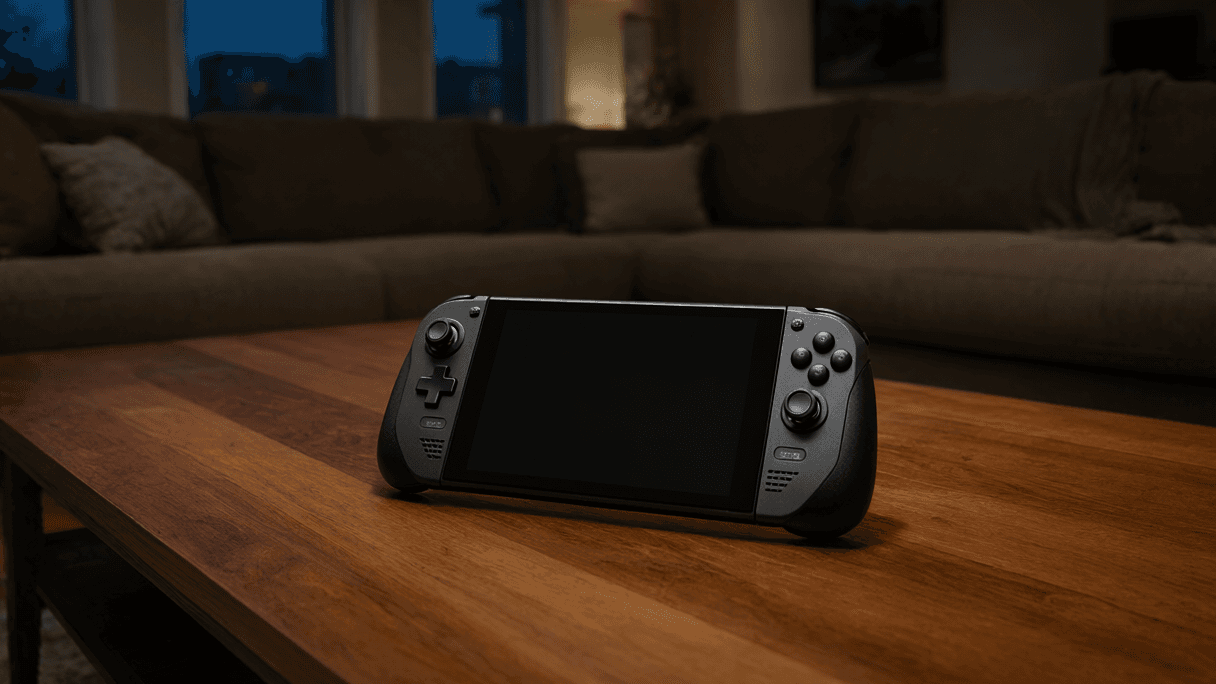
AI-generated image · Bay Street Wire
By combining SteamOS fluidity with superior raw specs, Lenovo has removed the traditional trade-offs of the handheld market.
For a long time, the handheld gaming market has felt like a choice between two extremes: the seamless, console-like experience of the Steam Deck or the raw power of Windows-based machines that often struggle with software friction. With the Lenovo Legion Go S, that divide is finally collapsing.
In my view, the Legion Go S represents the first real challenger to the Steam Deck OLED that doesn't force the user to compromise on ergonomics or software fluidity. As The Verge first reported, the secret sauce here is the integration of SteamOS. The Legion Go S runs identical software to the Steam Deck, meaning users get the same polished, gaming-first interface without the overhead of a traditional desktop OS.
But where the Legion Go S truly pulls ahead is in the hardware. While the Steam Deck OLED is priced at $789, the Legion Go S (currently discounted to $999.99 at Best Buy) offers a significant leap in specifications. The Verge notes that the device features double the RAM and storage of the base Steam Deck OLED, shipping with 32GB of RAM and a 1TB drive. It also upgrades the visual experience with a larger eight-inch IPS screen supporting 1080p resolution and a 120Hz refresh rate, outclassing the Deck OLED's 800p resolution and 90Hz screen.
Under the hood, the performance gains are equally tangible. The Verge reports that this configuration utilizes the Ryzen Z1 Extreme processor, which is slightly faster than what is found in the Steam Deck. Interestingly, while the Legion Go S originally launched with Windows 11 and the Ryzen Z2 Go chip, The Verge points out that the Z2 Go is actually less powerful than the Z1 Extreme found in the discounted SteamOS model.
From a tactile perspective, Lenovo has added value through the inclusion of two-stage triggers, enhancing the physical control scheme over the competition. While it isn't the most powerful device on the market—The Verge notes it is surpassed by the $1,299.99 Asus ROG Xbox Ally X20, which features an OLED screen and the Z2 Extreme processor—the Legion Go S hits a sweet spot for most gamers.
By pairing the efficiency of SteamOS with a faster processor and a superior display, Lenovo has created a machine that matches the Deck's ease of use while providing the hardware headroom that power users crave.