
GTA Rent Arrears Surge as Housing Costs Outpace Incomes

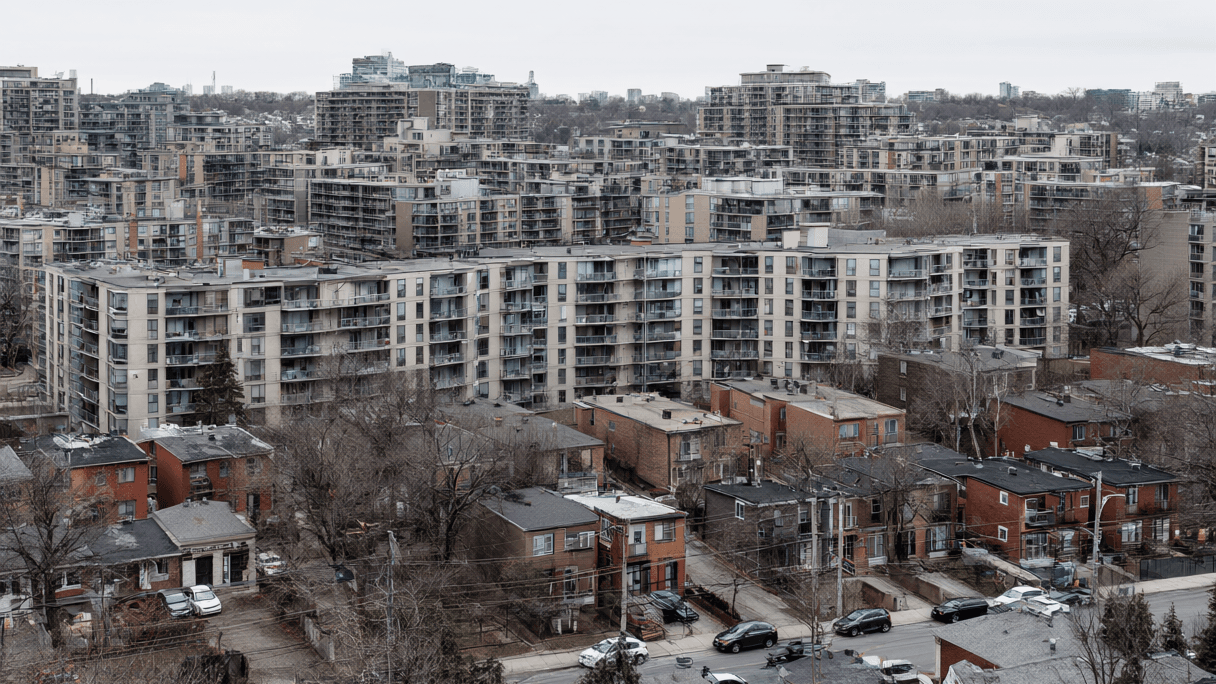
AI-generated image · Bay Street Wire
Eviction applications for non-payment are rising across Ontario while demand for housing supports hits unprecedented levels.
A growing gap between stagnant incomes and rising housing costs is driving a surge in rent arrears across the Greater Toronto Area, according to reporting from CBC Toronto.
Data from Ontario’s Landlord and Tenant Board reveals that applications to evict tenants for non-payment of rent (L1s) have steadily climbed, increasing from 37,690 in 2022-23 to 45,435 in 2024-25. These non-payment filings now make up roughly 50% of all applications the board receives.
Support organizations report that the need for financial assistance has reached all-time highs. Gladys Wong, executive director at the Neighbourhood Information Post, which operates the Toronto Rent Bank, noted that distributed grants rose from $6.4 million in 2022 to $8.8 million last year. Wong stated that it is now common for applicants to arrive with arrears exceeding $10,000 or $15,000.
Regional pressures are mounting across the GTA: * **Peel Region:** Service requests for housing supports rose 78% since 2022 to nearly 21,000 last year. Elizabeth Storti, senior director of housing services in Peel, reported that only 240 households were housed from a 37,060-household subsidized waitlist last year. * **York Region:** The subsidized housing waitlist grew 49% since 2022 to over 22,000 households. Jody DeGagne, general manager of housing and homelessness services, noted that within Hamilton and the GTA, York has the largest share of residents spending 30% or more of their income on housing. * **Halton Region:** Daryl Kaytor, director of housing services, identified high rent and insufficient income as the primary barriers for residents using the Housing Stability Fund.
Mark Richardson, founder of HousingNowTO, highlighted the disconnect between wages and rent, noting that a full-time worker earning the current minimum wage makes roughly $38,000 annually, meaning 30% of their income covers only $900 a month—a rate Richardson says is unrealistic for Toronto rentals.