
Google's Redaction Failures Signal a Broader Valuation Risk

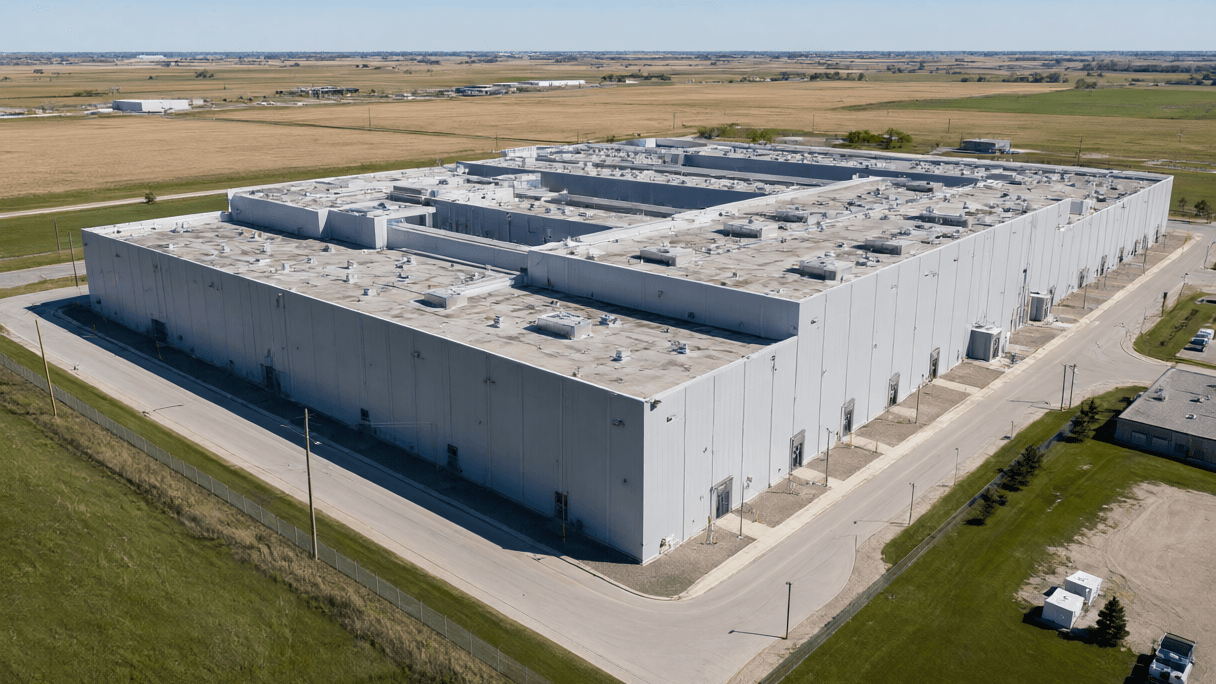
AI-generated image · Bay Street Wire
Opinion: The attempt to hide utility costs in Nebraska suggests a lack of operational transparency that could complicate investor assessments of AI scaling efficiency.
As investors scrutinize the massive capital expenditures required to scale artificial intelligence, the delta between corporate narrative and operational reality becomes a primary valuation driver. When a company claims efficiency while simultaneously attempting to obscure the basic resource costs of its infrastructure, it creates a transparency gap that the market will eventually price in as a risk.
Recent reporting from 10/11 reveals a troubling pattern of opacity regarding Google's data center operations in Nebraska. As 10/11 first reported, Google attempted to shield electricity and water usage data from public view in annual reports submitted to Nebraska’s Department of Water, Energy, and Environment (DWEE). By citing state statutes and claiming the data constituted trade secrets, Google sought to redact the resource consumption of its facilities.
However, the attempt at secrecy was undermined by a technical failure. 10/11 reports that the redacted text boxes in the reports could be revealed simply by highlighting the text and pasting it into a separate document. This "improper redaction" exposed the actual costs of maintaining the infrastructure that powers Google's AI ambitions.
From a deals and valuation perspective, these figures are not merely trivia; they are the raw inputs of the AI era. The revealed data shows that Agate LLC—a Google data center in Lincoln—reported 52.65 megawatts of electricity during peak electrical demand and 13.299 megagallons (approximately 13 million gallons) of water for cooling and operations over the last year. Even more significant is the consumption at Fireball Group LLC, the Google data center in Papillion, which 10/11 reports consumed 547.88 megagallons of water for its 2025 annual consumption.
In my opinion, the decision to label these utility figures as "trade secrets" is a strategic miscalculation. While individual site metrics may seem granular, the aggregate resource intensity of these centers is exactly what investors need to determine if the promised efficiencies of AI are manifesting or if the cost of scaling is becoming unsustainable. When a company actively fights to hide the amount of water and power it consumes, it signals that the actual operational costs may be higher—or less efficient—than the public narrative suggests.
Furthermore, the revealed documents provide a glimpse into the tax subsidies Google is leveraging to offset these costs. 10/11 reports that while no rebates have been received to date under the Nebraska Advantage Act or incentive payments under the ImagiNE Nebraska Act, the company is expecting significant 2025 tax refunds. Specifically, Agate LLC expects a refund of $55,822,472, Fireball LLC expects $39,171,573.39, and Westwood Solutions LLC—the Google-owned center in Omaha—expects $22,558,881.
These figures highlight a reliance on state-level incentives to maintain margins. For an analyst, the combination of high resource consumption (as seen in Papillion) and a heavy reliance on millions of dollars in tax refunds suggests a cost structure that is highly sensitive to regulatory shifts. If Nebraska’s Department of Water, Energy, and Environment or Governor Jim Pillen’s Data Center Task Force—which is overseeing the execution of a July 20th Executive Order on resource reporting—decides to tighten the screws on water and power usage, Google's operational overhead could spike.
Google's attempt to hide these numbers suggests a desire to control the narrative around "AI efficiency" without providing the underlying data to support it. In the current market, transparency is a currency. By attempting to redact the electricity and water usage of its Nebraska fleet, Google has not protected a trade secret; it has instead created a perception of volatility.
If the company is willing to use improper redactions to hide the water usage of its Papillion site or the peak power demand of its Lincoln site, investors must ask what other operational inefficiencies are being obscured in the name of competitive advantage. The valuation of AI leaders is currently predicated on the belief that they can scale these systems sustainably. Google's actions in Nebraska suggest that the reality of that scaling is something the company would prefer the public—and the market—not see.