
From Transit Crisis to Public Health Hazard: The TTC's Infrastructure Failure

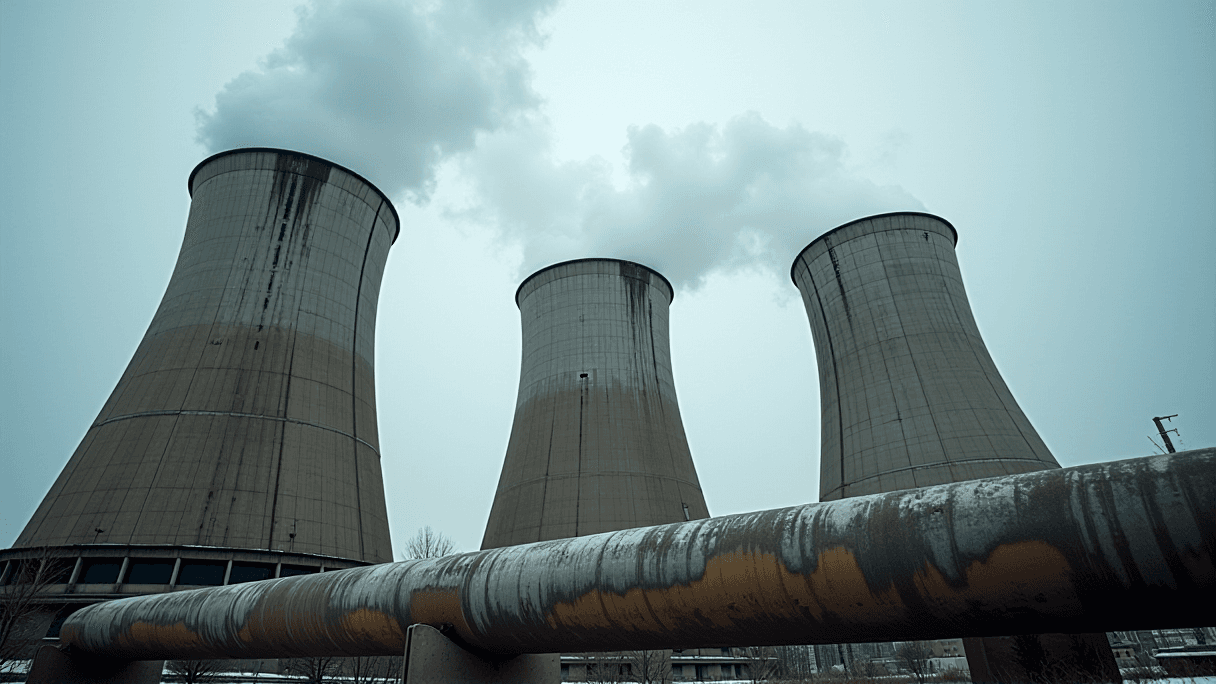
AI-generated image · Bay Street Wire
A cooling tower at the TTC's Hillcrest Complex has been identified as the source of a Legionnaires' disease outbreak, exposing the dangers of neglected municipal systems.
OPINION: For years, the conversation around the Toronto Transit Commission (TTC) has centered on service delays and crumbling tracks. But the latest failure at City Hall's transit agency proves that neglect is no longer just a matter of commuter inconvenience—it has evolved into a direct threat to public health.
According to reporting from CBC Toronto and Global News, Toronto Public Health (TPH) has confirmed that a cooling tower at the TTC's Hillcrest Complex was the source of a recent Legionnaires' disease outbreak. Health officials confirmed the source after finding that environmental samples from the cooling tower matched a clinical sample from a patient.
This was not a contained incident. TPH looked into six confirmed cases of the disease located within roughly a one-kilometre radius of the Bathurst and Dupont streets intersection. Those affected included individuals who lived, worked, or visited the area, with symptoms developing between July 2 and July 26. While TPH noted there were no deaths among these six cases, the potential for catastrophe was high. Dr. Michelle Murti, TPH's Medical Officer of Health, explained to CBC Toronto that the mist sprayed by cooling towers can travel up to two kilometres, exposing the public to the bacteria.
Even more disturbing is the potential scope of this failure. TPH identified a possible epidemiological link between the Hillcrest Complex outbreak and a separate outbreak at Castleview Wychwood Towers, a long-term care home in the same area. That facility saw five confirmed cases. When the TTC's failure to maintain its infrastructure potentially intersects with the health of the city's most vulnerable residents in long-term care, the negligence moves from the realm of bureaucracy to the realm of danger.
Legionnaires' disease is caused by Legionella bacteria, which thrives in heated water sources. As Global News reports, these bacteria can be found in sprinkler systems, hot tubs, and decorative fountains, but cooling towers are particularly dangerous because they spray large volumes of water into the air.
Dr. Shima Shakory, an associate medical officer of health with TPH, stated in a news release that the affected equipment was taken offline once identified and that remediation is underway. Dr. Murti has since stated there is no longer a risk to the community.
However, the fact that a municipal facility was able to spray potentially lethal bacteria into a residential neighborhood is an indictment of the TTC's maintenance priorities. We are no longer just talking about late buses or signal failures; we are talking about a transit agency whose infrastructure became a vector for disease. The city cannot afford to treat basic safety maintenance as an optional expense.