
Vision Zero is a Fantasy While Toronto's Death Toll Hits a Five-Year Peak

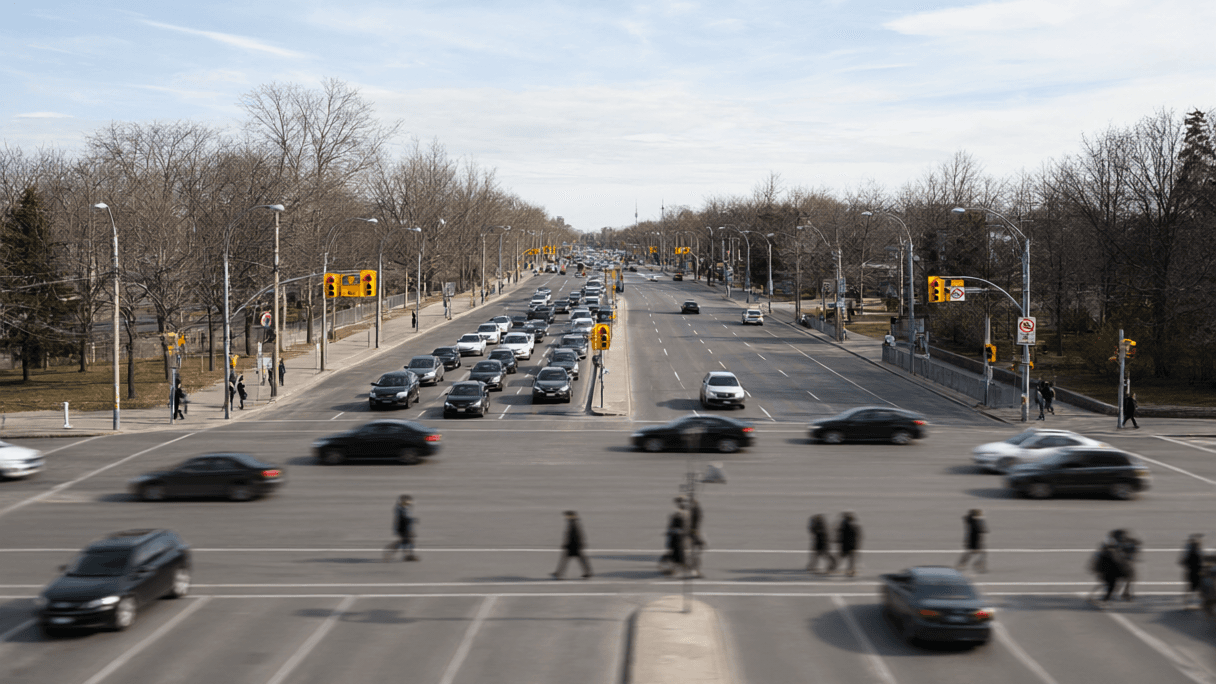
AI-generated image · Bay Street Wire
Opinion: City Hall's road safety rhetoric is failing as pedestrian and motorcyclist fatalities surge following the removal of speed cameras.
For years, Toronto City Hall has leaned on the lofty rhetoric of 'Vision Zero,' promising a future where traffic fatalities are eliminated. But as a council watchdog, I find the gap between those slogans and the current reality not just disappointing, but a failure of leadership. While the city speaks of safety, the blood on the pavement tells a different story.
As first reported by CBC Toronto, the city is currently on track for a pedestrian death toll that could exceed the 44 fatalities recorded in 2022—the highest number in recent years. Police data shows that 21 pedestrians have already died in traffic collisions this year, marking a 24 per cent increase over the same period last year.
It isn't just pedestrians. CBC Toronto reports that motorcyclist deaths have hit a five-year high, with 11 fatalities recorded as of Oct. 5, representing a staggering 57 per cent increase compared to last year.
Where did the safety go? Look to the policy shifts. Last November, the province removed speed cameras, a move that Jess Spieker, spokesperson for the advocacy group Friends and Families for Safe Streets, suggests has allowed drivers to "speed whenever and wherever they want." A June city report confirmed this, finding a significant increase in speeding specifically in areas where cameras used to be located.
When you remove the primary deterrent for speeding, you don't get a safer city; you get a free-for-all. Gary Smith, a St. Lawrence Market resident, describes the daily experience of walking in Toronto as a "life and death issue," citing aggressive driving, red-light running, and distracted driving via cellphones.
City Hall and the province's response to this crisis is a masterclass in bureaucratic stalling. Dakota Brasier, a spokesperson for the Ministry of Transportation, argues that speed bumps and roundabouts are the superior way to keep roads safe. The province has provided $10 million through its road safety initiative fund for these measures.
However, the math doesn't add up for the people crossing the street today. A February city staff report revealed that installing these traffic calming measures across Toronto could cost approximately $52 million and—more absurdly—take 13 years to implement.
Thirteen years. That is the timeline City Hall is offering while pedestrians are dying at a rate of roughly four per month, according to Spieker. We are being told to wait over a decade for infrastructure that might mitigate the loss of a tool (speed cameras) that worked yesterday.
Toronto police spokesperson Nadine Ramadan claims that enforcement has remained consistent despite the camera removals, with officers using analytics to target risky behavior. But when the data shows a five-year peak in motorcyclist deaths and a surging pedestrian toll, the "consistency" of enforcement is clearly not enough to save lives.
City Hall cannot continue to hide behind long-term reports and 'Vision Zero' branding while the actual death toll climbs. If the city is on track for 49 pedestrian fatalities by the end of the year, as Spieker estimates, then the current leadership has failed. We don't need a 13-year plan; we need a city that prioritizes human life over the convenience of speeding drivers.