
DP World Launches Latin America's First Shore Power System at Port of Callao

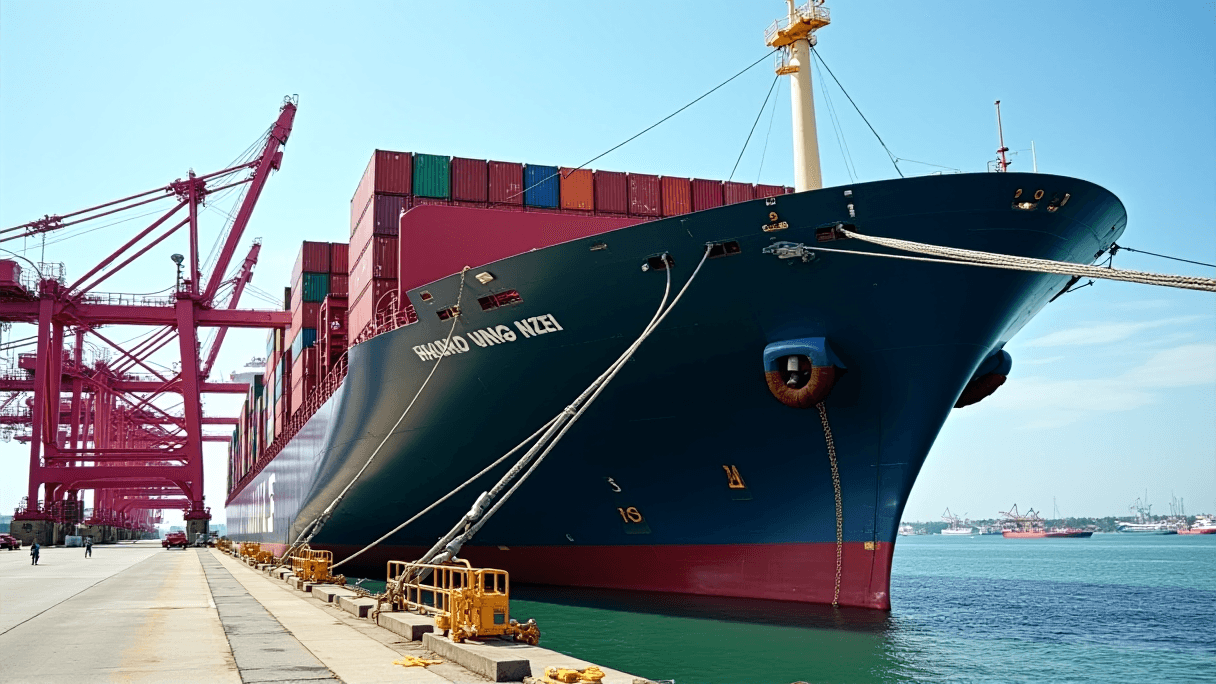
AI-generated image · Bay Street Wire
A new renewable energy investment in Peru allows docked vessels to cut emissions by replacing auxiliary engines with certified green electricity.
As first reported by the Financial Post, DP World has launched a shore power system at its South Terminal in the Port of Callao, the first of its kind in Latin America. The new infrastructure enables docked ships to utilize 100% certified renewable electricity instead of running auxiliary engines.
The project is part of a broader US$1 billion investment by DP World in Peru, with the shore power system integrated into a US$400 million Bicentennial Pier expansion. The Financial Post reports that the system can provide up to 7.5 MVA to a vessel, which is enough to support the largest container ships visiting the port at full load. The system was first utilized by the CMA CGM PLATINUM, a 13,100-TEU container vessel built in 2025.
From an environmental standpoint, the system is projected to avoid over 6,300 tonnes of CO2e annually, averaging 30 tonnes per vessel call. Additionally, the technology is expected to reduce particulate matter and emissions of sulfur oxides, nitrogen oxides, and fuel consumption by more than 90% while ships are connected.
A June 2026 white paper from DNV, a global maritime classification and assurance company, notes that only about 3% of ports globally currently provide shore power. Keiko Fujimori, President of Peru, noted the importance of the technology given its rarity globally. DP World has previously implemented shore power at its Vancouver and Prince Rupert terminals in Canada and intends to bring the technology to its European port network. Currently, about 80% of vessels calling at Pier 3 are equipped for shore power, and four of the seven weekly vessels on the Peru–Asia trade route are expected to connect initially.