
Bureacracy Over Building: City Hall's Red Tape Stifling the 'Missing Middle'

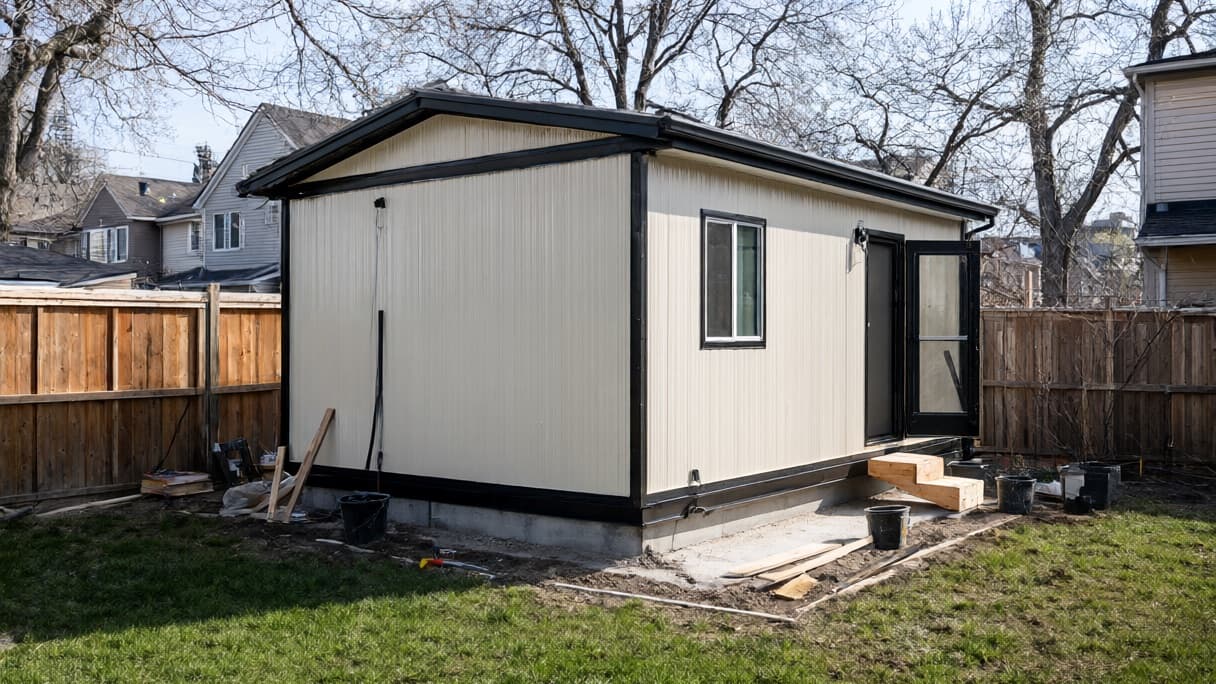
AI-generated image · Bay Street Wire
While the city touts its garden and laneway suite initiatives, homeowners and builders say outdated permit processes are blocking the very density Toronto desperately needs.
OPINION: City Hall loves to talk about solving the housing crisis, but its actions—or lack thereof—suggest that the bureaucracy is more important than the actual bricks and mortar.
As CBC Toronto first reported, the friction between the city's rhetoric and the reality on the ground is becoming clear. For years, the city has promoted laneway and garden suites as a way to fill the "missing middle"—that gap between massive high-rise condos and sprawling suburban homes. The city passed as-of-right zoning for laneway suites in 2018 and garden suites in 2022, framing them as a tool for homeowners to house aging parents or generate rental income. But as any resident of this city knows, passing a bylaw is not the same as breaking ground.
Homeowners Nitin Goela and Joanne Magday, who are attempting to build a garden suite, report that navigating the city's permit process and securing financing has been a struggle, noting that the project has taken longer than they anticipated.
Specifically, the city seems unable or unwilling to keep pace with modern construction. Goela and Magday utilized panelized construction—a method where structural components are prefabricated in a factory before being shipped to the site. Rather than embracing this efficiency, the city responded with increased scrutiny and a prolonged "back and forth" during the permitting phase.
Minesh Dattani, the president of Prefab Builds Canada, notes that this pattern is common. While Dattani acknowledges the city has made strides in enabling Accessory Dwelling Units (ADUs), he argues that municipal approval processes have failed to adapt to modern techniques. Dattani is calling for the city to collaborate with engineers and prefab builders to create a more efficient workflow.
City Hall's defense is the usual corporate script. Spokesperson Hilary Caton-King told CBC Toronto that pre-approved building plans are available to lower costs and simplify permits. However, Caton-King admitted that proposals that deviate from these pre-approved plans take longer because the city must review specific materials and methods for compliance with the Building Code.
When you look at the numbers provided by the city, the scale of the failure becomes clear. According to CBC Toronto, there are currently 755 garden and laneway suites under construction, with 627 permits closed. In a city facing a systemic housing collapse, these figures are a rounding error. Matti Siemiatycki, a professor in geography and planning at the University of Toronto, told CBC Toronto that while these units are part of the solution, they are not solving the crisis in a city of this size, noting that they are not inherently affordable and are currently difficult to finance.
If the city truly wanted to scale this, it would stop treating modern construction as a nuisance and start treating it as a necessity. Until the permit process is aligned with 21st-century building methods, these suites will remain a boutique luxury for the few, rather than a density solution for the many.