
Beyond the GPU Hoard: Why Quantum Computing Represents a Fundamental Architectural Pivot

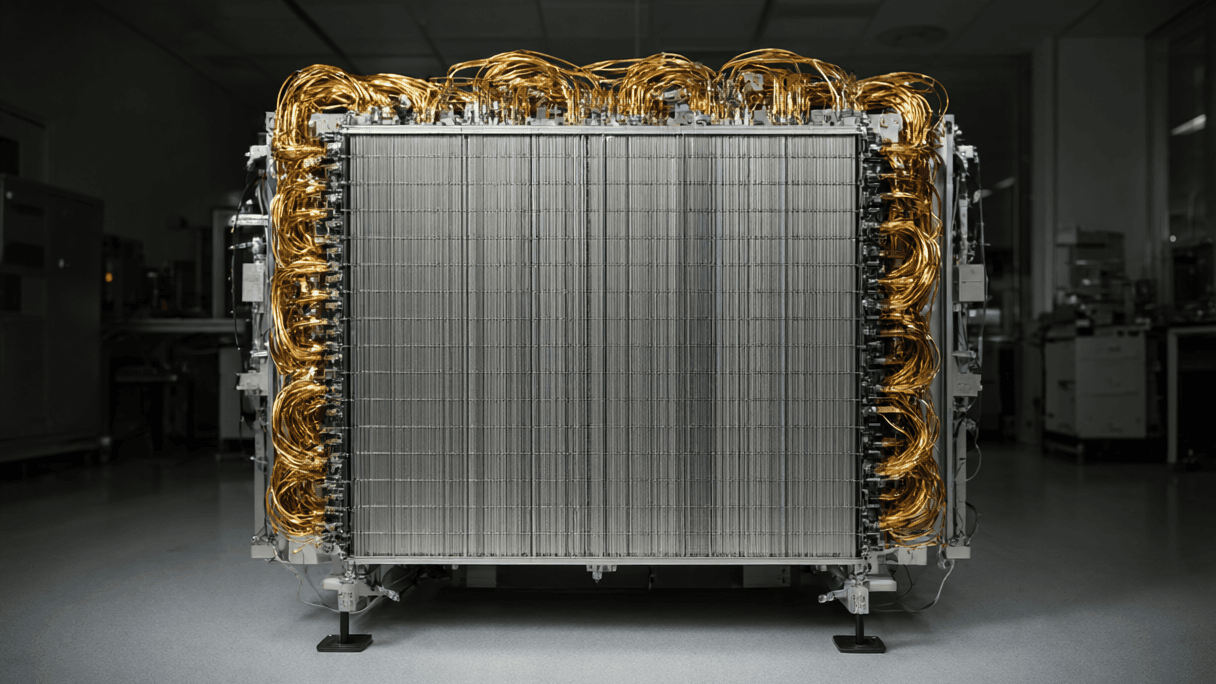
AI-generated image · Bay Street Wire
While the AI gold rush focuses on scaling existing hardware, quantum leaders suggest a different path toward commercialization—one defined by targeted problem-solving rather than hype-driven expansion.
### The Architecture of Transformation
In the current tech climate, the race toward Artificial General Intelligence (AGI) has triggered a massive capital expenditure cycle characterized by a frantic hoarding of GPUs. However, as BetaKit first reported during a panel at Canada's largest AI conference, the intersection of AI and quantum computing reveals a fundamental divergence in how these technologies are being developed.
According to BetaKit, a conversation involving quantum leaders Nikki Bhatia of Xanadu, Marc-Antoine Lemonde of Nord Quantique, and Lisa Lambert of IonQ, alongside CGI head of AI Chris Juryn, suggests that quantum is not merely a faster version of current AI hardware, but a distinct technological trajectory.
### Divergent Paths to Commercialization
While AI has been propelled by a 'ChatGPT moment' of sudden, public-facing utility, quantum computing is operating under different expectations. Lisa Lambert of IonQ noted that transformative technology only becomes so once it is adopted; for quantum, the focus is on the specific problems the technology is uniquely built to solve—areas where AI can provide support but cannot replace the underlying architecture.
### The Hype Gap
Despite both fields requiring massive R&D and capital to reach their goals—AGI for AI and fault-tolerant quantum computing for quantum—BetaKit highlights a cultural divide. Unlike the AI sector, which has been driven by a 'FUD' (fear, uncertainty, and doubt) hype chamber to attract investment, the quantum industry has largely avoided this approach. Furthermore, the leaders in the quantum space have maintained a level of control over their technology that their AI counterparts have fundamentally lost.