
The $300 Million Leak: Why the H100 Grey Market Defies Export Controls

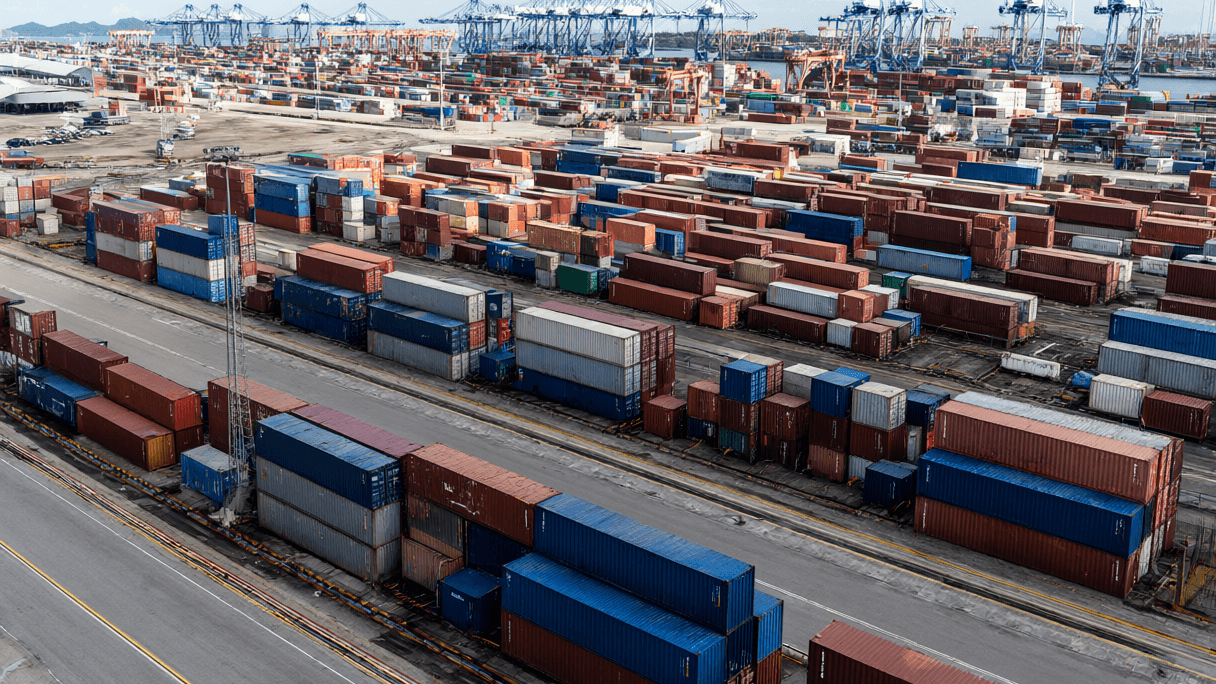
AI-generated image · Bay Street Wire
The arrest of Earthmade Computer CEO Greg Lui reveals a sophisticated smuggling pipeline that exposes the gap between official US policy and the reality of high-end silicon demand.
As first reported by Ars Technica, the laws of supply and demand will always override the laws of the land when the price of compute is this high. The recent Department of Justice (DOJ) action against Greg Lui is more than just a legal victory; it is a case study in how the grey market for AI hardware operates.
According to Ars Technica, the US has arrested Lui, the 38-year-old CEO of Earthmade Computer, on charges including money laundering, federal smuggling, and conspiracy to violate the Export Administration Regulations and the Export Control Reform Act. The DOJ alleges that Lui orchestrated a scheme to divert more than $300 million worth of servers containing export-controlled Nvidia H100 and A100 GPUs into China.
**The Mechanism of Evasion**
As detailed by Ars Technica, the operation relied on a complex web of freight-forwarding firms in South Asian hubs, specifically Singapore and Malaysia. The FBI's indictment alleges that Lui used fraudulent paperwork to mask the final destination of the hardware. In one 2024 instance, 70 servers with restricted GPUs were claimed to be bound for Malaysia; however, the DOJ alleges a co-conspirator confirmed to a Malaysian official that 27 of those units were actually shipped to China. Another shipment of 92 servers was allegedly routed through Singapore and Malaysia before landing in Hong Kong and, as the FBI alleges, eventually reaching a firm in Hangzhou—an area The Wall Street Journal has previously identified as China's AI hub.
Lui's commitment to the grift was exhaustive. Ars Technica reports that for a shipment of 100 servers containing H100 GPUs valued at over $22 million, Lui allegedly created a fake buyer under the name "Jackie Lui." Furthermore, the FBI alleges Lui purchased the identity of another individual three years prior to facilitate these transactions. The scale of the profit was immense: the DOJ claims Lui’s firm received over $176 million from the scheme in 2024 alone, with evidence drawn from bank records at JP Morgan and Bank of America.
**The Compliance Gap**
While Nvidia has attempted to minimize the impact of these leaks, the systemic nature of the problem is becoming harder to ignore. A spokesperson for Nvidia told Bloomberg that diverted products represent "less than one half of one percent" of their total volume, describing the diversion as a "drop in the bucket" compared to China's domestic compute.
However, a Bloomberg investigation involving sources across five countries suggests Nvidia has significant "blind spots" in its due diligence. While Nvidia claims to screen buyers, US officials believe the company is failing to catch obvious red flags, particularly regarding shipments to Thailand, Malaysia, and Singapore. This is not an isolated incident; Ars Technica notes a previous smuggling scheme involving a senior Nvidia manager in Taiwan and former Supermicro staff.
**Opinion: The Premium Problem**
In my view, as long as the H100 remains the gold standard for training large language models, these smuggling rings will persist. The US government fears that access to these chips could allow China to advance its military or AI capabilities—specifically citing firms like DeepSeek—but the current enforcement strategy is reactive. When a single CEO can move $300 million in hardware through fake identities and South Asian proxies, it proves that the grey market isn't just a leak; it's a parallel supply chain. Until the hardware gap is closed or the premium on these chips evaporates, the incentive for "Earthmade" operators will always outweigh the risk of a DOJ indictment.
Lui now faces up to 20 years in prison for money laundering and conspiracy charges.