
The 'Level Playing Field' Fallacy: Hyundai's Protectionist Plea

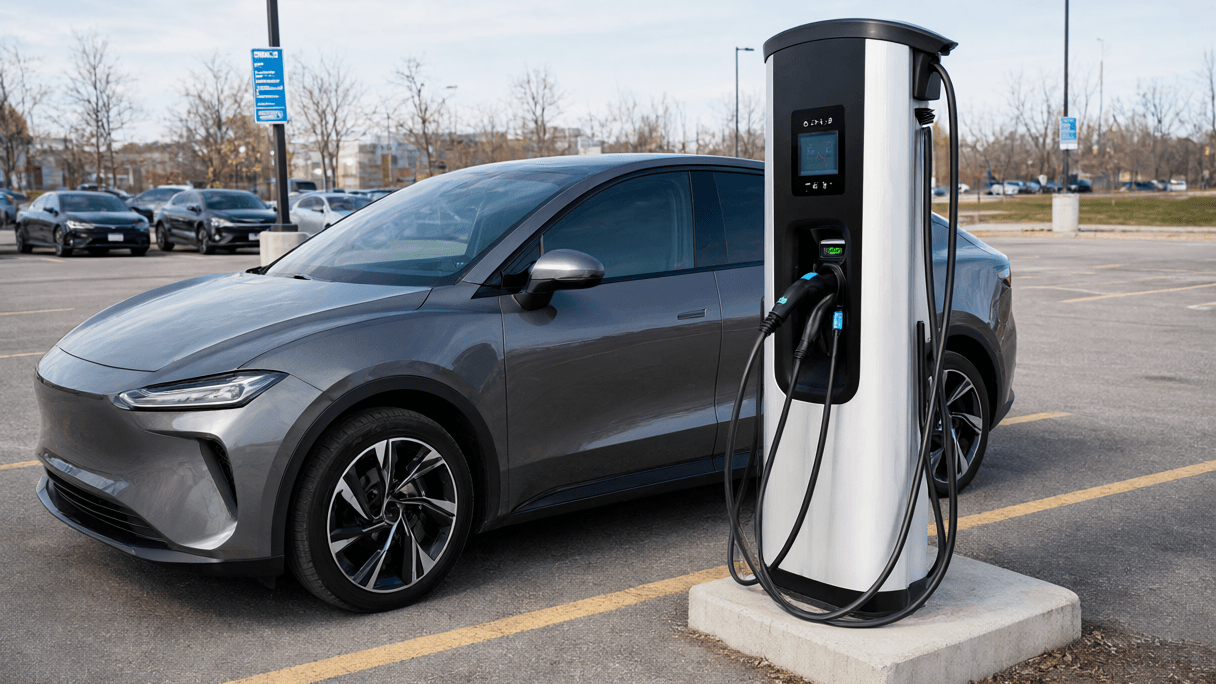
AI-generated image · Bay Street Wire
CEO José Muñoz calls for safeguards against Chinese EV imports, but his lack of a specific defensive strategy suggests a reliance on tariffs over innovation.
In the world of hardware, 'level playing field' is often corporate shorthand for 'please protect my margins.'
During the reveal of the 2027 Hyundai Tucson in New York City, Hyundai CEO José Muñoz voiced concerns that the United States could be 'overrun' by Chinese electric vehicle imports, mirroring the market disruption currently seen in Europe. As first reported by The Verge, Muñoz argues that the right combination of product improvements and protectionist policies can keep Chinese competitors at bay.
**Opinion:** Let's be clear—Muñoz isn't asking for a fair fight; he's asking for a fortress. When a CEO pleads for a 'level playing field,' they are typically acknowledging that their current cost structure cannot compete with a vertically integrated rival. In this case, the rival is China, whose EVs in Europe are, on average, 30 percent cheaper than comparable European models, even after accounting for EU import tariffs.
Despite the existential threat posed by low-cost, high-tech Chinese imports, Muñoz admitted to The Verge that Hyundai has not developed a specific strategy to combat Chinese competitors. His response was telling: 'We don’t develop strategies specifically because of the Chinese or because of other types of consumers, or other types of competitors.'
Instead, Hyundai is betting on its own brand of vertical integration. Muñoz pointed to a $5.8 billion investment in Louisiana to produce green steel as a primary example of how the company intends to lower costs and improve quality. While bringing tech and components in-house is the right move for any hardware player, it is a reactive posture when compared to the scale of Chinese manufacturing.
Currently, the U.S. market is shielded by steep tariffs and laws prohibiting the sale of cars featuring Chinese software. However, The Verge notes that this dam is weakening. President Donald Trump has indicated an openness to Chinese automakers building plants within the U.S., provided they hire American workers.
If Chinese brands successfully enter North America via partner channels or domestic manufacturing, Hyundai's lack of a targeted defensive strategy becomes a glaring liability. While Muñoz claims the U.S. is the most competitive market in the world, the reality is that U.S. EV adoption is lagging significantly—sitting at less than 6 percent compared to over 20 percent in Europe and over 60 percent in China.
Hyundai is currently keeping its EV business afloat through the sale of hybrids, integrating them into popular models like the Tucson. But as the industry shifts toward the affordable, high-tech models that China has perfected, relying on government-mandated protections isn't a strategy—it's a stay of execution.